

Juice vending machine: 7 best proven picks for profit
The best machines, top-selling juices, fresh vs bottled, pricing, rules and where juice machines earn the most.
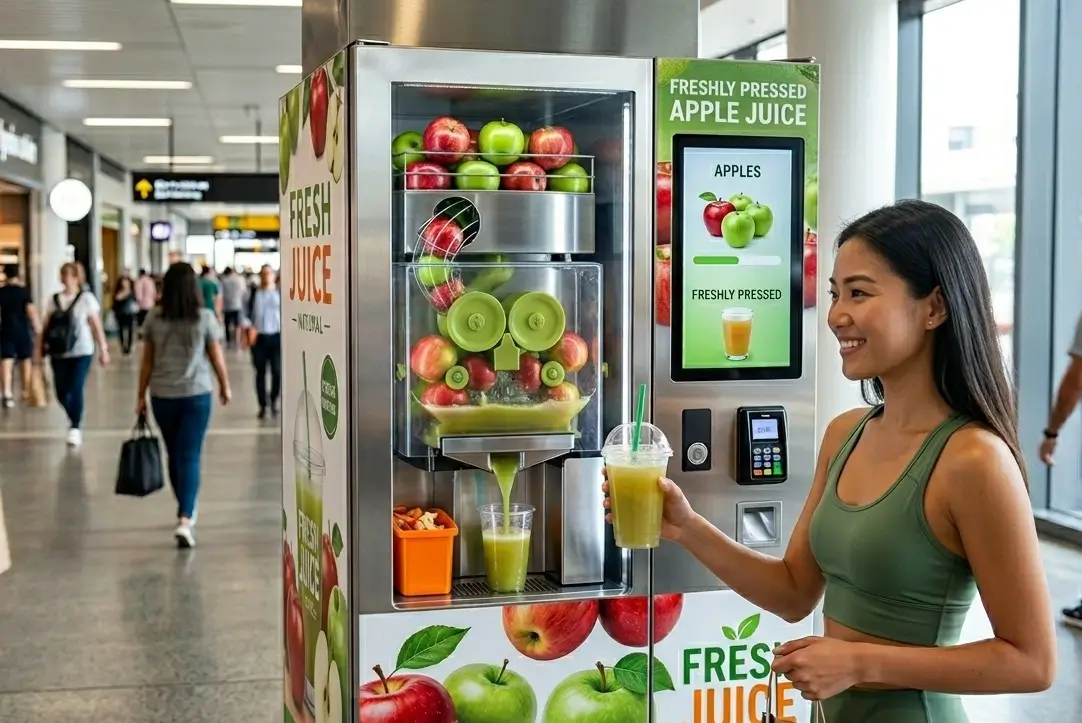
Juice is one of the fastest-growing categories in UK vending. More customers want healthier drinks, and a juice vending machine gives them a fresh, fruity alternative to fizzy drinks.
This guide covers the best juice vending machine picks, which juices sell best, fresh vs bottled options, pricing, rules and where juice machines earn the most.
Quick answer: A juice vending machine is usually a chilled bottle or glass-front machine stocked with fruit juices and smoothies. Orange and apple juice sell best, and premium juices command higher prices than standard soft drinks.
Most sites earn more by mixing juice with water and soft drinks, while very busy sites can consider a fresh-squeezed juice machine.
Chilled machines for juice
Bottle, glass-front and smart fridge machines with card readers, free UK delivery, installation and 0% payment plans.
Browse Machines →What is a juice vending machine?
A juice vending machine is a refrigerated machine stocked mainly with fruit juices, smoothies and juice drinks. Most are standard chilled drinks machines set up for juice bottles and cartons.
There are two main types. Bottled juice machines sell pre-packed juices, while fresh juice machines squeeze fruit on demand when a customer pays.
For most businesses and operators, a bottled juice vending machine is the practical choice. It is affordable, reliable and easy to restock.
Why juice sells well
Juice fits the growing demand for healthier vending, which is why a juice vending machine performs so well. Several things work in its favour.
- Healthy image: many customers see juice as a better choice than fizzy drinks.
- Higher prices: juice and smoothies usually sell for more than standard cans.
- Wide appeal: children, office workers, gym-goers and patients all buy juice.
- Breakfast sales: juice sells strongly in the morning, a quiet time for many drinks.
- Sugar tax advantage: pure fruit juice is not liable for the Soft Drinks Industry Levy.
That combination makes a juice vending machine a strong addition to sites with health-conscious customers.
Juice vending machine: 7 best proven picks
1. Snapple iced tea and juice machine
The Snapple iced tea and juice machine (£950) is an affordable, eye-catching juice vending machine with eight selections. It suits small sites, cafés and leisure venues.
2. Welch’s fruit juice machine
The Welch’s fruit juice machine brings bold fruit branding that tells customers exactly what is inside. It works well in family venues, schools’ staff areas and leisure sites.
3. Pepsi glass-front machine
The Pepsi glass-front vending machine (£1,995) shows colourful juice bottles through the glass. Visible stock helps juice sell, because customers can see the fruit and brand.
4. Blue wave bottle machine
The blue wave bottle vending machine (£2,095) handles bottles of different sizes. It suits sites selling juice alongside water and sports drinks.
5. 24H smart vending fridge
The 24H smart vending fridge (£2,295) is ideal for fresh juices and smoothies with short shelf lives. Customers open the door, take what they want and pay by card.
6. Black glass-front machine
The black glass-front vending machine (£1,950) gives juice a premium look. It suits offices, hotels and gyms.
7. Tap-to-pay large glass-front machine
The tap-to-pay vending machine (£2,295) offers large capacity and contactless payment. It suits busy campuses, hospitals and stations.
See all drinks vending machines or our vending machines for sale.
Best-selling juices for vending
The best stock for a juice vending machine mixes familiar favourites with a few premium options. Small bottle sizes work best.
| Type | Examples | Best for |
|---|---|---|
| Orange juice | Smooth or with bits, 250–330ml | Every site |
| Apple juice | Cloudy or clear | Schools’ staff areas, offices, hospitals |
| Tropical blends | Mango, pineapple, passion fruit | Leisure and students |
| Smoothies | Berry, banana, green blends | Gyms, offices, hospitals |
| Juice drinks | Juice with water or sparkle | Students and younger customers |
| Iced tea and juice | Fruit-flavoured iced teas | Leisure, cafés, stations |
Orange and apple are the safest sellers. Add one or two premium smoothies and rotate seasonal flavours to keep interest high, such as berry blends in summer and citrus in winter.
Fresh vs bottled juice
The biggest decision is whether your juice vending machine sells bottled or fresh-squeezed juice. Each suits different sites.
| Factor | Bottled juice machine | Fresh-squeezed machine |
|---|---|---|
| Machine cost | Lower | Much higher |
| Daily work | Restock when needed | Daily cleaning and fruit loading |
| Shelf life | Weeks or months | Fruit must be used quickly |
| Selling price | Standard to premium | Premium |
| Best for | Most sites | Very busy sites with daily staff |
Fresh-squeezed machines create a wow factor, but they need a lot of care. For most operators, a bottled juice vending machine is simpler and more profitable.
Temperature and food safety
Fresh and chilled juices must be kept cold. A refrigerated juice vending machine should hold a steady temperature, usually between 3°C and 5°C.
- Check the machine temperature at every visit.
- Remove juice past its use-by date straight away.
- Rotate stock so older bottles sell first.
- Clean shelves and drip trays regularly.
Our vending machine temperature and vending machine expiry dates guides explain the rules.
Pricing and margins
Juice usually sells for more than standard soft drinks, so a juice vending machine can be very profitable. Margins depend on the product, the buy price and how much stock goes out of date.
| Example | Buy price | Sell price | Gross profit |
|---|---|---|---|
| 250ml orange juice | 55p | £1.50 | 95p |
| 330ml juice drink | 60p | £1.60 | £1.00 |
| 250ml smoothie | £1.20 | £2.80 | £1.60 |
These figures are examples only, as wholesale prices change often. VAT is charged on juice, and card fees take a small cut of each sale.
Our vending machine pricing and vending machine VAT guides explain both.
Sugar tax and juice
Pure fruit juice with no added sugar is not liable for the Soft Drinks Industry Levy, a real advantage for a juice vending machine. That can make juice more attractive than sugary fizzy drinks on price.
Juice drinks with added sugar may be liable, depending on their sugar content. Check labels and choose products that fit your site and pricing.
Where juice machines sell best
A juice vending machine works best where customers care about health or want a morning drink. Some sites stand out.
| Site | Why juice sells | Best machine |
|---|---|---|
| Gyms and leisure centres | Health-focused customers | Glass-front or smart fridge |
| Offices | Morning and lunchtime demand | Smart fridge |
| Hospitals | Patients, visitors and staff | Large glass-front |
| Universities | Students wanting healthier choices | Tap-to-pay glass-front |
| Stations and airports | Breakfast on the go | Bottle machine |
| Family leisure venues | Parents buying for children | Branded juice machine |
See our guides to vending machines for gyms, vending machines for hospitals and vending machines for offices.
Juice in schools
Schools are a special case. School food standards in England allow pure fruit or vegetable juice in portions of up to 150ml, plus some combination drinks with no added sugar.
That means a juice vending machine can work in schools if the bottle sizes and products are chosen carefully. Fizzy drinks and sugary juice drinks are not allowed for pupils.
Our vending machines for schools guide explains what can be sold.
Juice only or a mix?
A juice vending machine filled only with juice can work at gyms and health-focused sites. Most sites, however, earn more from a mix.
- Juice only: suits gyms, hospitals and wellbeing-focused workplaces.
- Juice and water: a healthy mix that suits most sites.
- Juice, water and soft drinks: the widest appeal and usually the best sales.
A good starting point is to give juice around a third of the selections. Then adjust based on what sells over the first few weeks.
Healthier options
Many workplaces and hospitals want healthier vending. A juice vending machine fits well, especially with the right stock.
- Small 150ml to 250ml portions.
- No-added-sugar juices.
- Vegetable and green juices.
- Juice diluted with water.
- Plain water alongside juice.
The NHS counts a 150ml glass of fruit juice or smoothie as one of your five a day, at most once a day. Our healthy vending machine guide explains how to build a healthier range.
Allergens and labelling
Most products in a juice vending machine are free from the major allergens, but smoothies may contain milk, yoghurt, oats or nuts. Pre-packed products already carry full labels.
Customers can’t read labels through the glass, so offer allergen information on request or on a sign. Our vending machine allergens guide covers the rules.
Card payment
Most customers now pay by card or phone. A juice vending machine without a card reader misses many sales, especially at higher price points.
Card readers on a juice vending machine also show which juices sell best and when. Our contactless vending machine guide explains the options.
Restocking a juice machine
Juice has a shorter shelf life than cans or crisps, so restocking a juice vending machine needs more care. Telemetry shows what has sold before you visit.
- Order little and often to reduce waste.
- Load new stock at the back and older stock at the front.
- Check dates and temperatures at every visit.
- Remove slow sellers before they expire.
Our restock a vending machine and vending machine telemetry guides explain how to work efficiently.
Seasonal patterns
Juice sells all year, but demand shifts with the seasons. A juice vending machine can be adjusted to match.
- Summer: chilled juices and juice drinks sell fastest.
- January: healthy resolutions boost smoothie and juice sales.
- Winter: orange juice stays popular, while fizzy drinks slow down.
- Term time: campus machines sell far more during term.
A real-world example
Imagine a busy gym with 1,200 members. It installs a juice vending machine stocked with smoothies, orange juice, water and sports drinks.
Smoothies quickly become the top seller after morning and evening classes. Because they sell at a premium, the machine earns more per sale than a standard drinks machine.
Telemetry shows berry smoothies and orange juice sell fastest, so they each get extra rows. Slow flavours are swapped at the next restock to keep waste low.
Running costs
A juice vending machine is refrigerated, so it uses more power than a snack machine. The main costs are simple.
- Stock from a wholesaler or cash and carry.
- Electricity for cooling, lights and card reader.
- Card payment fees.
- Waste from out-of-date stock.
- Commission if the machine sits on someone else’s site.
Our vending machine electricity cost guide and vending machine profit calculator help estimate profit.
Placing a juice machine on someone else’s site
Many operators place a juice vending machine at a gym, office or hospital and pay commission on sales. The host gets a healthy drinks service, and the operator keeps the rest of the profit.
Agree the commission rate, power costs and restocking access in writing. Our vending machine placement agreements guide explains the details.
Fresh-squeezed machines in detail
A fresh-squeezed juice vending machine holds whole oranges in a chilled hopper. When a customer pays, it cuts and presses the fruit and fills a cup in front of them.
- Needs daily cleaning of the pressing parts and waste bin.
- Fruit must be loaded regularly and kept chilled.
- Works best where staff are on site every day.
- Suits supermarkets, large hotels, airports and busy leisure centres.
The theatre of watching juice being squeezed can justify a premium price. However, the extra work means most operators start with a bottled juice vending machine.
Branded and wrapped machines
A branded juice vending machine, such as a Snapple or Welch’s design, tells customers what is inside before they reach the glass. Bright fruit graphics stand out in busy corridors and leisure venues.
Businesses can also wrap a machine in their own colours. That suits gyms, juice bars and family venues that want the machine to match their look.
Starting out with juice
A juice vending machine can be a good first machine for operators targeting healthy sites. Juice brings higher prices but needs more careful stock control than cans.
- Find a site: gyms, offices and hospitals with health-conscious customers.
- Choose a machine: a chilled glass-front or smart fridge with a card reader.
- Start small: stock longer-life juices first to keep waste low.
- Track sales: use telemetry to see what sells and when.
- Grow: add smoothies and fresh lines once demand is clear.
Our start a vending machine business guide covers the full process.
Sustainability
Many customers care about packaging as much as what is inside. A juice vending machine can support greener choices.
- Choose juices in recyclable bottles or cartons.
- Place a recycling bin next to the machine.
- Use energy-efficient machines with LED lighting.
- Order carefully to avoid waste.
Our reverse vending machines guide explains the coming deposit return scheme for drinks containers.
Keeping the machine secure
Juice machines in public areas need basic security. Card payment reduces the cash inside, which makes the machine a less attractive target.
Place the machine in view of staff or CCTV, keep keys with a named person and fix it to the wall at high-risk sites. Our vending machine security guide has more tips.
Choosing bottle sizes
Bottle size affects price, sales and rules. Small bottles of 250ml to 330ml suit most sites, because they are quick to drink and easy to price.
Schools need portions of 150ml or less for pure juice. Gyms and offices often sell larger 500ml juice drinks alongside smaller premium smoothies, so check spiral or shelf sizes before ordering stock.
Common mistakes
- Stocking too many short-dated products and wasting stock.
- Using a non-refrigerated machine for chilled juice.
- Bottles too large for school rules.
- Ignoring the sugar content of juice drinks.
- Coin-only machines that miss card customers.
- Forgetting to check temperatures and dates.
The verdict on juice vending machines
A juice vending machine taps into the demand for healthier drinks and sells at higher prices than many soft drinks. Bottled juice machines suit most sites, while fresh-squeezed machines suit only the busiest.
Keep it cold, rotate stock, choose small bottles and mix juice with water and soft drinks where it makes sense. Browse our vending machines for sale or contact our team to find the right juice vending machine for your site.
FAQ
Frequently asked questions
A juice vending machine is a chilled drinks machine stocked mainly with fruit juices, smoothies and juice drinks. Most are standard bottle or glass-front machines, while some specialist machines squeeze fresh juice on demand.
Irelley juice-ready machines start from £950 for the Snapple iced tea and juice machine, with glass-front, bottle and smart fridge models above that. Delivery and installation are free, and 0% payment plans are available.
Yes. Juice sells at a higher price than many soft drinks, and premium juices and smoothies attract health-conscious buyers. Margins depend on buy price, shelf life and waste.
Fresh and chilled juices must be kept cold, so a refrigerated machine is essential. Long-life cartons can be stored at room temperature but sell much better chilled.
Orange and apple juice are the safest sellers, followed by tropical blends, smoothies and juice drinks with added water or sparkle. Small bottles of 250ml to 330ml suit vending best.
Yes, with limits. School food standards in England allow pure fruit or vegetable juice in portions of no more than 150ml, plus some combination drinks with no added sugar.
Pure fruit juices with no added sugar are not liable for the Soft Drinks Industry Levy. Juice drinks with added sugar may be, depending on their sugar content.
Yes. Fruit juices and juice drinks are standard-rated for VAT in the UK.
It is a specialist machine that squeezes whole oranges when a customer pays. These machines cost more and need daily cleaning and fresh fruit, so they suit very busy sites.
It depends on the product. Fresh juice may last only days, chilled pasteurised juice a few weeks, and long-life juice several months. Always check use-by and best-before dates.
Ready to sell juice?
Chilled bottle, glass-front and smart fridge machines with free UK delivery, installation and 0% payment plans.