

Vending machine temperature: 7 best proven settings
The right settings for drinks, chilled food, frozen and hot items, UK legal limits and how to monitor them.
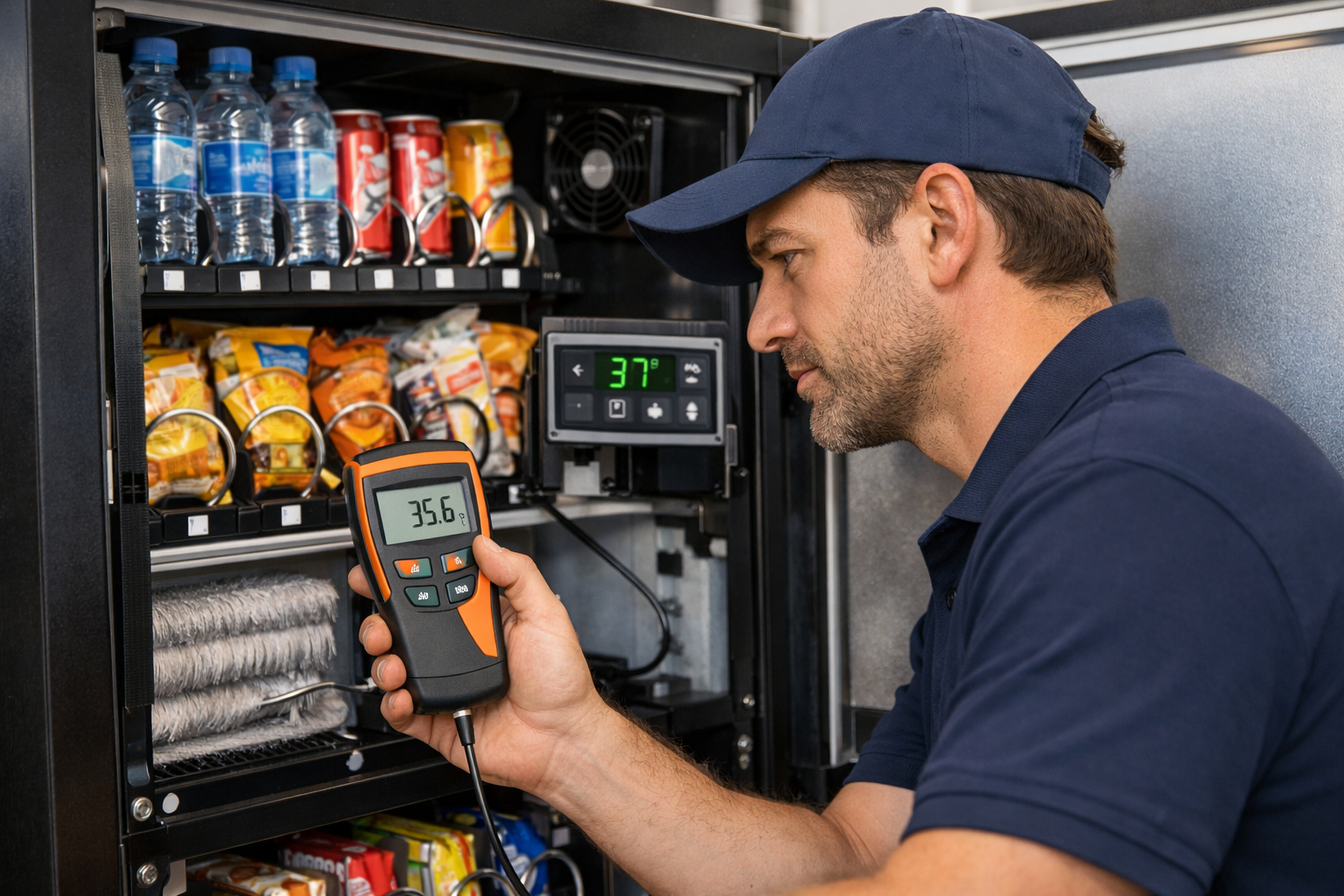
Getting the vending machine temperature right is one of the most important parts of running a machine. Too warm, and chilled food becomes unsafe and drinks lose their appeal. Too cold, and cans freeze or products spoil.
This guide explains the right vending machine temperature for drinks, chilled food, frozen products and hot items, the UK legal limits, how to monitor them and what to do when something goes wrong.
Quick answer: Set cold drinks machines to around 3–6°C and chilled food machines to 5°C or below. In England, Wales and Northern Ireland, chilled food must not go above 8°C. Keep frozen products at -18°C or colder, and hot food at 63°C or above.
Reliable chilled vending
Drinks machines, combo machines and smart fridges with dependable cooling, free UK delivery, installation and 0% payment plans.
Browse Machines →Why vending machine temperature matters
The right vending machine temperature protects customers, products and your profits. Harmful bacteria grow quickly in chilled food that gets too warm.
Customers also notice when drinks aren’t cold. A warm can is one of the fastest ways to lose repeat sales.
Getting the vending machine temperature right also cuts waste. Fewer products spoil, and you spend less replacing stock.
Vending machine temperature: 7 best proven settings
| Product type | Recommended setting | Legal or safety limit |
|---|---|---|
| Cans and bottled drinks | 3–6°C | No legal limit, quality only |
| Milk and dairy drinks | 3–5°C | 8°C maximum (England, Wales, NI) |
| Sandwiches and fresh food | 1–5°C | 8°C maximum (England, Wales, NI) |
| Frozen food | -18°C or colder | Keep frozen solid |
| Ice cream | -18°C to -22°C | Keep frozen solid |
| Hot food | 63°C or above | 63°C minimum when held hot |
| Ambient snacks | Below 20–25°C | Quality only |
1. Cold drinks: 3–6°C
Most customers expect cans and bottles to feel properly cold, so drinks need the right vending machine temperature. Around 3–6°C works well, while going much lower risks freezing and burst cans.
2. Milk and dairy drinks: 3–5°C
Milkshakes, flavoured milk and dairy drinks can support bacteria. Keep them well below the 8°C legal limit.
3. Fresh food: 1–5°C
Sandwiches, salads, wraps and meals need the tightest vending machine temperature control. A setting of 5°C or below leaves a safety margin.
4. Frozen food: -18°C or colder
Frozen meals and meat must stay frozen solid. Any thawing and refreezing affects quality and safety.
5. Ice cream: -18°C to -22°C
Ice cream needs to stay cold enough to hold its texture. Warmer temperatures cause ice crystals and a grainy feel.
6. Hot food: 63°C or above
Hot food held for sale must be kept at 63°C or above. Most hot food machines instead heat chilled meals on demand, which avoids long hot holding.
7. Snacks: below 20–25°C
Ambient snacks don’t need chilling, but a high vending machine temperature can melt chocolate and spoil quality. Keep snack machines out of direct sunlight and away from heaters.
UK legal limits
In England, the Food Safety and Hygiene (England) Regulations 2013 say chilled food that could support harmful bacteria must not be kept above 8°C. Similar rules apply in Wales and Northern Ireland.
There are a few exceptions, such as food that is safe at room temperature for its whole shelf life. Canned and dried products are also exempt until opened.
Scotland has different legislation. Chilled food must still be kept cold, and most operators follow a 5°C target as best practice.
Important: 8°C is the legal maximum, not the target. Setting the vending machine temperature at 5°C or below gives you a buffer for door openings, restocking and warm days.
The four-hour and two-hour rules
English law includes a limited defence for chilled food on display above 8°C for less than four hours, used once only. For hot food, there is a similar defence below 63°C for under two hours.
These rules are designed for counters and buffets, where staff watch the food. In a vending machine with no supervision, it is much safer not to rely on them.
Food that needs temperature control
Not every product needs a chilled vending machine temperature. The rules focus on foods that can support harmful bacteria.
- Needs chilling: sandwiches, wraps, salads, dairy products, cooked meats, ready meals.
- Needs freezing: ice cream, frozen meals, frozen meat.
- Chill for quality: soft drinks, water, energy and sports drinks.
- Ambient: crisps, chocolate, sweets, biscuits, canned and dried food.
Always follow the storage instructions printed on the packaging. They tell you exactly how each product should be kept.
How to monitor it
Checking vending machine temperature regularly is the best way to stay safe and compliant. There are three main methods.
| Method | How it works | Best for |
|---|---|---|
| Machine display | Shows the internal temperature | Quick checks on every visit |
| Separate thermometer | Probe or fridge thermometer checks accuracy | Confirming the display is correct |
| Telemetry alerts | Sends warnings if temperature rises | Chilled food and remote sites |
Record readings on every visit. A simple log shows you are managing food safety and helps you spot problems early.
Our vending machine telemetry guide explains how remote temperature alerts work.
Checking food temperature, not just air
The display usually shows the air temperature inside the machine, which changes quickly when the door opens. The food itself warms and cools more slowly.
For chilled food machines, use a probe thermometer on a sample product now and then. Clean the probe before and after use, or use a probe between packs.
What pushes temperatures up
Several everyday factors can push vending machine temperature up. Knowing them helps you prevent problems.
- Placement: machines in direct sun or near heaters work harder.
- Ventilation: machines pushed tight against walls overheat.
- Room temperature: hot summer days strain cooling systems.
- Restocking: long door openings and warm stock raise the temperature.
- Dirty condensers: dust reduces cooling efficiency.
- Overloading: packed shelves block airflow.
Restocking without warming the machine
Restocking is when vending machine temperature problems most often start. A few habits keep the vending machine temperature stable.
- Bring chilled stock in a cool box, not a warm van.
- Keep door opening times short.
- Load cold stock behind older stock so the oldest sells first.
- Don’t block air vents with products.
- Check the temperature recovers after closing the door.
Our how to restock a vending machine guide covers a full restocking routine.
Placement for stable temperature
Where you put a machine affects how well it holds the right vending machine temperature. Good placement also cuts energy bills.
- Leave the gap recommended by the manufacturer behind and around the machine.
- Avoid direct sunlight through windows.
- Keep away from radiators, ovens and hot air vents.
- Use a machine designed for outdoor use if it will be outside.
Our outdoor vending machine guide explains what outdoor machines need.
Summer and winter
Seasons have a big effect on vending machine temperature. Hot weather pushes cooling systems to their limit, while cold weather can push the vending machine temperature too low.
Summer
Check the vending machine temperature more often during heatwaves. Clean condensers before summer, and make sure vents are clear.
Winter
Machines in unheated spaces can drop below the ideal vending machine temperature, freezing drinks. Some outdoor machines include heaters to stop this.
Hot drinks machines
Hot drinks machines heat water to around 85–95°C, depending on the drink. Coffee is usually brewed at slightly lower temperatures than tea.
If drinks come out lukewarm, the heating element or thermostat may need attention. Scale build-up in hard water areas is a common cause.
Our coffee vending machine for business guide covers maintenance.
When the machine stops cooling
If the vending machine temperature rises above safe limits, act quickly.
- Check how long the machine has been too warm, using the display or telemetry.
- Remove chilled food that has gone above 8°C for too long.
- Check for blocked vents, dirty condensers and power issues.
- Switch the machine to drinks-only or empty it until fixed.
- Call an engineer if the fault continues.
- Record what happened and what you did.
Our vending machine troubleshooting guide covers common cooling faults.
Product-specific tips
Milk
Milk machines need especially careful control. Read our milk vending machine guide for farm milk rules.
Fresh food
Fresh food machines need tight temperature control and date checks. See our fresh food vending machine guide.
Frozen food and ice cream
Frozen machines need regular defrosting and checks. Our frozen food vending machine and ice cream vending machine guides explain more.
Temperature by machine type
Each type of machine has its own ideal vending machine temperature. Use this as a quick reference when setting up.
| Machine | Typical setting | Main check |
|---|---|---|
| Can and bottle drinks machine | 3–6°C | Drinks cold, not frozen |
| Combo machine | 4–6°C in the chilled zone | Snacks not too cold or damp |
| Smart fridge | 1–5°C | Food below 8°C at all times |
| Snack machine | Room temperature | Away from heat and sun |
| Frozen and ice cream machine | -18°C or colder | No thawing or frost build-up |
| Hot drinks machine | 85–95°C water | Drinks hot, no scale build-up |
Combo machines often have a chilled drinks section and an ambient snack section. Check the vending machine temperature in each zone separately.
Setting the temperature
Most machines let you adjust the vending machine temperature through a service menu or controller. The exact steps vary by model, so check the manual.
- Open the service menu with the operator key or code.
- Find the refrigeration or temperature settings.
- Set the target temperature for each zone.
- Close the machine and wait for it to reach the new setting.
- Check with a separate thermometer after a few hours.
New machines can take several hours to cool down fully. Load stock once the machine has reached the right vending machine temperature, not before.
Cleaning and maintenance
Regular maintenance keeps cooling systems working well. A clean machine holds its vending machine temperature with less effort.
- Vacuum or brush the condenser coils every few months.
- Check door seals for gaps or damage.
- Clear frost from freezer sections when needed.
- Keep drain lines clear to prevent leaks.
- Book an annual service for refrigeration parts.
A worn door seal can let warm air in all day. Replacing it is cheap compared with the cost of spoiled stock.
Training whoever restocks
Anyone who fills a chilled machine should know the safe vending machine temperature and what to do if it is too high. A short briefing is usually enough.
Give them a simple card with the target range, the 8°C limit and the steps to take if the machine is warm. Make sure they know who to call.
Energy use and temperature
A colder vending machine temperature uses more electricity. Setting drinks a little warmer within the safe range can cut running costs without customers noticing.
Modern machines with LED lighting, better insulation and efficient compressors use less energy. Some also have eco modes that relax cooling when a site is closed, which suits drinks but not chilled food.
Keeping records
Vending machine temperature records show environmental health officers that you take food safety seriously. They are also useful if a customer complains.
- Date and time of each check.
- Temperature reading.
- Who carried out the check.
- Any action taken if the temperature was too high.
Telemetry systems can store vending machine temperature readings automatically. That saves time and gives a complete record.
Food safety management
If you sell chilled food from a vending machine, temperature control should be part of your food safety management system. In England, the FSA’s Safer Food, Better Business pack is a simple way to set this up.
Combine temperature checks with date checks, cleaning and allergen information. Our vending machine expiry dates and vending machine allergens guides cover these.
Choosing a machine with good cooling
A reliable machine makes vending machine temperature much easier to manage. Look for these features.
- A clear temperature display.
- Separate cooling zones for drinks and food.
- Good insulation and a well-sealed door.
- Telemetry or remote alerts.
- An efficient compressor and LED lighting.
Browse our drinks vending machines, combo vending machines or the 24H smart vending fridge. Spread the cost with our 0% payment plans.
Customer complaints about warm drinks
Warm drinks are one of the most common vending complaints. Often the vending machine temperature is fine, but the machine was recently restocked with warm cans.
Freshly loaded drinks can take several hours to chill fully. Restock chilled machines at quiet times, such as early morning, so drinks are cold by the busy period.
If complaints continue, check the vending machine temperature with a thermometer and look for airflow problems. Telemetry can show whether the temperature rises at certain times of day.
A simple daily and weekly routine
A routine makes vending machine temperature control part of normal operations rather than an extra job.
| When | Task |
|---|---|
| Every visit | Read and record the display temperature |
| Weekly | Check with a separate thermometer and inspect door seals |
| Monthly | Clear dust from vents and check airflow |
| Every few months | Clean condenser coils |
| Yearly | Professional refrigeration service |
For chilled food machines, check more often. Telemetry alerts add an extra layer of protection between visits.
Temperature and product quality
Even when safety isn’t at risk, the vending machine temperature affects how products taste and look. Fizzy drinks lose sparkle when warm, chocolate blooms after melting and refreezing, and sandwiches dry out if the machine is too cold.
Small adjustments can improve quality and sales. Ask regular customers whether drinks are cold enough, and adjust the vending machine temperature within the safe range if needed.
Consistent temperatures also extend shelf life. Products kept at a steady vending machine temperature stay fresher for longer, which reduces waste.
Common mistakes
- Treating 8°C as the target instead of the maximum.
- Trusting the display without checking it.
- Placing chilled machines in direct sunlight.
- Blocking vents with overfilled shelves.
- Never cleaning the condenser.
- Keeping no temperature records.
The verdict on vending machine temperature
The right vending machine temperature keeps customers safe, drinks refreshing and waste low. Aim for 3–6°C for drinks, 5°C or below for chilled food, -18°C for frozen products and 63°C or above for hot food.
Check temperatures on every visit, keep records and act quickly when something goes wrong. For help choosing a machine with reliable cooling, contact our team.
FAQ
Frequently asked questions
Most operators set cold drinks machines to around 3–6°C. This keeps cans and bottles refreshingly cold without freezing them.
In England, Wales and Northern Ireland, chilled food that could support harmful bacteria must not be kept above 8°C. Many operators aim for 5°C or below to leave a safety margin.
Frozen food and ice cream should be kept at around -18°C or colder.
Hot food held for sale should be kept at 63°C or above. Hot drinks machines heat water on demand to around 85–95°C, depending on the drink.
If chilled food goes above 8°C for too long, it may no longer be safe to sell and should be removed. Drinks will simply be less cold, but chocolate and some snacks can melt.
Use the machine’s display, a separate probe or fridge thermometer and, ideally, telemetry alerts. Record readings on every visit.
Ambient snack machines don’t need chilling, but they should be kept away from heat and direct sunlight. Chocolate starts to soften in warm conditions.
Common causes include blocked vents, a dirty condenser, a failed fan, low refrigerant or a machine placed too close to a wall or heat source.
Scotland has its own rules. Chilled food must still be kept cold, and operators usually follow the same 5°C target as best practice.
In England, there is a limited defence for food on display for sale for under four hours, but only once. It is safer never to rely on it in a vending machine.
Need reliable chilled vending?
Drinks, combo and smart fridge machines with free UK delivery, installation and 0% payment plans.
[…] food must be kept at safe temperatures, and allergen information must be available. Our vending machine temperature and vending machine allergens guides explain the […]
[…] vending machine temperature and vending machine expiry dates guides explain the […]
[…] operators run must be kept at safe temperatures, and allergen information must be available. Our vending machine temperature and vending machine allergens guides explain the […]
[…] to manage. Chilled and fresh food needs temperature control and clear allergen information. Our vending machine temperature and vending machine allergens guides explain the […]
[…] food must be kept at safe temperatures, and allergen information must be available. Our vending machine temperature and vending machine allergens guides explain the […]
[…] food must be kept at safe temperatures, and allergen information must be available. Our vending machine temperature and vending machine allergens guides explain the […]