

Vending machine pricing: 7 critical tips for profit
How to set prices that customers accept and that still leave a healthy margin after VAT, card fees and commission.
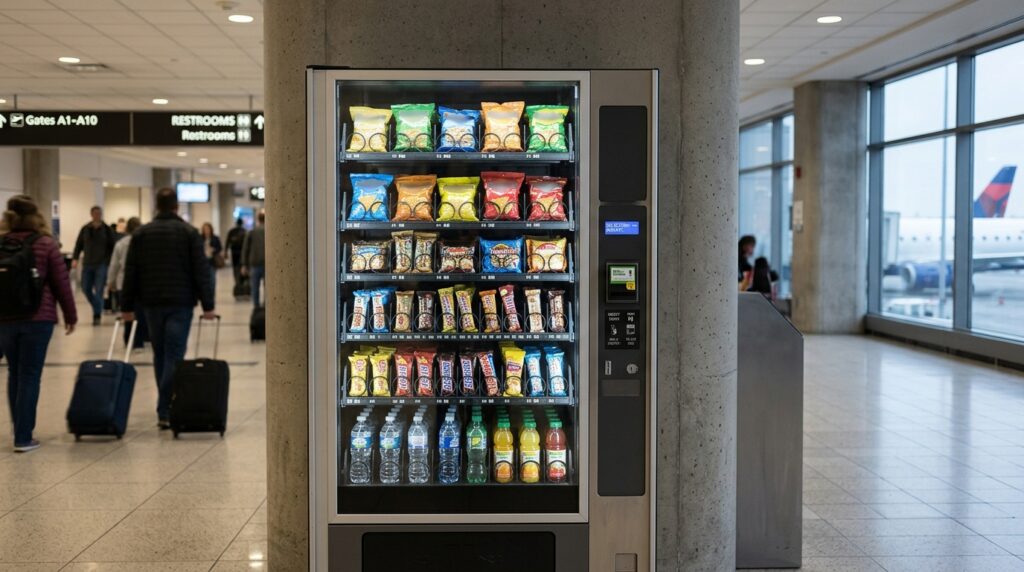
Vending machine pricing decides whether a machine makes real money or just keeps busy. Price too low and every sale barely covers costs; price too high and customers walk to the shop instead.
This guide covers 7 critical tips for vending machine pricing, how to allow for VAT, card fees and commission, a worked example, and when to change your prices.
Price exactly, not to the nearest coin
Card-ready machines with telemetry for £10 a month plus 2%, delivered and installed free anywhere in the UK.
View Machines For Sale →How vending machine pricing works
With vending machine pricing, every sale has to cover more than the product. It has to pay for VAT if you’re registered, card fees, any commission to the site, electricity, servicing and your time.
Good vending machine pricing starts with your true cost per sale, then adds a margin that customers accept. It’s a balance, not a single formula.
The price customers see includes VAT, so the amount you keep is always less than the number on the machine.
7 critical tips for vending machine pricing
Use these tips to set vending machine pricing that protects your margin and keeps customers coming back.
1. Know your true cost per item
Include the product cost, delivery to your stockroom and any wastage. Fresh and chilled items carry more wastage than crisps or cans, so factor that in.
2. Allow for VAT
If you’re VAT-registered, one sixth of a standard-rated price goes to HMRC. A £1.20 drink earns you £1.00 before any other costs.
3. Allow for card fees
At Irelley, card payments cost 2% per transaction plus £10 a month for telemetry. Build that into every price.
4. Check local prices
Look at what the nearest shop, café or canteen charges. Customers accept a small convenience premium, but not a big one.
5. Price by site
Sites with captive customers, such as night shifts or remote locations, can support slightly higher prices. Sites near a supermarket need sharper pricing.
6. Use exact prices
Card payment lets you charge £1.15 or £1.35 instead of rounding to coins. UK Finance data shows cash is now a small share of UK payments, so exact pricing suits most customers.
7. Review regularly
Supplier costs change often, sometimes several times a year. Review vending machine pricing every few months and adjust in small steps.
“Price for the site, not the spreadsheet. The right price is the one that sells well and still leaves you a healthy margin.”
A worked example
Here’s how vending machine pricing works on a single can of drink. The figures are illustrative, so use your own costs.
- Selling price: £1.20 including VAT
- VAT at one sixth: 20p
- Net price: £1.00
- Card fee at 2% of £1.20: about 2p
- Product cost: 45p
- Gross profit per can: about 53p
From that 53p, you still need to cover electricity, servicing, telemetry and any commission. Our vending machine profit calculator helps you work through the full picture.
Pricing by product type
In vending machine pricing, different products support different margins.
Cold drinks
Usually strong sellers with healthy margins, especially in warm weather. A recognisable machine like our Coca-Cola modern drinks machine helps drinks sell at a fair price.
Hot drinks
Ingredient cost per cup is often low, so hot drinks can carry excellent margins. A machine like our Nescafé hot drinks machine rewards sensible pricing.
Snacks
Crisps and chocolate are price-sensitive because shoppers know shop prices well. Keep snack prices competitive and use them to draw people to the machine.
Larger sharing bags and premium brands can carry a little more, as customers expect to pay for them.
Fresh food
Higher prices are accepted, but wastage is higher too. Price fresh items to cover the cost of what you throw away.
Smart Pricing
Margin-Led
- Based on: True cost per sale
- Allows for: VAT, card fees and commission
- Prices: Exact, not rounded
- Review: Every few months
- Result: Healthy, steady profit
Guesswork
Round Numbers
- Based on: What feels right
- Allows for: Little or nothing
- Prices: Rounded to coins
- Review: Rarely
- Result: Thin or uncertain margins
Psychological pricing
Small details change how prices feel. £1.45 often feels noticeably cheaper than £1.50, even though the difference is tiny.
Place a premium item next to a mid-priced one, and the mid-priced option looks like good value. This kind of vending machine pricing nudge works in shops, and it works in machines too.
Keep pricing simple to read on the machine’s display or labels. Confusing prices slow customers down and can cost you the sale.
Bundles and promotions
Bundles are one of the simplest vending machine pricing tools, because they lift the average sale. A drink and snack at a set price, or a coffee and pastry in the morning, encourages people to buy two items instead of one.
Promotions help shift slow lines or launch new products. Test one change at a time so you can see what actually works.
Our guide to starting a vending machine business covers pricing alongside the other early decisions.
Card-ready machines with telemetry make this easy, because you can see the effect of each change in your sales data.
Time-of-day pricing
Some card-ready machines support different prices at different times. A cheaper coffee before 9am, or a discount on fresh food late in the day, can lift sales and cut waste.
Check whether your machine supports it, and keep offers simple so customers understand them at a glance. Time-based vending machine pricing works best when it solves a real problem, such as clearing short-dated stock.
Using data to set prices
Sales data takes the guesswork out of vending machine pricing. Card readers and telemetry show what sells, when and at what price.
Test one change at a time and watch for a few weeks. If volume holds after a small rise, the new price is working; if it drops sharply, adjust back.
Our guides to cashless vending payment and restocking a vending machine show how payment data and restocking routines work together.
Commission and your prices
If you pay commission to a site owner, it comes out of your margin. Base commission on net sales after VAT, and allow for it when setting prices.
Our commission rates guide explains how to structure commission so it stays fair at your price levels.
Our take: work out your true cost per sale, allow for VAT, card fees and commission, then price slightly below the nearest shop’s convenience price. Review vending machine pricing every few months.
Common vending machine pricing mistakes
The most common mistake is forgetting VAT. If you’re registered, a sixth of a standard-rated price isn’t yours, and vending machine pricing that ignores it leaves margins far thinner than expected.
The second is ignoring card fees and commission. Each looks small on its own, but together they can take a real share of every sale.
The third is pricing every site the same. A busy night-shift warehouse and an office next to a supermarket need different vending machine pricing.
The last is never reviewing prices. Supplier costs creep up, and vending machine pricing that was right last year may barely break even now.
Subsidised and staff pricing
Not every machine is run for maximum profit. Many businesses use vending machine pricing as a staff perk, selling at cost or discounting popular items.
Owning the machine makes this easy, because you set every price. Some employers subsidise healthier options to encourage better choices, while keeping treats at normal prices.
If you subsidise, track the cost each month so the perk stays affordable. Clear vending machine pricing rules avoid confusion and keep the budget under control.
Raising prices
Costs rise, and vending machine pricing has to follow. Small, regular increases are far easier for customers to accept than a big jump once a year.
Raise prices on your best sellers first, where demand is strongest. Watch sales for a few weeks, and roll back if a price change clearly hurts volume.
A short note on the machine explaining that prices have changed due to supplier costs can soften the reaction. Most customers understand, especially when the rest of the range stays good value.
Choosing what to stock
Vending machine pricing works best when the range is right. Products that sell quickly at a good margin should get the best slots, and vending machine pricing should reflect their popularity.
Our guides to the best snacks for vending machines and best vending machine products help you build a profitable range. See how much vending machines make for real-world numbers.
Buying from Irelley
Browse our vending machines for sale, or contact our team for help choosing card-ready machines. We deliver and install free anywhere in the UK, within 24 hours, and our payment plans let you spread the cost at 0%.
FAQ
Frequently asked questions
Start with your cost price, add VAT if you’re registered, allow for card fees and commission, then check local shop prices. Good vending machine pricing balances margin with what customers will happily pay.
It varies by product and site. Work out your margin on every line after VAT, card fees and any commission, and drop or reprice products that don’t earn enough.
Yes, in two ways. Card fees, such as 2% per transaction, reduce your margin, but card payment also lets you set exact prices instead of rounding to coins.
Not necessarily. Many operators price higher at sites with captive customers and fewer alternatives, and lower where a shop is close by.
At least every few months, and whenever supplier costs change. Small, regular adjustments are easier for customers than large, sudden jumps.
Price for profit
Card-ready machines, free UK delivery and 0% payment plans to grow your margins.
[…] in line with local shops, adding a little for convenience at out-of-hours sites. Our vending machine pricing guide explains how to set prices that […]
[…] vending machine pricing guide explains how to test prices and adjust them over […]
[…] and slices sell as treats, while whole cakes sell as gifts at higher prices. Our vending machine pricing guide explains how to set prices that […]
[…] bread is zero-rated for VAT in the UK, which helps margins compared with standard-rated snacks. Our vending machine pricing guide explains how to set […]
[…] such as lashes with glue, raise the average sale. Our vending machine pricing guide explains how to set […]
[…] vending machine pricing guide helps you set prices that cover payment […]
[…] drinks are standard-rated for VAT, and card fees take a small cut. Our vending machine pricing and vending machine VAT guides explain […]
[…] wholesalers keeps stock costs down and protects vending machine profit Ireland operators earn. Our vending machine pricing guide explains how to set prices that sell while protecting your […]