

Contactless vending machine: 7 critical tips for success
A UK buyer’s guide to choosing, pricing and placing a card-ready machine that customers actually use.
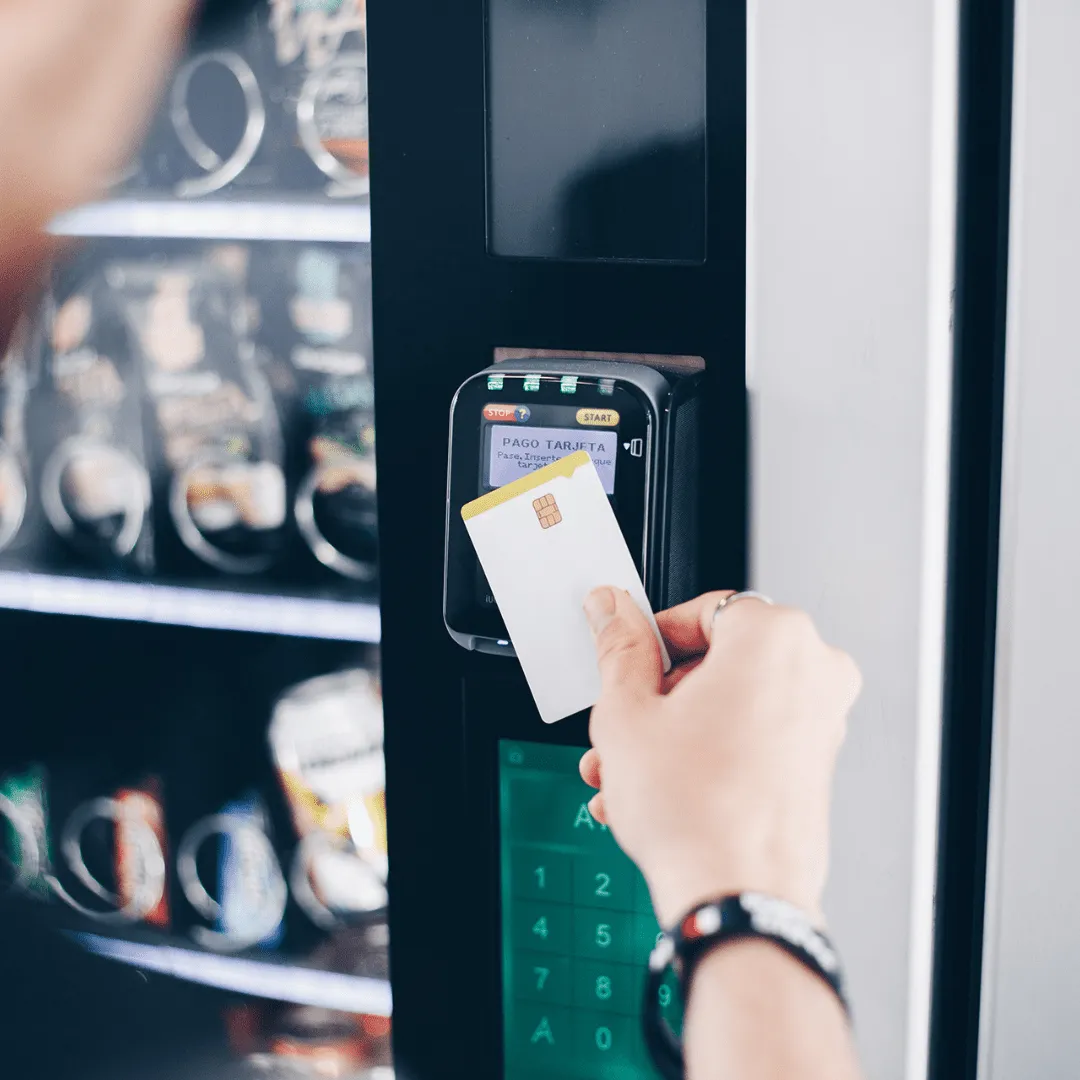
Buying a contactless vending machine is the simplest way to stop losing sales to customers who no longer carry coins. This guide covers what to check before you buy, what it costs in the UK, and where a card-ready machine earns the most.
Already own a machine and just want to add a card reader? Our vending machine contactless payment setup guide walks through the retrofit process. This post is for buyers choosing their next machine.
Browse card-ready machines
Every contactless vending machine in our range is fully tested, then delivered and installed free anywhere in the UK.
View Machines For Sale →What is a contactless vending machine?
A contactless vending machine accepts tap-to-pay cards, Apple Pay, Google Pay and smartwatches through a card reader on the front panel. Most models still take coins too, so nobody is turned away.
The reader connects to the machine through a standard payment port called MDB or Executive. Payments travel over a mobile data SIM, so the site doesn’t need to provide Wi-Fi.
Readers from providers such as Nayax, Payter and Vendman are common across UK vending. The brand matters less than the fees, the support and whether the reader arrives pre-fitted to the contactless vending machine you buy.
Many readers also show a small screen with prompts and receipts on request. That makes the machine feel familiar to anyone used to paying in a shop, which builds trust at the moment of purchase.
Why card payment now drives sales
UK shoppers have moved away from cash faster than most vending machines have. According to UK Finance’s Payment Markets Report, contactless made up 39% of all UK payments in 2025, while cash fell to just 8%.
Mobile wallets are the other big shift. Around 65% of UK adults are now registered for one, rising to 89% of 25 to 34-year-olds.
“A cash-only machine is invisible to a customer with no coins. A contactless vending machine turns that same passer-by into a sale.”
Card payment also lifts basket size. When people aren’t limited by the change in their pocket, they’re more likely to add a second drink or a pricier snack.
It opens up higher-value products as well. PPE, phone chargers and meal deals over £5 are hard to sell by coin, but easy to sell through a contactless vending machine.
Card payments also leave a clear record. Every sale is logged with a time and amount, so you can see your busiest hours, spot slow products and plan restocking around real demand rather than guesswork.
That data is hard to get from a coin-only machine. With a contactless vending machine, you can compare sites side by side and move stock or machines to wherever they earn most.
Built-in reader vs retrofit: which should you buy?
You have two routes. Buy a contactless vending machine with the reader already fitted, or buy a coin machine and add a reader later.
Option 1
Built-in Reader
- Up-front cost: Higher, one purchase
- Ready on delivery: Yes, tested before dispatch
- Compatibility: Guaranteed
- Card sales: From day one
- Best for: New operators and busy sites
Option 2
Retrofit Later
- Up-front cost: Lower now, extra cost later
- Ready on delivery: No, needs a second install
- Compatibility: Needs an MDB or Executive port
- Card sales: Only once the reader is fitted
- Best for: Existing fleets on tight budgets
For most first-time buyers, a pre-fitted reader is the safer choice. It’s tested with the machine before delivery, so there’s no second visit and no compatibility risk.
A retrofit makes sense if you already own solid coin machines. It’s cheaper than replacing a working machine, as long as the payment port is compatible.
One practical point: older machines sometimes need a firmware update or a replacement control board before a reader will work. Ask for the model number and year, and get the full retrofit cost confirmed before you choose that route over a new contactless vending machine.
If you run several sites, a mix often works well. Put a pre-fitted machine where footfall is highest, then retrofit the older coin machines at quieter sites as budget allows.
Card-only or card and coin?
Some operators now buy card-only machines. Removing the coin mechanism means no cash collection trips, no jammed coins and nothing inside worth breaking in for.
The trade-off is reach. A card-only contactless vending machine will miss the minority of customers who still pay with coins, and that minority is larger at some sites than others.
For most first machines, card and coin together is the safer starting point. Once your sales data shows how few coin payments you take, you can decide whether the next contactless vending machine you add needs a coin mechanism at all.
Security is the other factor. A machine that holds little or no cash is a less attractive target, which matters at unstaffed sites and anywhere open overnight.
Types of contactless vending machine
Card payment works on almost every kind of machine. The right contactless vending machine for you depends on what your site needs and how much space you have.
Snack machines
Spiral snack machines are the classic choice for offices, schools and warehouses. A contactless snack machine lets you sell crisps, chocolate and protein bars at prices that don’t need to match the coins in someone’s pocket.
Drinks machines
Chilled can and bottle machines suit gyms, sports centres and anywhere people get thirsty fast. Drinks are often an impulse buy, so a quick tap matters more here than almost anywhere else.
Combo machines
A combo contactless vending machine sells snacks and drinks from one cabinet. It’s ideal for smaller sites that only have room for one machine but want to offer a full range.
Coffee and hot drinks machines
Bean-to-cup and instant machines work well in offices, garages and waiting rooms. Hot drinks often sell above £2, which is exactly where card payment beats coins.
Fresh food and specialist machines
Fresh food, meal deals, PPE and phone accessories usually cost more than a snack. These higher prices make a card reader essential, because few customers carry £5 or £10 in coins.
Whichever type you choose, check the reader is fitted and tested before delivery. Every contactless vending machine in our vending machines for sale range is ready to take cards on day one.
7 critical checks before you buy a contactless vending machine
These are the questions that separate a good contactless vending machine from an expensive mistake. Run through all seven before you commit.
1. Payment options
Check the reader takes contactless cards, Apple Pay and Google Pay. Keep a coin mechanism too if your site has visitors who still prefer cash.
2. Mobile signal
Readers need mobile data to approve payments. Check the signal at the exact spot the machine will stand, not just at the front door.
3. Reader fees
Most readers carry a monthly service charge plus a small fee on each transaction. Get both figures in writing so you can work out your real margin.
4. Telemetry
Many readers report sales and stock levels to an app. That cuts wasted restocking trips and shows which products actually sell.
5. Machine type
Match the machine to the site: snacks, drinks, combo, coffee or specialist stock like PPE. A card reader can’t rescue a machine selling the wrong products.
6. Warranty and support
Ask what’s covered, for how long, and who fixes the reader if it fails. A contactless vending machine that can’t take cards loses most of its sales until it’s repaired.
7. Delivery and installation
Vending machines are heavy and need a proper power check on site. Confirm whether delivery and installation are included in the price.
Contactless vending machine costs in the UK
The price of a contactless vending machine depends on its type, capacity and condition. Refurbished snack and drinks machines cost far less than new coffee or fresh food units.
As an example, our PPE Essentials Vending Machine takes both coin and card and costs £1,995, with delivery and installation included. You’ll find current prices for every in-stock contactless vending machine on our vending machines for sale page.
Budget for running costs as well as the purchase price. The main ones are reader service fees, transaction fees, stock, electricity and occasional servicing.
On a contactless vending machine from Irelley, card payment with telemetry costs £10 a month plus 2% per transaction. That one price covers taking cards and seeing your sales and stock levels from your phone, so your contactless vending machine is ready to earn from day one.
Comparing other readers or fitting one to a machine you already own? Our vending machine contactless payment UK guide compares providers, fees and the step-by-step setup.
Check the reader contract: fees vary widely between providers and contract lengths. Compare the monthly charge and the per-transaction fee before signing, because both come out of every sale.
If the up-front cost is a hurdle, you can spread it. Our vending machine payment plans let you pay monthly while your contactless vending machine starts earning.
Spread the cost of your machine
Pay monthly while your new machine starts taking card payments.
View Payment Plans →How much can a contactless vending machine earn?
Earnings depend far more on the site than on the machine. Footfall, opening hours, product mix and pricing all matter more than the brand of reader on the front.
What card payment does is remove a reason not to buy. A customer with no coins can still buy from a contactless vending machine, so more of the people who walk past become sales.
Here’s a simple way to think about it. If a machine makes £400 a month and card payment adds even 10–20% more sales, that’s £40–£80 extra a month. On Irelley’s £10 a month plus 2% card rate, the reader cost on £400 of card sales is about £18.
For realistic figures by site type, read our guide to how much vending machines make in the UK. You can also test your own numbers with our vending machine profit calculator before you buy a contactless vending machine.
New or refurbished contactless vending machine?
A refurbished machine costs less up front, and many can take a card reader. The catch is that older machines may need a firmware update or new control board before a reader will work.
A new contactless vending machine costs more but arrives with the reader built in, tested and covered by warranty. It’s also likely to use less power and last longer.
If budget is tight, a payment plan can make a newer machine affordable. Our refurbished vending machines buyer's guide explains what to check if you go second-hand.
Best sites for card-ready machines
Card payment matters most where customers are young, busy or passing through. Offices, gyms, universities, hospitals and transport hubs all fit that profile.
Warehouses and factories are a strong fit too, especially for PPE and night-shift snacks. Workers rarely carry cash on shift, and the canteen may be closed.
Sites with older visitors, such as some care homes and community halls, still see more coin use. There, a contactless vending machine that also takes coins is the safest pick.
Whatever the site, place the machine where people naturally pass. Entrances, break areas and corridors to the car park beat a quiet back corner every time.
Before you commit to a site, ask the owner how many people use the space each day and at what times. A contactless vending machine in a building with steady footfall across long hours will outsell one in a busier site that empties at 5pm.
Pricing products on a contactless vending machine
Card fees are small, but they come out of every sale. The simplest approach is to build them into your normal prices rather than charging card users more.
Customers dislike seeing a higher price for paying by card, and many will walk away. Keep one price for cash and card, and let the extra sales cover the fee.
Card payment also frees you from coin-friendly prices. A contactless vending machine can sell a drink at £1.35 or a meal deal at £4.80, so you can price each product for margin instead of convenience.
Review your prices every few months using your sales data. If a product sells out quickly, a small price rise may barely affect demand, while slow sellers may need a cut or replacing.
Finally, check your prices against nearby shops and canteens. People will pay a little more for convenience, but not double what the café next door charges.
Common buying mistakes
The biggest mistake is buying on price alone. A cheap contactless vending machine with an unsupported reader can cost more in lost sales than you saved.
The second is ignoring signal. A reader in a basement with no mobile data will decline cards all day, and customers rarely try twice.
The third is skipping the contract detail. Check the reader’s minimum term, cancellation terms and who owns the hardware if you stop paying the service fee.
The fourth is overstocking on day one. Start with a tight product range, watch the sales data, then expand into what your customers actually buy.
Finally, don’t forget pricing. Customers paying by card are less sensitive to round numbers, so a contactless vending machine lets you price at £1.35 or £2.10 instead of rounding to the nearest coin.
Running a contactless vending machine day to day
Card payment changes how you run your machines as well as how customers pay. With fewer coins to collect, your visits can focus on restocking and cleaning.
Telemetry is the biggest change. A contactless vending machine with telemetry shows sales and stock levels on your phone, so you only visit when the machine actually needs filling. Our guide to vending machine telemetry explains how it works.
Keep the reader clean and check it on every visit. A smudged screen or a faulty reader quietly turns a contactless vending machine back into a coin-only one.
Watch your card data too. If a product sells well at lunchtime and badly in the evening, adjust your stock and restocking times to match.
How to buy from Irelley
Buying a contactless vending machine from us is straightforward. Browse the machines for sale, then contact our team with your site details and we’ll confirm the right fit.
Delivery and installation are free anywhere in the UK, including a power check and a walkthrough of the machine. Read how our vending machine delivery and installation works before you order.
Every machine is covered by our vending machine warranty, so check the full terms for the machine you choose. Want to hear from other operators first? Read our customer reviews.
For quick answers, see the buying a vending machine FAQ. You can also learn more about Irelley or browse more guides on the vending machine blog.
FAQ
Frequently asked questions
Most do. A typical contactless vending machine keeps a coin mechanism alongside the card reader, so you can serve customers who pay by card, phone or coin.
Usually, yes. If your machine has an MDB or Executive payment port, a card reader can be retrofitted. Most commercial machines built in the last 20 years have one.
No. Most card readers use a built-in mobile data SIM. You do need reasonable mobile signal at the exact spot where the machine will stand.
Prices depend on the machine type, capacity and condition. Our PPE Essentials machine, which takes coin and card, costs £1,995 with free UK delivery and installation. Monthly payment plans are available, and card payment with telemetry costs £10 a month plus 2% per transaction.
For most UK sites, yes. Cash made up just 8% of UK payments in 2025, so a card-ready machine reaches far more customers than a coin-only one.
A new contactless vending machine arrives with the reader built in, tested and under warranty. A refurbished machine costs less but may need extra work before a reader fits, so check the model and year first.
Higher-value items such as meal deals, coffee, energy drinks, PPE and phone chargers benefit most, because customers rarely carry enough coins for them. Snacks and soft drinks still sell well too.
Find your contactless vending machine
Every machine is tested before dispatch, then delivered and installed free anywhere in the UK.
[…] warehouse staff don’t carry cash on shift. Card and phone payment is now standard, and our contactless vending machine buyer’s guide explains what to look […]
[…] to UK Finance. A machine that takes card and phone payments sounds modern and reliable, and our contactless vending machine guide explains the […]
[…] payment matters more than most people expect. Our contactless vending machine guide explains why, and our contactless payment setup guide covers how readers […]
[…] readers and telemetry make reporting much easier, because every sale is logged automatically. Our contactless vending machine guide explains how card-ready machines […]
[…] staff rarely carry cash, and UK Finance figures show cash is now a small share of UK payments. Our contactless vending machine guide explains what to look […]
[…] the gym floor, and many only carry a phone. Card and phone payment is close to essential, as our contactless vending machine guide […]
[…] pupils now pay by card or phone, and many schools already run cashless catering systems. Our contactless vending machine guide explains how card-ready machines […]
[…] often arrive in a hurry with no cash. Card and phone payment is essential, and our contactless vending machine guide explains what to look […]
[…] visitors, carry little or no sterling cash. Card and phone payment is essential, as our contactless vending machine guide […]
[…] no longer carry cash, so vending machines for car washes should take card and phone payments. Our contactless vending machine guide explains what to look […]
[…] people pay for coffee by card or phone. Our contactless vending machine guide explains how card readers […]
[…] and phone payment lift sales on almost every site. Our contactless vending machine guide explains how card readers […]
[…] readers can still be useful for optional items that aren’t required PPE. Our contactless vending machine guide explains how card readers […]
[…] machine brands use standard payment connections, so card readers can be fitted to many models. Our contactless vending machine guide explains how card readers […]
[…] you set exact prices rather than rounding to coins, which helps you protect margins after VAT. Our contactless vending machine guide explains how card readers […]
[…] usually comes with a card reader, so customers can pay by card, phone or watch. Our contactless vending machine guide explains why that lifts […]
[…] less reason to break in. Card and phone payments also leave a clear record of every sale, as our contactless vending machine guide […]
[…] at the pool or beach rarely carry coins. Card and phone payment lifts sales, as our contactless vending machine guide […]
[…] phone payment make quick sales easy, especially for people mid-workout or rushing for a train. Our contactless vending machine guide explains how it […]
[…] machines can usually take coins, cards and phone payments. Card payment suits most venues, as our contactless vending machine guide […]
[…] cards, Apple Pay, Google Pay and smartwatches are standard on a smart vending machine. Our contactless vending machine guide explains the […]
[…] on a night out or at the gym rarely carry coins. Card and phone payment are essential, as our contactless vending machine guide […]
[…] and phone payments suit quick morning purchases. Our contactless vending machine guide explains the […]
[…] cashless removes most coin problems entirely. Our contactless vending machine guide explains the […]
[…] with telemetry make it easy to confirm everything is working once it’s back online, as our contactless vending machine guide […]
[…] show what sells, when and where. With Irelley, they cost £10 a month plus 2% per transaction. Our contactless vending machine guide explains the […]
[…] have room to improve. Adding card payment to coin-only machines is often the quickest win, as our contactless vending machine guide […]
[…] With Irelley, card payments with telemetry cost £10 a month plus 2% per transaction, as our contactless vending machine guide […]
[…] With Irelley, card payments with telemetry cost £10 a month plus 2% per transaction, as our contactless vending machine guide […]
[…] Irelley, card payments with telemetry cost £10 a month plus 2% per transaction, as our contactless vending machine guide explains. Remote stock data helps you restock before commuter […]
[…] With Irelley, card payments with telemetry cost £10 a month plus 2% per transaction, as our contactless vending machine guide […]
[…] With Irelley, card payments with telemetry cost £10 a month plus 2% per transaction, as our contactless vending machine guide […]
[…] With Irelley, card payments with telemetry cost £10 a month plus 2% per transaction, as our contactless vending machine guide […]
[…] them. With Irelley, card payments with telemetry cost £10 a month plus 2% per transaction, as our contactless vending machine guide […]
[…] With Irelley, card payments with telemetry cost £10 a month plus 2% per transaction, as our contactless vending machine guide […]
[…] cost £10 a month plus 2% per transaction. Telemetry also shows stock levels remotely. Our contactless vending machine guide explains […]
[…] Irelley, card payments with telemetry cost £10 a month plus 2% per transaction. Our contactless vending machine guide explains […]
[…] Irelley, card payments with telemetry cost £10 a month plus 2% per transaction. Our contactless vending machine guide explains how it […]
[…] contactless vending machine guide and vending machine telemetry guide explain how both […]