

How to restock a vending machine efficiently: the route planning guide.
Restocking is where vending operators spend most of their time — and where most of the waste happens. A smarter approach to how you restock a vending machine saves fuel, saves hours, and makes every visit count.
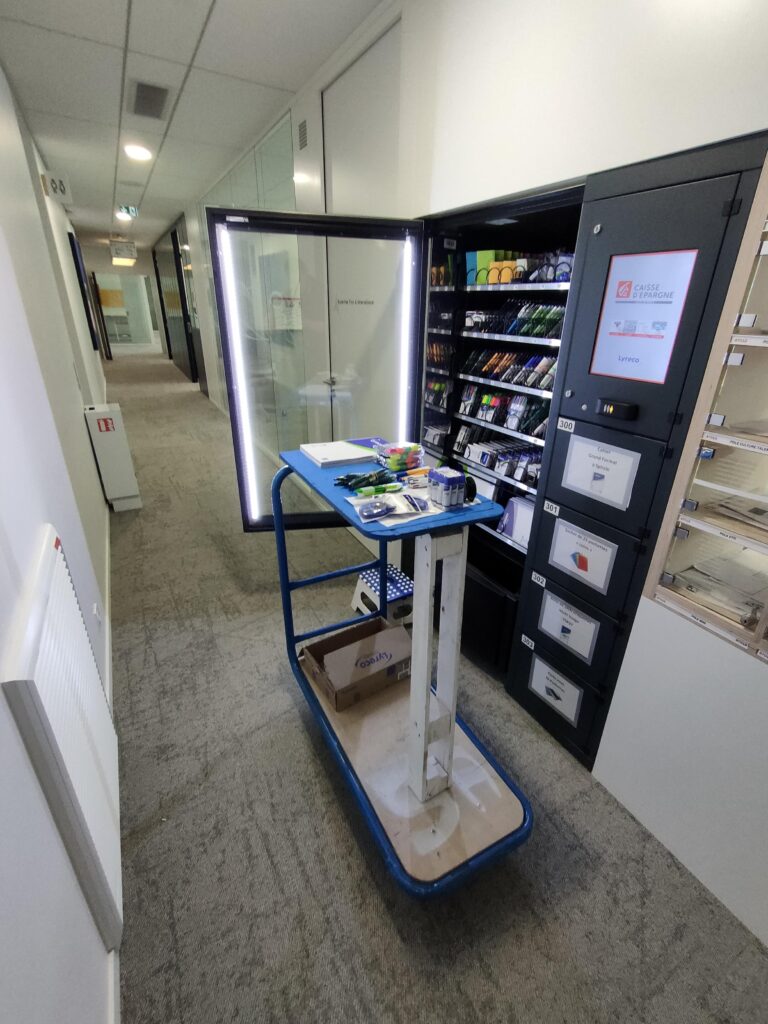
Restock a vending machine the wrong way and you waste hours driving to machines that do not need visiting, overstock products that do not sell, understock the ones that do, and burn fuel on inefficient routes that zigzag across town. Restock a vending machine the right way and every visit is purposeful, every product you load has a reason for being there, and your route covers maximum machines in minimum time. The difference between the two approaches is not talent — it is system. This guide gives you the system.
Whether you operate 1 machine or 50, the principles of efficient restocking are the same: know what each machine needs before you arrive, carry the right stock in the right quantities, follow a planned route, execute a consistent process at each stop, and track everything so your next visit is even more efficient. The guidance here reflects operational best practices consistent with recommendations from the Automatic Vending Association (AVA).
How to restock a vending machine — before you leave the warehouse
The most efficient way to restock a vending machine starts long before you reach the machine. Preparation is where the real time savings happen. Here is what professional operators do before every route:
1. Check stock levels before you drive
If your machines have telemetry, check real-time stock levels on your dashboard. You will know exactly which slots are empty, which are running low, and which are still full. This tells you precisely what to load into your vehicle — and which machines to skip entirely because they do not need a visit yet. If you do not have telemetry, use your sales data and restocking history to predict what each machine needs based on its typical consumption pattern. Even a simple spreadsheet beats guessing.
2. Pre-pick your stock by machine
Load your vehicle with stock organised by machine, not by product. Use labelled crates, bags, or sections of your van — one per machine on today’s route. Each crate contains exactly what that machine needs: the right products in the right quantities. When you arrive at each stop, you grab one crate and go. No rummaging through mixed stock, no mental maths, no forgotten items. This single habit transforms how efficiently you restock a vending machine.
Pre-picking reduces time at each machine by 40–60%. Instead of standing in front of the machine deciding what goes where, you arrive with a pre-assembled kit that matches the machine’s needs. Load, rotate, close, leave. The preparation happens once at the warehouse; the time saving multiplies across every stop.
3. Plan your route geographically
Plot your machines on a map and plan a circular or linear route that minimises backtracking. Free route planning tools and apps can optimise multi-stop routes automatically. The goal is simple: visit every machine that needs restocking in the shortest possible driving distance. A 10-machine route that is planned geographically can save 30–60 minutes and significant fuel compared to the same 10 machines visited in the order you happen to think of them.
How to restock a vending machine — the restocking process
Once you arrive at a machine, follow a consistent process every time. Consistency means speed, and speed means more machines per hour. Here is the step-by-step process experienced operators use to restock a vending machine efficiently:
- Open and inspect: Open the machine. Before loading anything, do a quick visual inspection — is the cooling system running, are the vend motors functioning, is the coin mechanism or card reader working, are there any jams or error codes?
- Collect cash (if applicable): Empty the coin box first. Record the amount. This takes 60 seconds and should not be skipped or left until after restocking.
- Remove expired or slow-selling products: Pull anything past its sell-by date. Pull products that have been sitting for multiple visits without selling — they are taking up space that a better-selling product could use.
- Rotate existing stock: Move older products to the front of each slot and place new stock behind them. This is standard FIFO (first in, first out) stock rotation that every food retailer uses. It prevents waste and ensures customers always get the freshest products.
- Load new stock: Fill each slot to its par level (more on par levels below). Work from your pre-picked crate — every product you load should have a designated slot.
- Check pricing: Verify that the prices displayed on the machine match your current pricing. Update any labels or digital prices that have changed since your last visit.
- Clean the exterior: Wipe down the selection panel, the display screen or window, and the delivery bin. A clean machine sells more than a dirty one — it takes 30 seconds and makes a visible difference.
- Close and test: Close the machine, make a test vend if possible, and confirm everything is working before you leave.
- Record what you loaded: Note what you stocked, what you removed, and any issues. This data drives your next pre-pick and your product mix decisions.
Starting your first vending route?
Browse our machines — all tested, serviced, and ready for your first placement.
Browse Machines →How to restock a vending machine — understanding par levels
A par level is the maximum quantity of each product you keep in a given slot. Setting the right par levels for every slot in every machine is the foundation of efficient restocking. Par levels answer the question “how much do I put in?” so you do not have to think about it at every visit.
Par level too high
Overstocking
- Problem: Products expire before selling
- Cash impact: Waste eats your margins
- Cause: Stocking to capacity regardless of demand
- Fix: Set pars based on actual sales between visits
Par level too low
Understocking
- Problem: Popular items sell out before next visit
- Cash impact: Lost sales, frustrated customers
- Cause: Not matching stock to demand
- Fix: Increase pars for fast-movers or visit more often
How to set par levels
The formula to set the right par level when you restock a vending machine is straightforward: par level = average units sold between visits × 1.25. The 1.25 multiplier adds a 25% buffer for demand variation. If a product sells 8 units between your weekly visits, set the par at 10. You will rarely run out, and you will rarely have significant unsold stock sitting for multiple cycles.
Review and adjust par levels monthly. Sales patterns change with seasons, weather, staffing changes at the location, and product trends. A product that sold 12 units per week in winter might sell 6 in summer (or vice versa for cold drinks). Static par levels become inaccurate over time — dynamic adjustment keeps your restocking precise.
How to restock a vending machine — optimising your product mix
Every time you restock a vending machine, you have an opportunity to improve your product mix based on what actually sold since your last visit. The data you collect during restocking — what sold, what did not, what expired — should directly influence what you load next time.
- Double down on winners: If a product consistently sells out before your next visit, give it more slots or a more prominent position in the machine. Your best-selling items should have the best visibility.
- Replace chronic underperformers: If a product has been in the machine for 3–4 visits and consistently fails to sell, replace it. Every slow-selling slot is a missed revenue opportunity. Test a new product in that slot and measure the result.
- Match products to the location: An office full of health-conscious professionals wants different products than a factory floor. Pay attention to what sells and what does not — the machine’s sales data tells you what this specific customer base wants, regardless of what you think should sell.
- Rotate seasonal items: Swap in cold drinks and ice creams for summer, hot drinks and comfort snacks for winter. Seasonal relevance drives impulse purchases every time you restock a vending machine.
“The product mix is never finished. Every restock is a chance to test, learn, and improve. The operators who treat their machines like static installations earn less than the ones who treat them like living experiments.”
How to restock a vending machine — common mistakes
Visiting every machine on a fixed schedule
A high-traffic machine that sells out in 3 days should not be on the same weekly schedule as a low-traffic machine that takes 2 weeks to sell through. Flexible, demand-driven scheduling — ideally powered by telemetry data — is always more efficient than a rigid “every Tuesday” route. Fixed schedules mean you visit machines that do not need you and neglect machines that do.
Stocking to full capacity every time
Filling every slot to maximum feels productive but creates waste. Products expire, variety suffers (because you fill slow slots instead of removing them), and you carry more stock than necessary in your vehicle. Restock a vending machine to par levels, not to capacity.
Not rotating stock (FIFO)
Loading new products in front of old ones means the oldest stock sits at the back indefinitely until it expires. Always pull old stock forward and place new stock behind. This takes 30 seconds per slot and prevents a significant source of waste.
Ignoring the machine’s condition
Restocking is also your maintenance check. A machine with a blown bulb, a jammed slot, a dirty window, or a faulty card reader is losing sales every hour. Spend 2 minutes inspecting the machine at every visit and fix small issues on the spot before they become big problems.
Not recording what you load
If you do not track what goes into the machine, you cannot calculate sales, set accurate par levels, identify trends, or optimise your product mix. A simple spreadsheet or a note on your phone after each stop transforms your operation from guesswork to data-driven decision making every time you restock a vending machine.
Efficient restocking is the highest-leverage skill in vending. Your machine, your product, and your location are fixed assets. How efficiently you restock a vending machine — the route, the process, the data — is the variable that determines whether those assets generate maximum profit or maximum waste. Master restocking, and everything else in your vending business improves.
Common questions — restock a vending machine
Building your vending route? Start with the right machines.
Browse our stock of 70+ tested machines — new and refurbished, all ready for placement. Or get in touch and we’ll help you choose the right unit for each location.