

Vending machine allergens: 7 best proven safety rules
The 14 allergens, UK labelling rules, hot drink risks, Natasha’s Law and how to keep every customer safe.
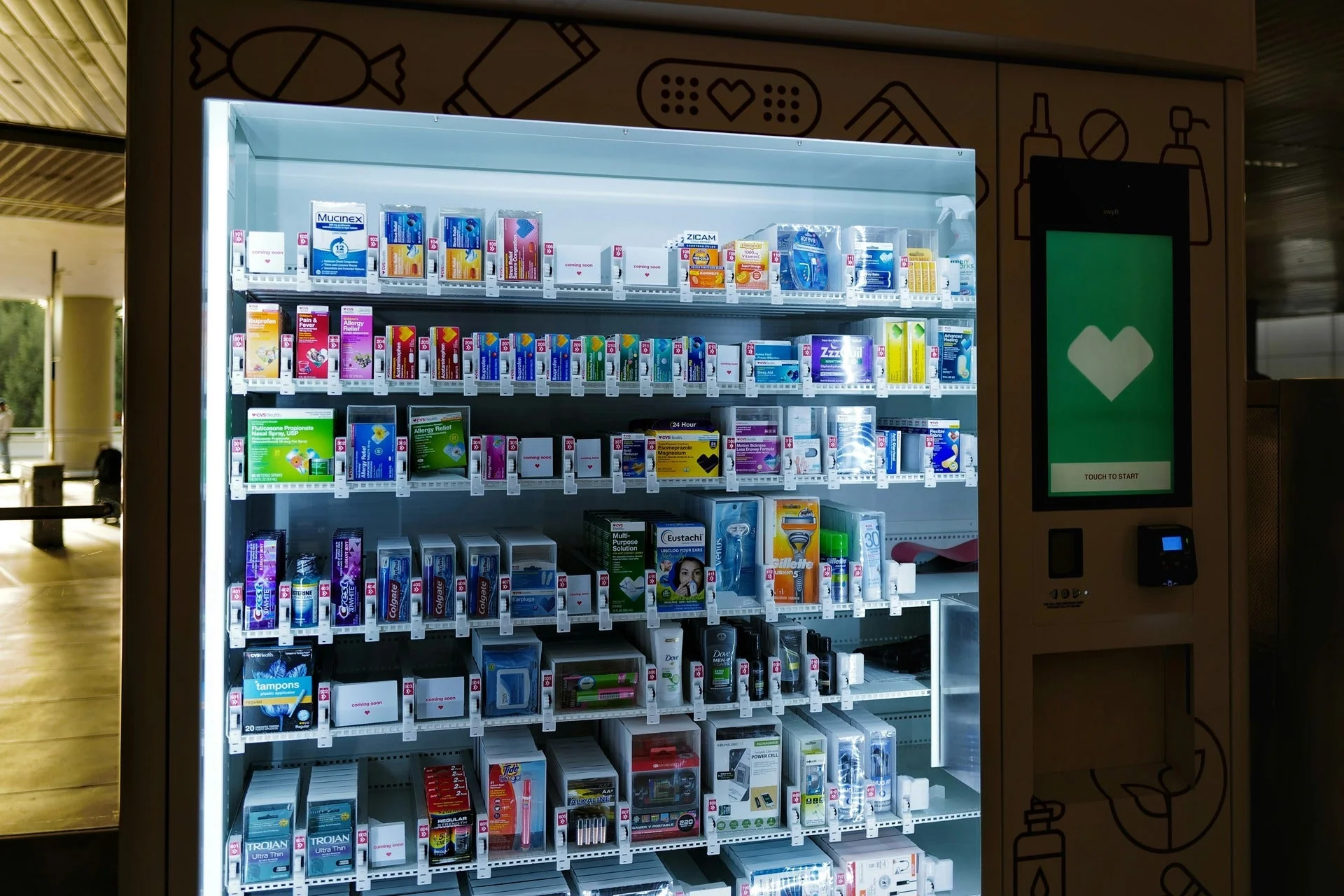
Millions of people in the UK live with food allergies, and severe reactions can be fatal. For anyone running a machine that sells food or drink, managing vending machine allergens is a legal duty and a safety essential.
This guide explains the 14 allergens, the UK labelling rules for vending, the hidden risks in hot drinks machines, how Natasha’s Law applies and the practical steps that keep customers safe.
Quick answer: UK law requires allergen information for all food and drink sold from vending machines. Prepacked products need full labels, while non-prepacked items such as hot drinks need clear allergen information at the machine.
The biggest hidden risk is cross-contact in hot drinks machines, especially milk.
Machines that make labelling easy
Glass-front machines let customers read every label before buying. Free UK delivery, installation and 0% payment plans.
Browse Machines →Why allergens matter in vending
A vending machine has no shop assistant to answer questions about vending machine allergens. Customers rely entirely on the information they can see before they pay.
That makes vending machine allergens a particular risk. If the label is hidden, the chart is missing or the information is wrong, an allergic customer has no way to check.
Reactions to vending machine allergens can range from mild rashes to anaphylaxis, which can be life-threatening. Good allergen management protects customers, your reputation and your business.
The 14 allergens
UK law lists 14 allergens that must be declared when they are used as ingredients. These are the vending machine allergens every operator should know.
| Allergen | Common in vending products |
|---|---|
| Cereals containing gluten | Biscuits, cereal bars, sandwiches, pastries |
| Milk | Chocolate, hot drinks, milkshakes, crisps flavourings |
| Eggs | Cakes, mayonnaise, some sandwiches |
| Peanuts | Chocolate bars, snack mixes |
| Tree nuts | Cereal bars, chocolate, protein bars |
| Soya | Chocolate, protein snacks, some drinks |
| Sesame | Seeded bars, crackers, bread |
| Mustard | Sandwiches, flavoured crisps |
| Celery | Soups, savoury snacks, seasonings |
| Fish, crustaceans, molluscs | Sandwiches and fresh food |
| Lupin | Some breads and gluten-free products |
| Sulphur dioxide and sulphites | Dried fruit, some drinks |
Vending machine allergens: 7 best proven safety rules
1. Make labels visible before purchase
Customers should be able to check vending machine allergens before they pay. Glass-front machines help because people can see the product and often read the pack.
2. Add an allergen chart
Where labels are hard to read, display a simple chart of vending machine allergens for each selection. Update it whenever stock changes.
3. Treat hot drinks as non-prepacked
Drinks made inside the machine have no pack label. Allergen information for every drink must be shown clearly near the buttons.
4. Control cross-contact
Clean mixing bowls, nozzles and dispensers regularly to stop milk and other vending machine allergens carrying over between drinks or products.
5. Keep the planogram and chart matched
If a product moves to a different slot, the allergen information must move with it. Mistakes often happen during restocking.
Our vending machine planogram guide explains how to keep layouts consistent.
6. Check recipes and substitutions
Manufacturers change recipes, and wholesalers sometimes swap brands, which can change vending machine allergens without warning. Check the label on every new delivery, not just the first one.
7. Train everyone who restocks
Anyone who fills the machine should understand vending machine allergens and know how to update charts and labels.
UK labelling rules for vending
The main rules on vending machine allergens come from the Food Information Regulations 2014 and retained food information law. The Food Standards Agency allergen guidance explains them in detail.
Prepacked food and drink
Most vending products, such as crisps, chocolate and canned drinks, are prepacked by the manufacturer. They must carry a full ingredients list with the 14 allergens emphasised, usually in bold.
Because a vending machine is a form of selling where customers cannot handle the product first, mandatory information should be available before purchase. Visible labels or an allergen chart help meet this.
Non-prepacked food and drink
Hot drinks, soups and anything made inside the machine are non-prepacked, and they carry some of the highest vending machine allergens risk. Allergen information for these must be provided clearly, usually on the machine itself.
Prepacked for direct sale
Food packed on the same premises where it is sold, such as sandwiches made in a workplace kitchen and sold in a fridge on site, falls under Natasha’s Law. These items need a full ingredients list with allergens in bold.
Natasha’s Law and vending
Natasha’s Law came into force in England in October 2021. It was introduced after Natasha Ednan-Laperouse died from an allergic reaction to sesame in a baguette that did not list it on the packaging.
The law applies to food prepacked for direct sale. For vending, this mainly affects operators who make fresh food themselves and sell it from machines at the same site.
If your fresh food comes from a manufacturer or supplier off site, it is normally fully prepacked and labelled already. Check with your local authority if you are unsure which category applies.
The hidden risk in hot drinks machines
Hot drinks machines are one of the biggest sources of vending machine allergens risk. Many use milk powder, and residues can carry over into the next drink.
In 2020, trading standards in Torfaen, Wales tested drinks from ten businesses using hot drinks machines. Half were not providing the required allergen information, and two drinks that should not have contained milk had enough to cause a reaction in severely allergic people.
Key lesson: if cross-contact cannot be ruled out, tell customers clearly before they buy. Verbal information from staff is not enough on its own.
- Clean mixing bowls, whippers and nozzles daily or as the manufacturer advises.
- Run a rinse cycle between milk and non-milk drinks where possible.
- Display a clear warning if milk cross-contact is possible.
- Keep allergen information for every ingredient used in the machine.
Our coffee vending machine for business guide covers choosing and maintaining hot drinks machines.
Fresh food and smart fridges
Smart fridges and fresh food machines sell sandwiches, salads and meals, which often contain several vending machine allergens at once. These products need careful labelling and stock control.
- Buy from suppliers who provide full allergen labels.
- Keep products in date and at safe temperatures.
- Never relabel or repackage food without the right labels.
- Check that labels face outwards so customers can read them.
See our fresh food vending machine guide and the 24H smart vending fridge.
Vending machine allergens by machine type
Different machines carry different risks. Knowing where vending machine allergens are most likely to cause problems helps you focus your checks.
| Machine type | Main allergen risks | Key control |
|---|---|---|
| Snack machine | Nuts, milk, gluten, soya in chocolate and bars | Visible labels and accurate charts |
| Cold drinks machine | Milk in milkshakes, sulphites in some drinks | Check labels on new lines |
| Hot drinks machine | Milk cross-contact, soya, nuts in flavoured syrups | Daily cleaning and clear warnings |
| Fresh food fridge | Gluten, eggs, milk, mustard, fish, sesame | Supplier labels and date control |
| Combo machine | Mixed risks across snacks and drinks | One clear chart for every slot |
Writing a simple allergen policy
A short written policy keeps everyone consistent. It does not need to be long, but it should cover how you manage vending machine allergens from delivery to sale.
- Who checks labels when stock arrives.
- How allergen charts are created and updated.
- How often hot drinks parts are cleaned.
- What to do if a customer reports a reaction.
- How staff and volunteers are trained.
Review the policy at least once a year, or whenever you add new machines or products. Keep a copy with your food hygiene records.
If a customer has a reaction
Even with good controls, problems can happen. Know what to do if someone reports a reaction linked to vending machine allergens.
- If symptoms are severe, call 999 straight away.
- Remove the product from sale until you have checked it.
- Record the product, slot, batch and time of sale.
- Check the label and allergen chart for errors.
- Contact the supplier if the label may be wrong.
- Report serious incidents to your local authority if required.
Learning from incidents helps prevent them happening again. Update your checks and charts based on what you find.
Training for restockers
Whoever fills the machine is the last line of defence against vending machine allergens errors. Simple training makes a big difference.
The Food Standards Agency offers free online allergen training for food businesses. It covers the 14 allergens, labelling and cross-contact in plain language.
Keep a record of who has completed training. Refresh it when the rules change or a new person joins.
Who is responsible?
The food business operator running the machine is responsible for vending machine allergens. That is usually the vending operator or the business that owns and stocks the machine.
If you host a machine run by an operator, check they manage vending machine allergens properly and keep the machine clean. Your agreement should make responsibilities clear.
If you own and stock the machine yourself, you are the food business operator. You may also need to register with your local council as a food business.
How to display allergen information
Clear presentation makes vending machine allergens easy for customers to check. There are several good options.
| Method | Best for | Notes |
|---|---|---|
| Visible product labels | Glass-front snack and drinks machines | Face labels outwards where possible |
| Allergen chart on the machine | All machines | Must match current stock |
| Selection screen information | Touchscreen and hot drinks machines | Show allergens before payment |
| QR code to full details | Extra information | Use alongside on-machine information |
Keep charts of vending machine allergens simple, with large text and each allergen clearly marked. A cluttered sign is easy to miss.
Precautionary “may contain” labels
Many products carry warnings such as “may contain nuts”, which add to the picture of vending machine allergens. These are voluntary and should only be used where there is a real risk of cross-contact.
For vending, precautionary warnings are most useful on hot drinks machines and machines selling loose or fresh items. They should never replace proper cleaning and allergen controls.
Allergen-friendly stock
Offering a few products free from common vending machine allergens helps more people buy from your machine. It can also lift sales at sites with many health-conscious customers.
- Gluten-free snack bars and crisps.
- Nut-free chocolate and sweets.
- Dairy-free drinks and plant-based snacks.
- Plain water and simple soft drinks.
Place products free from key vending machine allergens in clearly marked slots. Our healthy vending machine guide has more stock ideas.
Free-from and vegan claims
Claims such as “gluten-free”, “nut-free” or “vegan” need care. A vegan product is not automatically safe for people with allergies, as it may be made alongside milk or eggs.
Only use free-from claims printed by the manufacturer. Never add your own labels claiming a product is free from vending machine allergens unless you can prove it.
If you group free-from products together, keep them away from slots with loose or leaking products. That reduces the chance of vending machine allergens spreading through spills.
Schools and workplaces
Schools and workplaces need extra care with vending machine allergens. Children may not read labels carefully, and staff may assume a machine is safe because it is on site.
Many schools are nut-free, so check the school’s policy before stocking. Our vending machines for schools guide covers the wider rules for schools.
In offices, ask whether any staff have severe allergies, and plan vending machine allergens around them. A simple stock adjustment can make the machine safe for everyone. See our vending machines for offices guide.
Restocking checklist
Most mistakes with vending machine allergens happen when a machine is restocked. A quick checklist on every visit cuts the risk.
- Check each new product label against the allergen chart.
- Keep each product in its usual slot where possible.
- Update the chart straight away if a product changes.
- Clean shelves, spirals and dispensers.
- Remove out-of-date or damaged stock.
- Record the visit and any changes made.
Our how to restock a vending machine and vending machine expiry dates guides have full routines.
Penalties for getting it wrong
Local authority trading standards and environmental health officers enforce the rules on vending machine allergens. They can issue improvement notices and, for serious failures, prosecute.
Fines can be unlimited, and a business can lose its reputation overnight after a reaction to vending machine allergens. The greatest cost, though, is the harm to a customer.
Handling customer questions
Customers sometimes contact operators about vending machine allergens. Make it easy for them to reach you.
- Show a phone number or email on the machine.
- Keep up-to-date allergen records for every product.
- Reply quickly and accurately, without guessing.
- If you cannot confirm a product is safe, say so.
Choosing a machine that helps
Some machines make vending machine allergens easier to manage. Glass-front models let customers read labels, while touchscreen machines can show allergen details for each product.
Browse our snack machines, the touchscreen coffee vending machine or all vending machines for sale. Spread the cost with our 0% payment plans.
Quick monthly audit
Once a month, walk round each machine with a short audit. Check every label, compare the chart with the stock, inspect hot drinks parts and confirm your contact details are still visible.
A ten-minute audit catches most problems with vending machine allergens before a customer does. Keep a dated record of each check.
Common mistakes
- No allergen information for hot drinks.
- Allergen charts that no longer match the stock.
- Products moved to new slots without updating information.
- Relying only on a QR code.
- Skipping daily cleaning of hot drinks parts.
- Not checking labels when suppliers change recipes.
The verdict on vending machine allergens
Managing vending machine allergens comes down to clear information, good cleaning and careful restocking. Prepacked products need visible labels, and non-prepacked items such as hot drinks need clear allergen details at the machine.
Build allergen checks into every visit and you protect both your customers and your business. If you need advice on choosing machines that make labelling easier, contact our team.
FAQ
Frequently asked questions
Yes. Food and drink sold from vending machines must meet UK allergen rules. Prepacked products need full labels, and allergen information for non-prepacked items such as hot drinks should be clearly available at the machine.
The 14 allergens are celery, cereals containing gluten, crustaceans, eggs, fish, lupin, milk, molluscs, mustard, tree nuts, peanuts, sesame, soya and sulphur dioxide or sulphites.
They can be. Milk powder and other ingredients can carry over between drinks, and a 2020 trading standards study found milk in drinks that were not supposed to contain it.
Natasha’s Law covers food that is prepacked for direct sale, meaning packed on the same premises where it is sold. If you make sandwiches on site and sell them from a machine at that site, full ingredient labels with allergens in bold are needed.
The food business operator running the machine is responsible for allergen information and controls. Site owners should check that the operator meets the rules.
Local authorities can issue improvement notices, and serious failures can lead to prosecution and unlimited fines. More importantly, a mistake can cause a serious or fatal allergic reaction.
A QR code can help, but it should not be the only source, as not every customer has a phone or signal. Keep clear allergen information on the machine or product itself.
Make sure product labels are visible or provide a clear allergen chart on the machine. For hot drinks and freshly prepared items, display allergen details for every selection near the buttons.
Use precautionary warnings only where there is a real risk of cross-contact that cannot be removed. They should not replace good allergen controls.
Not necessarily. Many healthy snacks contain nuts, seeds, soya, milk or gluten, so allergen labelling matters just as much.
Need allergen-friendly machines?
Glass-front and touchscreen machines with free UK delivery, installation and 0% payment plans.
[…] customers with allergies must still be able to see full allergen information. Read our vending machine allergens guide for the […]
[…] vending machine allergens guide covers the […]
[…] read labels through the glass, so offer allergen information on request or on a sign. Our vending machine allergens guide covers the […]