

Vending machine security: 7 critical theft prevention tips
How to protect your machines, stock and takings from break-ins, vandalism and misuse.
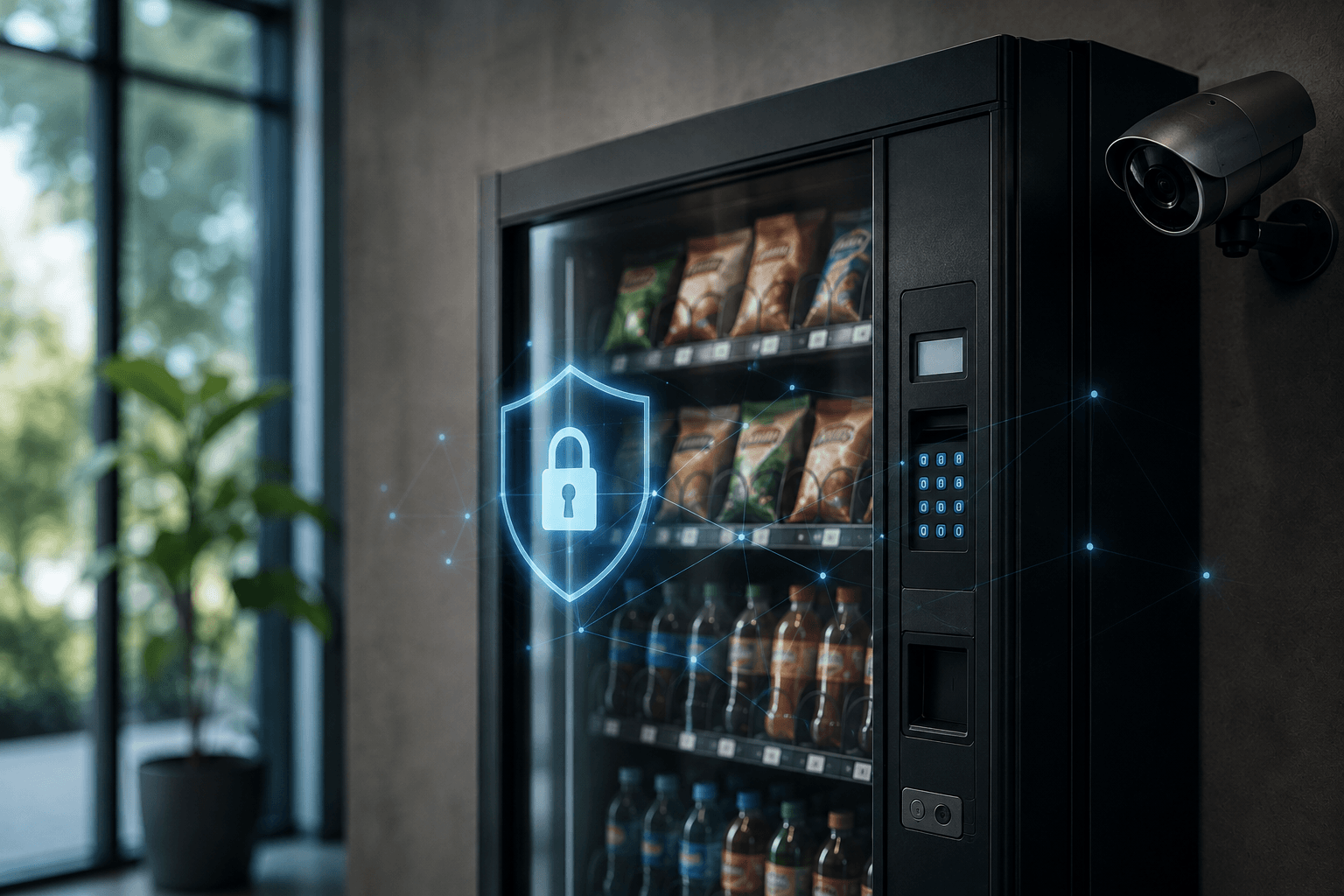
Vending machine security matters because an unattended box of cash and stock can attract the wrong kind of attention. Break-ins, vandalism and pilfering cost operators money and goodwill.
This guide covers 7 critical vending machine security tips, from placement and cashless payment to locks, anchoring, alerts and insurance.
Cashless machines are safer machines
Card payments and telemetry for £10 a month plus 2%, with free UK delivery and installation.
View Machines For Sale →Why vending machine security matters
A break-in costs far more than the cash taken. Repairs, lost stock, downtime and lost sales usually add up to much more.
Repeated problems can also cost you the site. Site owners don’t want a damaged machine in their reception or break room.
Good vending machine security protects your income, your machines and your relationships with the businesses that host them.
It also protects your customers. A safe, well-kept machine in a well-lit spot makes people comfortable using it, especially late at night, and that’s good for sales.
7 critical vending machine security tips
These seven tips cover the vending machine security measures that make the biggest difference.
1. Choose the location carefully
Place machines in busy, well-lit areas with people around, ideally within sight of staff or CCTV. Quiet corners and hidden corridors invite trouble.
2. Go cashless
The less cash inside, the less reason to break in. Card and phone payments also leave a clear record of every sale, as our contactless vending machine guide explains.
3. Fit high-security locks
Standard locks can be picked or forced. Upgrade to high-security locks and keep tight control of who holds keys.
4. Anchor the machine
Bolting the machine to the floor or wall stops it being tipped, rocked or moved. That’s especially important outdoors and in public spaces.
5. Use alerts
Telemetry can warn you when a door opens out of hours or the machine reports a fault. Early warning means faster action.
Alerts are one of the cheapest vending machine security upgrades, because they come with most card reader setups.
6. Vary cash collections
If you still collect cash, avoid predictable times and routines. Empty cash boxes regularly so large amounts never build up.
7. Insure properly
Make sure your policy covers theft, vandalism and stock. Our guide to vending machine insurance explains what to look for.
“The best vending machine security isn’t a stronger lock. It’s a machine with nothing worth stealing, in a place where someone is always watching.”
Placement: your first line of defence
Location does more for vending machine security than any device. Machines in staffed receptions, busy break rooms or covered by CCTV are rarely targeted.
Avoid isolated spots, especially near exits where someone could damage the machine and leave quickly. Good lighting at night makes a big difference.
Our guide to vending machine locations covers placement in more detail. The police-backed Secured by Design initiative also offers useful general security guidance.
Outdoor machines
Outdoor machines need the strongest vending machine security. Choose a weather-protected setup like our outdoor dual vending station with canopy, anchor it securely and light the area well.
Go fully cashless outdoors wherever possible. A visible “no cash kept in this machine” sign can deter opportunists too.
Check outdoor vending machine security after storms too, as wind and rain can loosen fixings.
Low Risk
Secure Setup
- Location: Staffed, busy and lit
- Payment: Cashless
- Locks: High-security
- Fixing: Anchored
- Monitoring: CCTV and alerts
High Risk
Vulnerable Setup
- Location: Isolated or dark
- Payment: Coin only
- Locks: Standard
- Fixing: Freestanding
- Monitoring: None
Vending machine security by site type
Different sites need different levels of vending machine security.
Offices and staffed workplaces
Usually low risk, because machines sit inside secure buildings with controlled access. Standard locks and cashless payment are typically enough.
Warehouses and factories
Mostly secure, but night shifts and large spaces can leave machines unwatched. Place them in break areas covered by CCTV, and see our guide to vending machines for warehouses for placement ideas.
Public sites
Transport hubs, leisure centres and retail spaces carry more risk. Anchoring, high-security locks and CCTV are essential parts of vending machine security here.
Outdoor and unattended sites
Car washes, forecourts and charging hubs face the highest risk. Go fully cashless, anchor the machine, light the area and use door-open alerts.
Vandalism and misuse
Not every vending machine security problem is theft. Rocking, kicking and forcing machines happens when customers lose money or products get stuck.
Reliable machines and quick refunds reduce frustration. Clear contact details on the machine let customers report problems instead of taking them out on it.
Regular servicing keeps jams to a minimum. Our guide to vending machine maintenance covers the routine checks.
Technology that helps
Modern machines have more built-in protection than older ones. Stronger cabinets, reinforced doors and electronic locks all improve vending machine security.
Telemetry adds remote eyes on every machine. Door-open alerts, sales data and fault reports show when something isn’t right, often before you’d notice on a visit.
Some operators add small security cameras or alarms to high-risk machines. On busy sites, simply making cameras visible can deter most opportunists.
When upgrading an older machine, a card reader is often the best single improvement. It reduces cash inside and adds the data that makes reconciliation easy.
Card reader security
Card readers improve vending machine security, but they need checking too. Inspect the reader during each visit for signs of tampering, loose parts or anything attached that shouldn’t be there.
Use reputable payment providers and keep software up to date. Our guide to cashless vending payment covers the main options.
Our take: combine smart placement, cashless payment and anchoring. Those three steps prevent most vending machine security problems before any lock is tested.
Staff and insider theft
Not all losses come from outside. Where several people hold keys or collect cash, gaps between takings and records can appear.
Limit keys to the fewest people possible and log who has them. Telemetry and card data make it easy to reconcile what each machine sold against what was collected, which is a big part of vending machine security on larger routes.
Rotate collection duties and review figures regularly. Most people are honest, but clear controls protect everyone, including your staff.
Keep a simple log of every collection, signed by whoever made it, so any discrepancy can be traced quickly.
A quick security checklist for every visit
Build vending machine security into every restock. It takes a minute and catches problems early.
- Check locks, hinges and the door seal for damage
- Inspect the card reader for tampering
- Confirm the anchoring is still secure
- Look for scratches, dents or pry marks
- Make sure lighting and CCTV around the machine still work
Note anything unusual and tell the site owner. Small signs of tampering often come before a full break-in.
The real cost of poor security
Weak vending machine security costs more than the cash taken. A forced door can mean replacement parts, an engineer visit and days without sales.
Repeated incidents can also raise insurance premiums or lead a site owner to end your agreement. Prevention is almost always cheaper than repair.
Investing in vending machine security early protects the long-term value of every site you win.
Agreeing responsibility with the site
Your placement agreement should say who’s responsible for vending machine security, damage and insurance. Without it, disputes can follow a break-in.
Ask whether the site has CCTV, out-of-hours security or staff on site. Our guides to placement agreements and vending machine contracts explain what to include.
What to do after an incident
If a machine is damaged or broken into, act quickly:
- Make the machine safe and switch off power if it’s damaged
- Photograph the damage and note what was taken
- Report it to the police if a crime has occurred
- Tell the site owner and check any CCTV
- Contact your insurer with the details
Then review your vending machine security plan for that site. A single incident is often a sign that placement or payment needs changing.
Choosing a secure machine
When buying, ask about the cabinet build, the lock type and whether the machine can be anchored. Good vending machine security starts with a well-built machine.
Check whether card payment and telemetry are included or can be added easily. A machine ready for cashless trading from day one is far easier to protect.
For tight or exposed spaces, a compact unit like our compact snack and drink machine is easier to place in a supervised spot than a large cabinet.
Buying from Irelley
Browse our vending machines for sale, or contact our team about card-ready, secure setups for your site. We deliver and install free anywhere in the UK, within 24 hours.
Every machine comes with a 12-month warranty covering parts and remote support, as set out in our vending machine warranty.
FAQ
Frequently asked questions
Place it in a well-lit, busy or CCTV-covered area, go cashless so there’s little to steal, fit high-security locks and anchor the machine. Door-open alerts add an early warning.
Yes. A machine with little or no cash inside is a far less attractive target, and card payments also leave a clear record of every sale.
In public, outdoor or unattended areas, anchoring the machine to the floor or wall makes it much harder to tip, move or steal.
It can be, depending on your policy. Check that cover includes theft, vandalism and stock, and whether the site owner’s insurance covers the machine.
Make the machine safe, photograph the damage, report it to the police if a crime has occurred, tell the site owner and contact your insurer.
Safer machines, steadier income
Card-ready machines, free UK delivery and installation, and a 12-month warranty.