

Fresh food vending machine UK: 7 critical tips
How fridge vending works, the temperature rules, shelf life and stock, so your site can offer proper food around the clock.
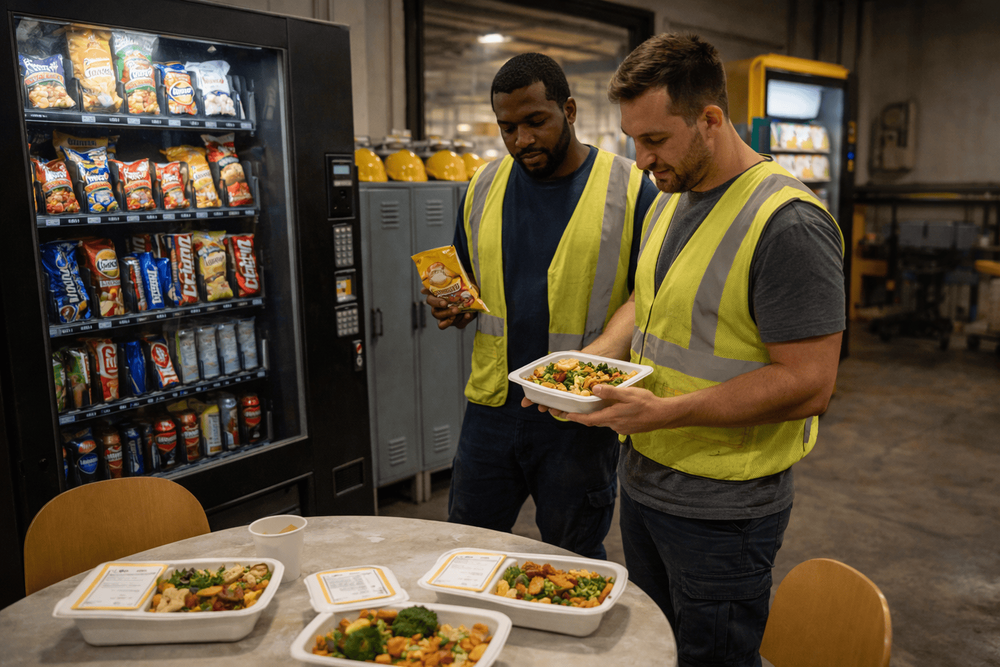
A fresh food vending machine sells proper food from a chilled cabinet: sandwiches, salads, fruit, yoghurts and ready meals. It’s the closest thing to a 24-hour canteen that doesn’t need staff.
This guide covers 7 critical tips for running a fresh food vending machine, how fridge vending works, the temperature rules, shelf life, what to stock, where it works best and what it costs.
Browse fresh food machines
Fresh produce, healthy combo and chilled machines, delivered and installed free anywhere in the UK.
View Machines For Sale →How a fresh food vending machine works
Unlike a snack machine, the whole cabinet is refrigerated. Products sit on shelves or spirals at a controlled cold temperature until someone buys them.
Many machines use a lift or a locker-style door rather than a spiral drop. That protects fragile items such as salads, pots and glass bottles.
Check how easy the machine is to clean and restock, too. A fresh food vending machine is opened far more often than a snack machine, so good access saves time on every visit.
Good machines monitor their own temperature and can alert the operator if it rises. That matters, because a fresh food vending machine is only as good as its fridge.
Some newer cabinets go further, with a touchscreen that shows ingredients, allergens and calories for each product. That helps customers choose quickly and confidently.
7 critical tips for a fresh food vending machine
Use these tips to run a fresh food vending machine that sells well and stays safe.
1. Keep it cold, always
In England, chilled food must be kept at 8°C or below, and many operators aim for 5°C or below. Check and record temperatures regularly.
2. Register as a food business
Selling food through vending means you should register with your local council as a food business. Do it at least 28 days before you start trading.
3. Restock little and often
Fresh food has short shelf lives. Smaller, more frequent deliveries cut waste and keep the range looking fresh.
4. Rotate stock carefully
Put new stock at the back and move older items forward. Remove anything at or past its use-by date at every visit.
5. Label clearly
Customers can’t ask about ingredients, so allergens, calories and dietary information need to be on the pack or the machine’s screen.
6. Track waste
Record what you throw away each week. It shows which lines to cut and which days need less stock.
Even a simple spreadsheet works well at first.
7. Choose the right site
A fresh food vending machine needs steady demand to keep waste low. Busy sites with long hours are the best fit.
“Fresh food vending lives and dies on two things: temperature and turnover. Get both right and it’s one of the best services on site.”
Is it worth it for your site?
A fresh food vending machine suits sites where people need a real meal and have few other options. If staff can easily walk to a café, a snack and drinks machine may be enough.
As a rough guide, the busier the site and the longer its hours, the better a fresh food vending machine performs. Quiet sites risk throwing away more stock than they sell.
Test demand before committing. Start with a smaller fresh range in a healthy combo, track sales and waste, then move to a dedicated fresh food vending machine if demand is strong.
What to stock
A good fresh food vending machine range covers meals, lighter options and drinks:
- Meals: sandwiches, wraps, salads, pasta pots and ready meals
- Fruit: whole fruit, fruit pots and prepared fruit
- Dairy: yoghurts, milk drinks and cheese snacks
- Breakfast: overnight oats, granola pots and pastries
- Drinks: water, juices and chilled soft drinks
Include vegetarian, vegan and gluten-free options. Our guide to the best vending machine products has more ideas.
Rotate a few seasonal lines too. Soups and hearty pots sell better in winter, while salads and fruit lead in summer.
Shelf life and waste
Waste is the biggest cost in any fresh food vending machine. Sandwiches and salads may only last a few days, so ordering the right amount matters.
Use sales data to plan orders by day of the week. Many sites sell more on Mondays and mid-week than on Fridays, especially with hybrid working.
Mix shorter-life items with longer-life ones such as whole fruit, yoghurts and some ready meals. That keeps the machine full without overloading on products that expire quickly.
Our guide on how to restock a vending machine covers rotation and planning in more detail.
Sourcing fresh food
Most operators buy from specialist suppliers who make food for vending and retail. Look for consistent quality, clear labelling and shelf lives that suit your restocking schedule.
Local bakeries, delis and caterers can make a fresh food vending machine stand out. Locally made sandwiches or salads often sell better than generic brands.
Whoever supplies the food, check they’re registered and can provide full allergen information. Keep their details on file in case of any food safety query.
Hybrid working and changing demand
Hybrid working means office attendance can swing from busy mid-week days to quiet Mondays and Fridays. A fresh food vending machine needs ordering that follows those patterns.
Order more for peak days and less for quiet ones, and keep longer-life lines on hand for the quieter days. Remote sales data makes this much easier to plan.
Best machines for fresh food
Our fresh produce vending machine is built for chilled food, with a fully refrigerated cabinet for fruit, salads and meals.
For sites that want snacks, drinks and some fresh items together, our healthy vending combo is a flexible option. Bakery items can be sold from a specialist cabinet such as our custom bakery vending machine.
Option 1
Fresh Food Machine
- Cabinet: Fully chilled
- Range: Meals, fruit and dairy
- Shelf life: Short
- Upkeep: Frequent restocking
- Best for: Sites needing proper meals
Option 2
Snack Machine
- Cabinet: Ambient
- Range: Crisps, bars and confectionery
- Shelf life: Long
- Upkeep: Less frequent restocking
- Best for: Quick snacks on any site
Where a fresh food vending machine works best
The strongest sites are busy, have long hours and lack a full canteen:
- Hospitals: night staff and visitors when cafés close
- Offices: especially those without a staff canteen
- Factories and warehouses: shift workers who need a proper meal
- Universities: libraries and halls late at night
- Transport hubs: stations and service areas
For shift-based sites, see our guide to vending machines for warehouses. Our vending machine locations guide covers placement more broadly.
Our take: a fresh food vending machine works brilliantly on busy sites with long hours. Keep it cold, restock little and often, and track waste every week.
Cleaning and food safety
Clean shelves, trays and doors regularly, and wipe up any spills straight away. Check door seals often, because a poor seal makes the fridge work harder and lets temperatures drift.
Keep food in its original packaging, never decant it. Our guides to cleaning a vending machine and vending machine regulations cover the details.
Pricing fresh food
Price meals below nearby cafés and supermarkets’ meal deals where you can, but high enough to cover waste. Customers accept higher prices for convenience, especially late at night.
Meal bundles work well in a fresh food vending machine. A sandwich, snack and drink at a set price lifts the average sale and helps clear stock before it expires.
Consider a small discount on items nearing their use-by date, where your machine allows it. It cuts waste and gives customers a reason to check the machine regularly.
Review prices every few months. Supplier costs change, and a fresh food vending machine needs its margins checked more often than a snack machine.
Costs and margins
A fresh food vending machine usually costs more to buy and run than a snack machine, because it’s fully refrigerated. Waste is the other big cost to manage.
Fresh meals often sell at higher prices, which helps margins. Our vending machine profit calculator helps you model the numbers.
Card payment is essential for meal-price items, with telemetry at £10 a month plus 2% per transaction. Our contactless vending machine guide explains how it works.
Buying from Irelley
Check prices on our vending machines for sale page. Our vending machine payment plans let you pay a 25% deposit and spread the rest over up to 12 months at 0% interest.
Contact our team to talk through a fresh food vending machine for your site. We deliver and install free anywhere in the UK, usually within 24 hours, and every machine comes with a 12-month warranty covering parts and remote support. See our warranty and delivery pages.
FAQ
Frequently asked questions
A fresh food vending machine is a fully chilled cabinet that sells perishable food such as sandwiches, salads, fruit, yoghurts and ready meals, as well as cold drinks.
In England, chilled food must be kept at 8°C or below by law, and many operators aim for 5°C or below. The machine should hold that temperature reliably and alert you if it rises.
It depends on the product. Sandwiches and salads may last only a few days, while whole fruit, yoghurts and some ready meals last longer. Always follow use-by dates.
Hospitals, offices without a canteen, factories, universities and transport hubs, where people want a proper meal at times when cafés are closed.
Anyone selling food through vending should register as a food business with their local council, ideally at least 28 days before trading begins.
Proper food, around the clock
Fresh produce and chilled machines, delivered and installed free anywhere in the UK.
[…] guides to coffee vending machines and fresh food vending machines cover the extra care these machines […]
[…] need more frequent restocking because fresh food has short use-by dates. Our guide to fresh food vending machines covers stock control and the best […]