

Bread vending machine: 9 proven ideas & best tips
What to sell, freshness, labelling, packaging, best UK sites and how bakeries sell bread 24/7.
Running out of bread on a Sunday evening is a familiar problem. The bakery is shut, the shop is miles away and breakfast is tomorrow.
A bread vending machine solves it by selling fresh loaves, rolls and baguettes around the clock. This guide covers how they work, nine ideas for what to sell, freshness, labelling, packaging and the best UK sites.
Quick answer: A bread vending machine sells loaves, rolls and baguettes 24/7, usually from an ambient machine because most bread keeps best at room temperature.
It works best outside bakeries, in villages without a shop and at farm shops. Restock often, label allergens clearly and use packaging that protects crusts.
Sell bread around the clock
The Custom Bakery Vending Machine, tested and delivered free anywhere in the UK.
View the Bakery Machine →What is a bread vending machine?
A bread vending machine is a vending machine stocked with bread instead of snacks or drinks. Customers choose a loaf, pay and collect it from the hatch.
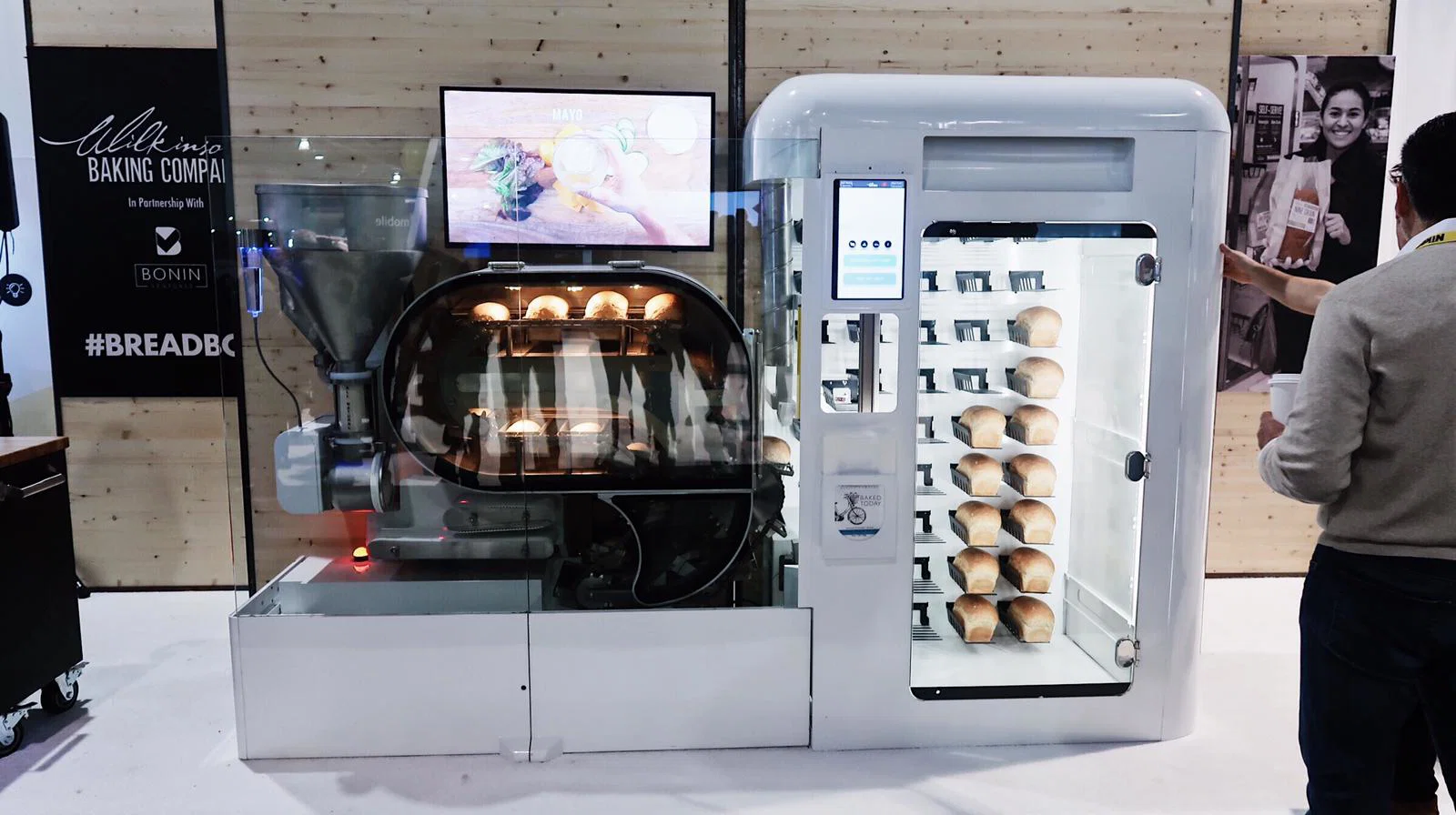
Most machines simply hold bread baked earlier in the day. A few specialist machines go further and finish part-baked bread inside the machine, dispensing it warm.
France led the way with baguette machines. Around 2011, a baker in north-eastern France built a machine that baked part-cooked baguettes and dispensed them hot in seconds, according to an NBC News report on the baguette machine.
Bread vending machine: 9 proven ideas
1. Sliced loaves
White, wholemeal and seeded sliced loaves are everyday staples. Wrapped loaves last longer than crusty bread and vend easily.
2. Crusty loaves
Bloomers, sourdough and farmhouse loaves sell well near bakeries. They’re best sold on the day they’re baked.
3. Baguettes
Long, narrow and popular, baguettes need a machine with tall or long compartments.
4. Rolls and baps
Packs of rolls suit families and barbecues. They’re easy to package and fit most compartments.
5. Croissants and pastries
Breakfast pastries sell strongly in the morning. Pair them with bread for a breakfast range.
6. Sourdough
Sourdough carries a premium price and a loyal following. It’s ideal for artisan bakeries.
7. Gluten-free bread
Gluten-free loaves are hard to find out of hours. Keep them sealed and clearly labelled.
8. Bread with butter, eggs and milk
Combining bread with breakfast basics turns the machine into a mini shop. Chilled items need a chilled section.
9. Speciality breads
Focaccia, rye, brioche and flatbreads add variety and attract food lovers.
Bread vending machine freshness
Freshness matters more for bread than almost any other vending product. Crusty bread can go stale within a day, while wrapped sliced loaves last several days.
Bakeries usually restock a bread vending machine every morning, and sometimes again in the afternoon. Unsold bread can be discounted, donated or used for other products such as croutons or breadcrumbs.
Most bread keeps best at room temperature, not in the fridge, which can make it go stale faster. That’s why most bread machines are ambient.
| Product | Best storage | Typical freshness |
|---|---|---|
| Crusty loaves | Ambient | Best on the day |
| Baguettes | Ambient | Best on the day |
| Sliced wrapped loaves | Ambient | Several days |
| Rolls and baps | Ambient | 1–2 days |
| Croissants and pastries | Ambient | Best on the day |
| Butter, milk, eggs | Chilled or cool | Follow the date |
Bread vending machine allergen labelling
Most bread contains gluten, and many loaves also contain sesame, milk, eggs or soya. Every product in a bread vending machine needs a clear label.
Bread packed by a bakery for direct sale usually counts as prepacked for direct sale. That means a label with the name of the food and a full ingredients list with allergens emphasised.
Our bakery vending machine guide explains labelling in more detail, including how it applies to bakeries selling their own products.
Packaging for a bread vending machine
Crusty bread needs to breathe, while sliced bread needs to stay sealed. Paper bags with windows suit crusty loaves; plastic bags suit sliced bread.
Packaging should fit the machine’s compartments without squashing the bread. Locker-style machines suit large loaves and baguettes better than spirals.
Clear labels on the front help customers choose quickly through the glass.
Best sites for a bread vending machine
- Outside bakeries: sell after closing and before opening.
- Villages without a shop: a lifeline for daily essentials.
- Farm shops: bread alongside meat, eggs and dairy. See farm shop vending machines.
- Housing estates: steady daily demand.
- Campsites and holiday parks: breakfast for holidaymakers. See caravan park vending machines.
- Train stations: commuters buying bread on the way home. See station vending machines.
Bread vending machine for bakeries
For a bakery, a bread vending machine extends opening hours without extra staff. It sells early in the morning, in the evening and on days the shop is closed.
It also helps with waste. Bread that didn’t sell in the shop can go into the machine for evening buyers while it’s still fresh.
Regulars soon learn the machine’s rhythm. Many bakeries find early-morning commuters and late-evening shoppers become a steady second customer base alongside their daytime trade.
A machine outside the shop needs weather protection and good lighting. A wall recess or canopy works well.
Bread vending machine for villages
Many villages have lost their local shop. A bread vending machine, stocked by a nearby bakery, gives residents fresh bread without a drive into town.
Adding milk, eggs and butter turns it into a basic village store. Our milk vending machine guide covers selling milk.
Bread vending machine for farm shops
Farm shops already sell local produce, and many use vending machines for out-of-hours sales. Bread fits naturally alongside eggs, dairy and vegetables.
Our Fresh Produce Vending Machine suits chilled lines, while an ambient bakery machine holds bread and pastries.
Bread vending machine for train stations
Commuters often remember they need bread on the way home. A bread vending machine at a station catches them before they reach the car park or bus stop.
Wrapped sliced loaves, rolls and pastries suit stations best, because they travel well in a bag. Talk to the station operator about space, power and commission.
Working with local bakeries
Operators who don’t bake can partner with a local bakery. The bakery supplies bread each morning, and the operator runs the bread vending machine and the site.
Agree delivery times, labelling and what happens to unsold bread before you start. Local branding helps both sides, because customers like supporting a nearby baker.
Gluten-free and dietary ranges
Customers with coeliac disease or other dietary needs often struggle to find suitable bread out of hours. A few sealed gluten-free loaves can make a machine their first choice.
Keep free-from products sealed and clearly labelled. Claims such as “gluten-free” must be accurate, so check your kitchen controls before using them.
Security and insurance
Outdoor machines can attract vandalism. Choose a strong, well-locked machine, place it in a well-lit spot and consider CCTV.
Check your insurance covers the machine and its stock. Our vending machine security and vending machine insurance guides cover both.
Promoting your machine
Let people know the bread vending machine is there. Add it to your Google Business Profile, post photos of fresh bakes on social media and put a sign in the shop window.
Local Facebook groups and village newsletters are especially effective for village and estate machines.
Getting started
Choose your site, pick a machine with compartments that fit your loaves and register as a food business. Sort out labels and packaging, then start with your best-selling breads.
Track sales for the first month and adjust quantities to cut waste. The right range grows from what customers actually buy.
Choosing a bread vending machine
- Compartment size: big enough for loaves and baguettes.
- Dispensing method: lockers or lifts are gentler than spirals.
- Ambient or chilled sections: depending on whether you add dairy.
- Card payments: essential for higher-priced bread.
- Telemetry: to track sales and cut waste.
- Weather protection: for outdoor sites.
Our guide to choosing the right vending machine covers the wider decision.
Margins and profit
Bread has lower prices than cakes, but it sells every day. Regular buyers who pick up a loaf several times a week create steady income.
Artisan loaves, sourdough and pastries lift the average sale. Waste is the main cost to control, so match quantities to demand.
To estimate your numbers, see our guide to how much vending machines make.
The customer experience
Customers should find bread quickly, pay easily and leave with an undamaged loaf. Clear labels, bright lighting and simple instructions all help.
A short note on the machine saying when it’s restocked, such as “fresh every morning by 7am”, builds trust and brings people back.
Community and village hall machines
Community groups sometimes run a machine to keep basic food available where shops have closed. A village hall, church or community centre can host a machine stocked by a local bakery.
Any profit can support the building or local projects. Agree clearly who restocks, who handles payments and who deals with faults before the machine goes in.
Bread alongside other machines
A bread machine works well next to a drinks machine, milk machine or fresh produce machine. Together they form a small self-service shop that serves the whole community.
Grouping machines in one covered spot also makes restocking quicker and gives customers more reasons to stop.
Food safety and registration
Selling bread from a machine usually means registering as a food business with your local council at least 28 days before you start trading. Registration is free.
Keep the machine clean, rotate stock and remove anything past its date. Our vending machine regulations guide covers the wider rules.
Pricing bread
Price bread in line with your shop, perhaps with a small premium for out-of-hours convenience. Artisan loaves and sourdough carry higher prices than sliced bread.
Most bread is zero-rated for VAT in the UK, which helps margins compared with standard-rated snacks. Our vending machine pricing guide explains how to set prices.
Warm bread machines
Some bread vending machines bake part-cooked bread on demand. The French baguette machine held about 120 part-baked baguettes and finished each one in seconds.
These machines are specialist and expensive, but the warm, fresh result draws attention. For most UK bakeries, a standard ambient bread vending machine restocked each morning is the practical choice.
Bread vending machine for campsites and holiday parks
Holidaymakers want fresh bread and croissants for breakfast, often before the site shop opens. A bread vending machine near the reception or shower block catches early risers.
Add milk, butter and jam and you have a complete breakfast stop. Summer demand can be very high, so plan restocks around peak weeks.
Bread vending machine for housing estates
New housing estates are often built before local shops arrive. A bread vending machine gives residents everyday essentials within walking distance.
Young families on new estates buy bread, milk and breakfast items almost every day, which suits a machine well.
Steady daily demand makes estates reliable sites. Talk to the developer, management company or a local community building about placement.
Breakfast bundles
Bundles make a bread vending machine more useful. A loaf with butter, a pack of croissants with jam, or rolls with bacon for a weekend fry-up all encourage bigger baskets.
Chilled items need a chilled section or a second machine. Many sites pair an ambient bread machine with a small chilled machine for dairy.
Reducing bread waste
Bread has a short life, so waste is the main risk. Start with modest quantities and increase them as you learn what sells.
Telemetry shows sales by product and time, so you bake the right amounts. Day-old bread can be discounted in the evening or donated to food banks and community fridges where safe.
A daily restocking routine
Most bakeries fill the bread vending machine first thing, after the morning bake. Busy sites may need a second top-up in the afternoon.
Remove yesterday’s crusty bread, rotate wrapped loaves and check labels. Our restocking guide and vending machine telemetry guide cover the basics.
Payments
Most customers pay by card or phone, so contactless is essential. Coin-only machines lose sales, especially for higher-priced artisan loaves.
Our contactless payment guide explains the options for UK machines.
Cleaning crumbs and keeping it hygienic
Bread leaves crumbs everywhere. Clean shelves, compartments and the delivery hatch regularly so the machine stays hygienic and pests stay away.
Wipe the glass so products stay visible. Our cleaning guide explains how to keep food machines clean.
Outdoor placement
A bread vending machine outside a bakery or in a village needs shelter from rain and direct sun. Heat and humidity can make bread sweat inside its packaging.
A canopy or wall recess helps, along with good lighting for evening buyers. Our outdoor vending machine guide covers what to look for.
Seasonal bread
Hot cross buns at Easter, stollen and panettone at Christmas and special loaves for local events give a bread vending machine fresh appeal through the year.
Promote seasonal lines on social media and with a sign on the machine. Limited runs create a reason to visit.
Costs to plan for
- The machine, or payment plan instalments.
- Packaging and labels.
- Electricity for lighting and payments.
- Card fees and telemetry.
- Waste from unsold bread.
- Site commission, if the machine sits on someone else’s land.
Payment plans spread the cost over up to 12 months at 0% interest. See our payment plans.
Questions buyers ask
Can a bread vending machine hold baguettes? Only if the compartments are long enough. Locker machines are the most flexible.
Does it need chilling? Not for most bread. Add a chilled section only for dairy or filled products.
How many loaves does it hold? It depends on the machine and packaging. Start with a small range and grow it.
Common mistakes
- Stocking more crusty bread than will sell in a day.
- Using packaging that squashes loaves.
- Missing allergen labels.
- Choosing a machine with compartments too small for baguettes.
- Placing the machine where few people pass.
Bread vending machines from Irelley
Irelley’s Custom Bakery Vending Machine suits bread, pastries and bakes, with a bold design that stands out. For a tailored layout, our Custom Retail Machine can be configured to suit your range.
Every machine is tested before dispatch, delivered and installed free anywhere in the UK, and covered by a 12-month warranty. Card payment with telemetry costs £10 a month plus 2% per transaction.
The verdict on the bread vending machine
A bread vending machine lets bakeries, farm shops and villages sell fresh bread around the clock, with little extra staff time. Freshness, packaging and labelling are what make it work.
Start with a small range, restock often and choose a site with steady daily demand. Browse our vending machines for sale or contact our team for advice.
FAQ
Frequently asked questions
A bread vending machine sells loaves, rolls, baguettes and other bread products 24 hours a day. Customers pay by card or cash and collect their bread from the hatch.
Most bread doesn’t need chilling and keeps best at room temperature. An ambient machine suits loaves, rolls and baguettes, while filled or cream products may need a chilled machine.
Crusty bread is best on the day it’s baked, while wrapped sliced loaves last several days. Follow the best-before date and restock often.
Yes. Bakeries, farm shops and villages use vending machines to sell bread out of hours, and baguette machines have been used in France for years.
Yes. Bread packed by a bakery for direct sale usually needs the name of the food and a full ingredients list with allergens emphasised. Gluten is present in most bread, and sesame, milk, eggs and soya are also common.
Most bread is zero-rated for VAT in the UK as a basic food. Some bakery items, such as certain cakes and hot food, are treated differently.
Outside bakeries, in villages without a shop, at farm shops, on housing estates, at campsites and near train stations.
Some specialist machines finish part-baked bread and dispense it warm, like the baguette machines developed in France. Most bread vending machines simply sell bread baked elsewhere.
Sell bread 24/7
Tested machines with free UK delivery and installation.
[…] UK has its own version in village bread and cake machines. Read our bread vending machine guide for the […]