

AI vending machine: 7 best proven uses in the UK
Smart fridges, demand forecasting, dynamic pricing, age checks and predictive maintenance for UK sites.
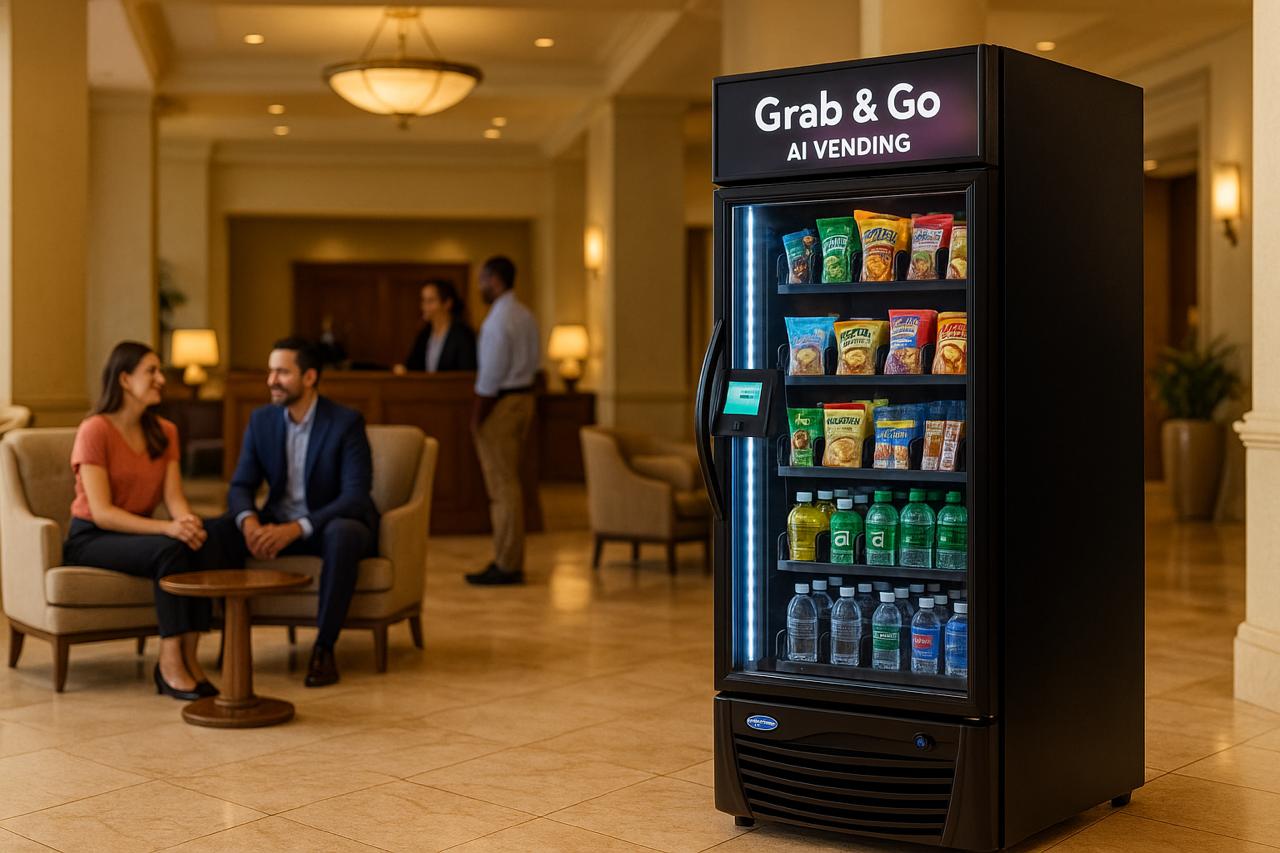
Artificial intelligence is changing how people shop, and vending machines are part of that shift. An AI vending machine can recognise what a customer takes, predict what will sell tomorrow and flag a fault before it causes a breakdown.
This guide explains what an AI vending machine actually does, the most useful features available today, what they cost, the rules to know and whether AI is worth it for UK sites.
Quick answer: An AI vending machine uses cameras, sensors and data to go beyond basic vending. Common uses include smart fridges that track what you take, demand forecasting, dynamic pricing, personalised offers, age estimation and predictive maintenance.
For most UK sites, the most practical AI features today are smart fridges and data-driven restocking through telemetry.
Smart vending, ready to install
Smart fridges and telemetry-ready machines with free UK delivery, installation and 0% payment plans.
Browse Machines →What is an AI vending machine?
An AI vending machine uses artificial intelligence to make decisions or recognise things that a standard machine can’t. That might mean identifying products, learning sales patterns or predicting faults.
Some AI runs inside the machine, such as cameras in a smart fridge. Other AI runs in the cloud, analysing sales data sent by telemetry.
A standard machine simply releases the product you select. If you’re new to the basics, our how vending machines work guide explains the mechanics.
AI vending machine: 7 proven uses
1. Smart fridges with product recognition
Customers unlock the door, take what they want and walk away. Cameras and weight sensors work out what was taken and charge the right amount.
2. Demand forecasting
AI studies past sales, time of day, weather and events to predict what will sell. Operators stock more of the right products and waste less.
3. Smarter restocking routes
Software suggests which machines to visit and what to bring. It cuts wasted trips and prevents sell-outs.
4. Dynamic pricing
Prices can change by time of day or demand, such as discounts on items nearing their date. It needs careful, transparent use to keep customers’ trust.
5. Personalised recommendations
Screens and apps can suggest products based on time, weather or past purchases. A cold drink on a hot afternoon is an easy upsell.
6. Age estimation
Some systems estimate a customer’s age from a camera image before selling age-restricted items. It’s still developing, and the rules haven’t caught up everywhere.
7. Predictive maintenance
AI spots warning signs, such as a fridge working harder than usual or a motor slowing down. Operators fix problems before the machine breaks.
AI vending machine vs standard vending machine
| Feature | Standard machine | AI vending machine |
|---|---|---|
| How customers buy | Select, pay, collect | Often open-door, take and go |
| Products | Must fit spirals or columns | Almost any packaged item |
| Restocking | Fixed routine | Based on predicted demand |
| Pricing | Fixed | Can change by time or stock |
| Faults | Found on the next visit | Predicted and flagged early |
| Cost | Lower | Higher |
Smart fridges: the most common AI vending machine
For most UK sites, the AI vending machine they’ll meet first is a smart fridge. It looks like a glass-door fridge, but it only unlocks for a card, phone or app.
Because customers pick products by hand, smart fridges can sell sandwiches, salads, multi-packs and premium drinks that don’t suit spiral machines. That widens the range and lifts average spend.
Our 24H smart vending fridge has seven LED-lit shelves and cashless unlock for £2,295. Our smart vending machine guide explains the technology in more detail.
How AI uses vending data
Every AI vending machine depends on data. Telemetry sends sales, stock and fault information from the machine to software in the cloud.
AI then looks for patterns that a person would miss, such as sales rising before rain or a product selling out every Thursday. It turns those patterns into suggestions.
Even without cameras, adding telemetry to a standard machine gives you much of this benefit. Our vending machine telemetry and vending machine software guides explain how.
Demand forecasting in practice
Forecasting helps you stock the right amount of each product at each site. Too little means sell-outs; too much means waste, especially with fresh food.
An AI vending machine system might suggest extra cold drinks before a heatwave or fewer sandwiches on a bank holiday. Over time, its suggestions improve as it learns.
For operators with fresh food, forecasting is one of the most valuable uses of AI. It cuts waste and keeps shelves full at the busiest times.
Dynamic pricing: useful but sensitive
Dynamic pricing lets prices change automatically, such as cheaper sandwiches late in the day. It can reduce waste and reward customers who buy off-peak.
But customers dislike feeling overcharged, so be careful with price rises at busy times. Clear, fair rules work best.
Our vending machine pricing guide covers pricing strategies that keep customers happy.
AI age checks and age-restricted products
Some AI vending machine systems use facial age estimation, which guesses a customer’s age from a camera image. It’s being tested in UK retail as a way to manage age-restricted sales.
This matters more as rules tighten. The government has confirmed a ban on selling high-caffeine energy drinks to under-16s in England from April 2027, subject to Parliament, covering drinks with more than 150mg of caffeine per litre and including vending machines.
It isn’t yet clear whether AI age estimation will be accepted for every age-restricted product. Until guidance is settled, many operators are planning lower-caffeine ranges; see our low caffeine drinks guide.
Predictive maintenance
Breakdowns cost sales and annoy customers. An AI vending machine system can watch for signs of trouble, such as rising fridge temperatures or slow motors.
You get an alert before the fault becomes a breakdown. That means fewer emergency call-outs and less spoiled stock.
Simple maintenance still matters. Our vending machine maintenance guide covers the weekly checks.
Personalised offers and screens
Touchscreens and apps let machines show offers that suit the moment. Breakfast items in the morning, cold drinks in the heat and healthy snacks after a gym class.
Personalisation works best where the same people buy regularly, such as offices and gyms. Our vending machine app guide explains how apps add loyalty and offers.
Privacy and data protection
An AI vending machine with cameras or apps may collect personal data. Operators must follow UK data protection law, explain what’s collected and keep it secure.
Many smart fridge systems focus on products rather than faces, using cameras inside the cabinet. Ask any supplier exactly what data their system captures and how long it’s kept.
Clear signs on the machine help customers understand how it works and build trust.
AI vending machine ideas by site
Offices
An AI vending machine such as a smart fridge works like a mini shop for staff, open all day. Fresh food, snacks and drinks in one unit can replace a tired tea point; see our vending machines for offices guide.
Gyms and studios
Members want protein shakes, water and snacks straight after training. A smart fridge with app offers can reward regulars, as our vending machines for gyms guide explains.
Hotels and co-working spaces
Guests and members expect convenience at any hour. An AI vending machine sells late-night snacks and drinks without staffing a kiosk.
Hospitals and stations
Busy public sites benefit most from forecasting and predictive maintenance. Locked machines with telemetry often suit them better than open-door fridges.
Fresh food and AI
Fresh food is where AI makes the biggest difference, because waste costs money fast. Forecasting helps you order the right number of sandwiches and salads for each day.
Smart fridges also track use-by dates and can flag items that need removing. Some systems discount items close to their date to sell them before they go to waste.
Our fresh food vending machine guide covers how to run a chilled range safely.
Security and theft
Open-door smart fridges rely on cameras, sensors and card details to charge customers correctly. That deters most people from taking items without paying.
They still work best in sites with a trusted, regular audience, such as offices and hotels. In busy public areas, a locked AI vending machine with spirals gives more control.
Our vending machine security guide covers placement, lighting and anchoring for any machine.
Less waste, lower energy
AI helps cut waste by stocking closer to real demand. Fewer unsold products means less food thrown away and fewer wasted trips.
Predictive maintenance also keeps fridges running efficiently, using less electricity. For businesses with sustainability goals, an AI vending machine can support targets as well as sales.
Accessibility
Touchscreens and apps should be easy for everyone to use. Look for machines with clear displays, readable text and controls at a reachable height.
Keep simple payment options, such as contactless cards, alongside any app. A good AI vending machine adds convenience without shutting anyone out.
Questions to ask an AI vending supplier
- What does the AI actually do: product recognition, forecasting or both?
- What data does the system collect, and how is it stored?
- Is there a monthly software fee on top of the machine price?
- How accurate is product recognition, and how are mistakes refunded?
- What mobile signal or Wi-Fi does the machine need?
- What support and warranty are included?
The answers will show whether an AI vending machine fits your site, or whether a standard machine with telemetry is the smarter first step.
How product recognition works
Smart fridges usually combine two methods. Weight sensors on each shelf notice when something is lifted, and cameras identify which product it was.
When the door closes, the system matches what’s missing against its product list and charges the customer. Most systems learn each product’s shape and packaging when it’s first added.
Accuracy depends on good set-up, so place each product in its assigned spot when restocking. A well-run AI vending machine rarely makes mistakes, and refunds are handled through the payment system.
What AI can’t do yet
AI is helpful, but it isn’t magic. It can’t restock the machine, clean it or fix a jammed spiral.
Forecasts are only as good as the data behind them, so a brand-new site needs a few weeks before predictions become reliable. Unusual events, such as a one-off conference, can still catch the system out.
Think of an AI vending machine as a smart assistant. It points you in the right direction, but you still make the final decisions.
AI for small operators
You don’t need a large route to benefit from smart vending. Even one machine with telemetry shows which products sell and when to restock.
A single smart fridge in a good office or hotel can be a strong first step. As you grow, AI tools become more valuable because they save time across many sites.
Start with one AI vending machine where the site suits it, learn from the data, then expand.
Helping customers use smart machines
Open-door shopping is new to some people. A short sign explaining “tap, open, take, close” removes confusion on day one.
For staff sites, a quick email or poster when the machine arrives helps everyone feel confident using it.
What does an AI vending machine cost?
AI-powered machines usually cost more than basic models, because they include cameras, sensors, screens and software. Some also carry a monthly software fee.
At Irelley, our smart vending fridge costs £2,295, with a 25% deposit and the balance over up to 12 months at 0%. Card payment with telemetry costs £10 a month plus 2% per transaction.
For a smaller step, adding telemetry to a standard machine brings data-driven restocking and alerts at a lower cost.
Is an AI vending machine worth it?
It depends on your site. An AI vending machine makes most sense where higher-value products, regular customers and steady footfall justify the extra cost.
Offices, hotels, co-working spaces and gyms often see the biggest gains from smart fridges. Busy public sites may still prefer locked spiral machines for control.
For many operators, telemetry and good data deliver most of the benefit without the full cost of AI hardware.
Where AI vending is heading
Expect more machines to come with cameras, screens and cloud software as standard. Forecasting and maintenance tools will keep getting better as they learn from more data.
We’re also likely to see more voice and touchscreen ordering, app-based loyalty and fully cashless smart stores in workplaces. Our vending machine industry trends guide covers the wider changes in UK vending.
How to get started with smart vending
- Start with data: add card payment and telemetry to see what sells.
- Choose the right site: offices, hotels and gyms suit smart fridges best.
- Pick a smart machine: a smart fridge offers the biggest step up.
- Check signal and power: smart machines need a reliable connection.
- Explain it to users: clear signs make open-door shopping easy.
- Review the data: use reports to refine stock and prices.
Irelley delivers and installs free anywhere in the UK, usually within 24 hours. Spread the cost with our 0% payment plans.
Common mistakes
- Buying an AI vending machine for a site with too little footfall.
- Placing a smart fridge in a busy public area with little supervision.
- Ignoring data protection rules for cameras and apps.
- Using dynamic pricing in ways customers see as unfair.
- Relying on AI age checks before guidance is clear.
- Collecting data but never acting on it.
The verdict on AI vending machines
An AI vending machine can sell a wider range, waste less and break down less often. Smart fridges and data-driven restocking are the most practical uses for UK sites today.
Start with telemetry and good data, then add smart machines where the site justifies it. Browse our vending machines for sale or contact our team for advice on smart vending for your site.
FAQ
Frequently asked questions
An AI vending machine uses artificial intelligence to do things a standard machine can’t, such as recognising products taken from a smart fridge, predicting demand, suggesting products or spotting faults early.
Most use cameras, weight sensors or both. When you close the door, the system works out which items were removed and charges your card or app account.
Yes. Smart fridges with cashless unlock and machines with telemetry and data-driven restocking are already used in UK offices, hotels, gyms and stations.
Some systems use facial age estimation, and it is being tested in UK retail. Rules on age-restricted sales still apply, so check current guidance before relying on it.
Smart and AI-powered machines usually cost more than basic models. At Irelley, our 24H smart vending fridge with cashless unlock costs £2,295.
Some do, especially those with cameras or apps. Operators must follow UK data protection law and explain clearly what data is collected and why.
No. Machines still need stocking, cleaning and repairs. AI helps operators work smarter by showing what to stock and when to visit.
An AI vending machine such as a smart fridge works best at sites with regular, trusted users and steady footfall, such as offices, hotels, co-working spaces and gyms.
Yes. By forecasting demand and flagging items close to their use-by date, AI helps operators stock closer to what actually sells, which cuts waste.
Well set-up systems are very accurate, combining cameras and weight sensors. Accuracy depends on placing products in their assigned spots, and any mistakes are refunded through the payment system.
Usually a few weeks. Forecasts improve as the system collects more sales data from the site.
Partly. Adding a card reader with telemetry brings data-driven restocking and alerts to many older machines, even without cameras.
Ready for smart vending?
Smart fridges and telemetry-ready machines with free UK delivery and installation.