

History of vending machines: 7 proven milestones
From Hero of Alexandria and English tavern honour boxes to Victorian postcard machines and today’s cashless, connected machines.
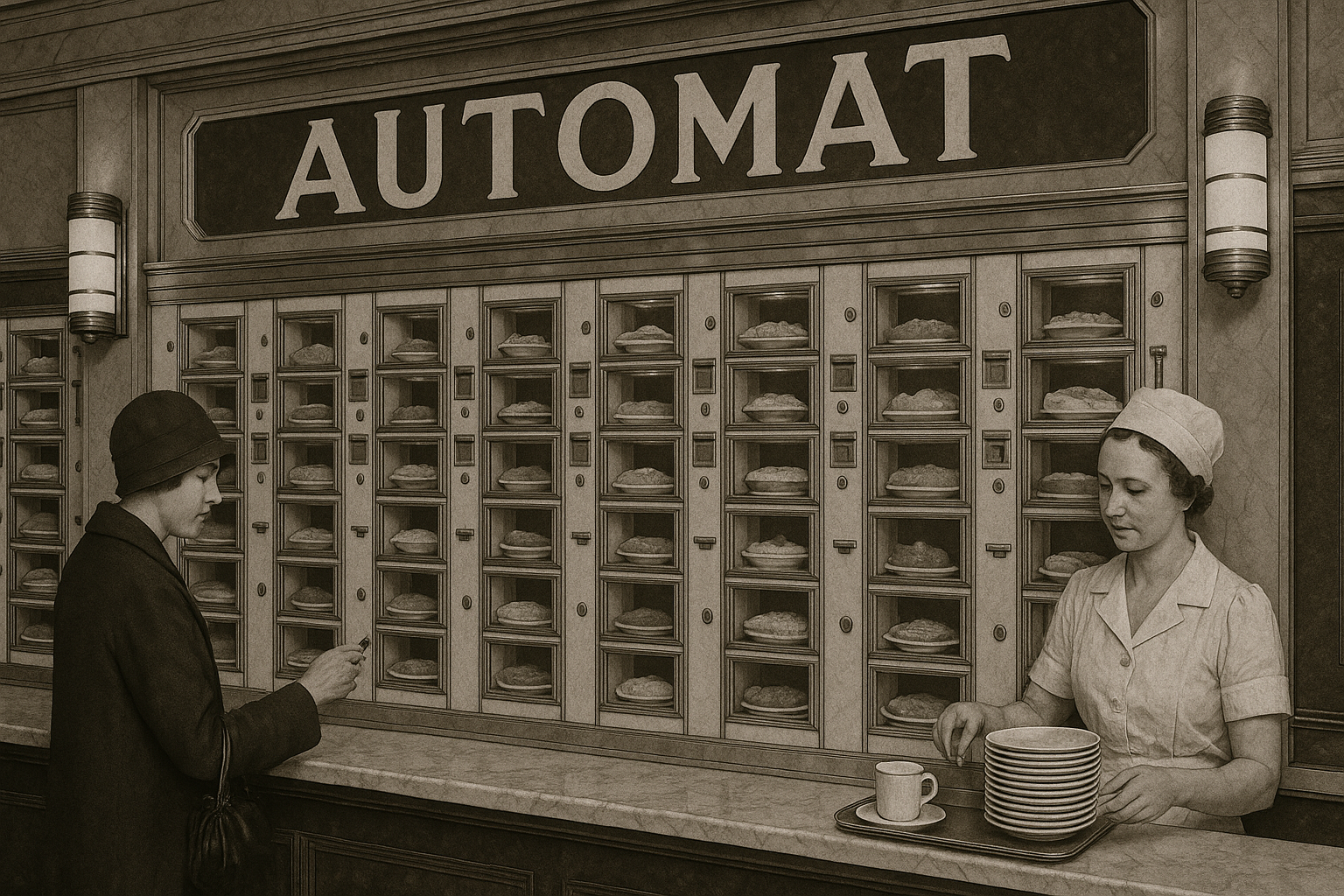
Vending feels like a modern invention, but the history of vending machines goes back around 2,000 years. Britain plays a big part in the story, from tavern tobacco boxes to the first commercially successful coin-operated machine.
This guide walks through the history of vending machines, with a focus on the UK. It covers the key inventors, the products machines have sold and how cashless payment and telemetry changed the industry.
Quick answer: The history of vending machines starts with Hero of Alexandria’s holy water dispenser in the first century AD. English taverns used coin-operated tobacco honour boxes from the 1600s, and Percival Everitt’s 1883 postcard machine became the first commercially successful modern machine. Today’s machines take cards and send sales data online.
Own a piece of vending history
Retro-style and modern machines from £695, tested, delivered and installed free.
View Machines For Sale →History of vending machines: 7 proven milestones
Here are the seven milestones that shaped the history of vending machines, from the ancient world to today.
- First century AD: Hero of Alexandria describes a coin-operated holy water dispenser.
- 1600s: brass honour boxes sell tobacco in English taverns.
- 1867: Simeon Denham of Wakefield patents a fully automatic stamp machine.
- 1883: Percival Everitt patents his postcard vending machine.
- 1887: the Sweetmeat Automatic Delivery Company is formed in England.
- 2011: cigarette vending machines are banned in England.
- 2020s: contactless payment and telemetry become standard.
The ancient start: Hero of Alexandria
The history of vending machines usually starts in Roman Egypt. Hero of Alexandria, an engineer and inventor, described a machine that dispensed holy water in temples.
A coin dropped onto a small tray attached to a lever. The weight of the coin tipped the tray and opened a valve, letting water flow out. When the coin slid off, the lever returned and the valve closed.
The idea was simple: a coin triggers a mechanism that releases a fixed amount of product. That same principle still sits at the heart of every machine today.
History of vending machines in Britain: tavern honour boxes
Britain’s part in the history of vending machines began in its taverns. From the 1600s, brass honour boxes sold tobacco to drinkers.
A customer dropped a coin into the box, which unlocked the lid. They were then trusted to take a single pipeful and close the lid again. The honour system did much of the work, which is how the boxes got their name.
Honour boxes show that self-service selling has deep roots in British social life. Pubs, inns and coaching houses were natural places for it.
Richard Carlile and the 1822 bookshop machine
In 1822, the London bookseller and campaigner Richard Carlile used a self-service device in his shop. Customers turned a dial to choose a publication, paid, and the item dropped down.
The aim was to sell publications without a member of staff handing them over. Historians are unsure how automatic the system really was, but it is an early example of selling without a shop assistant.
The Victorian boom in the history of vending machines
The Victorian era is where the modern history of vending machines really begins. New engineering skills, a growing rail network and the penny post created the perfect conditions.
Simeon Denham’s stamp machine (1867)
Simeon Denham of Wakefield was granted a patent in 1867 for a machine that sold postage stamps for a penny. It is often described as the first fully automatic selling machine, though it was soon forgotten.
Percival Everitt’s postcard machine (1883)
Percival Everitt patented a postcard vending machine in 1883. It was the first commercially successful modern coin-operated machine, and improved versions soon appeared at railway stations and post offices selling postcards, envelopes, notepaper and stamps.
The Sweetmeat Automatic Delivery Company (1887)
In 1887, the Sweetmeat Automatic Delivery Company was formed in England. It is widely described as the first company set up mainly to install and maintain vending machines, an early version of today’s vending operators.
As Country Life notes, other Victorian ideas, such as a coin-operated reading lamp for trains, were less successful. Not every invention in the history of vending machines found customers.
Vending spreads beyond Britain
Once the idea proved itself in Britain, the history of vending machines went international.
- United States, 1888: the Thomas Adams Gum Company sold chewing gum from machines on New York train platforms.
- Germany, 1890s: the chocolate maker Stollwerck sold chocolate through thousands of machines.
- Early 1900s: automats, restaurants where food was served from coin-operated compartments, became popular in some American cities.
This international growth turned the history of vending machines from a British curiosity into a global industry.
The Penguincubator: books from a machine (1937)
One of the most charming chapters in the history of vending machines is the Penguincubator. In 1937, Penguin founder Allen Lane installed a book vending machine outside a shop on Charing Cross Road in London.
It reflected Penguin’s mission to make good books cheap and easy to buy. The idea has returned in modern times, with Penguin book vending machines appearing at railway stations, including Exeter St Davids.
The 20th century: snacks, drinks and the tea break
In the 20th century, the history of vending machines moved from novelty to everyday convenience. Chocolate, sweets and cigarettes were sold from machines in stations, pubs and public places.
As factories and offices grew, so did demand for food and drink on site. Hot drinks machines and snack machines became a familiar part of the workplace tea break, especially for shift workers and staff without a canteen.
Refrigeration made chilled cans and bottles possible, and the classic glass-front snack machine with spirals became the standard design. Many retro-style machines today copy the look of this era. Our guide to the retro vending machine covers this style.
History of vending machines and cigarettes
For decades, cigarette machines were a common sight in UK pubs and clubs, and a big part of the history of vending machines here. Concerns about under-age smoking changed that.
Cigarette vending machines were banned in England from 1 October 2011, and the rest of the UK followed with its own bans. It was one of the biggest legal changes in the history of vending machines in Britain.
The ban shows how public health rules can reshape what machines sell. A similar shift is coming for energy drinks, as covered below.
Healthier vending and schools
From the 2000s, concern about diet and childhood obesity led to stricter rules on food in schools. School food standards in England now limit confectionery, chocolate and crisps, which changed what school vending machines sell.
Many workplaces, gyms and hospitals also moved towards healthier ranges, a new chapter in the history of vending machines. Our guides to the healthy vending combo and vending machines for schools explain the modern approach.
History of vending machines at UK railway stations
Railway stations have been central to the history of vending machines in Britain since the 1880s. Everitt’s improved postcard machines appeared at stations, where travellers wanted stamps, notepaper and postcards on the move.
Stations remain some of the busiest vending sites today. Waiting passengers buy drinks, snacks and even books, and many stations now host fresh food and coffee machines.
The lesson has stayed the same for well over a century: people waiting with time to spend are good customers for a machine.
History of vending machines in the workplace
The workplace is where most people first met a vending machine in the 20th century. The history of vending machines at work follows the growth of factories, offices and shift work.
- Factories: machines kept shift workers supplied with hot drinks and snacks around the clock.
- Offices: drinks machines became part of the daily tea and coffee routine.
- Hospitals: staff and visitors needed food and drink at all hours.
- Warehouses: large sites far from shops relied on machines for breaks.
Today, workplaces are still among the best sites for vending. Our guides to vending machines for offices and vending machines for warehouses explain why.
How machine design changed through the history of vending machines
The way machines work has changed as much as what they sell. Early designs were entirely mechanical, with coins tipping levers and releasing a drawer or flap.
Electric motors, refrigeration and electronic controllers came later. The spiral shelf allowed one machine to sell dozens of products, and drop sensors made sure customers got what they paid for.
Early machines
- Mechanical levers
- One product type
- Coins only
- No refrigeration
Modern machines
- Electronic controllers
- Dozens of selections
- Card, phone and cash
- Chilled, frozen and hot options
Our guide to how vending machines work explains the technology inside a modern machine.
Payment through the history of vending machines
| Era | How customers paid |
|---|---|
| Ancient world | A single coin on a lever |
| 1600s–1800s | A penny in a tavern honour box |
| Victorian era | Penny coins in mechanical machines |
| 20th century | Coins, then notes with change-giving |
| 2000s onward | Contactless cards, phones and watches |
Each step made buying easier, and each one increased sales. Machines that kept up with how people preferred to pay sold more, while machines that didn’t were left behind. That pattern runs right through the history of vending machines.
The cashless revolution
In the history of vending machines, payment has changed more in the last 20 years than in all the centuries before.
- 2007: contactless cards launch in the UK with a £10 limit.
- 2010s: card readers and phone payments spread to vending machines.
- October 2021: the UK contactless limit rises to £100.
Today, most UK customers expect to tap a card or phone. Our vending machine contactless payment UK guide explains how card payment works on modern machines.
Telemetry and smart machines
The latest chapter in the history of vending machines is connectivity. Telemetry sends sales, stock levels and faults to an online dashboard, so owners restock only when needed.
Touchscreens, remote price changes and detailed sales data are now a normal part of the history of vending machines rather than the future. Our guide to vending machine telemetry explains the benefits for operators.
The UK vending industry today
After more than a century of growth in the UK history of vending machines, vending is now a major industry. An industry census reported by Country Life put the number of machines at over 420,000 in 2019, selling around seven billion items a year.
Machines now sell far more than snacks and drinks, a big change in the history of vending machines. Fresh food, hot meals, eggs, milk, PPE and even beauty products are sold from machines across the country. Our guides to food vending machines, the fresh food vending machine and PPE essentials machine show the range.
History of vending machines: a timeline
| Date | Milestone |
|---|---|
| 1st century AD | Hero of Alexandria’s holy water dispenser |
| 1600s | Tobacco honour boxes in English taverns |
| 1822 | Richard Carlile’s self-service bookshop device |
| 1867 | Simeon Denham’s stamp machine patent |
| 1883 | Percival Everitt’s postcard machine |
| 1887 | Sweetmeat Automatic Delivery Company formed |
| 1888 | Gum machines on New York train platforms |
| 1937 | Penguincubator book machine in London |
| 2007 | Contactless cards launch in the UK |
| 2011 | Cigarette vending banned in England |
| 2021 | UK contactless limit rises to £100 |
| 2027 | Planned energy drink rules and deposit return scheme |
5 surprising facts from the history of vending machines
The history of vending machines has plenty of curious moments. Here are five worth knowing.
- Holy water came first: the earliest known machine sold water in a temple, not food.
- Trust was built in: tavern honour boxes relied on customers taking only one pipeful.
- Postcards beat sweets: Britain’s first big commercial success sold postcards and stationery.
- Books had their moment: the 1937 Penguincubator sold paperbacks on a London street.
- Not every idea worked: a Victorian coin-operated train reading lamp failed to catch on.
These stories show that the history of vending machines has always been about experimenting with what people will buy without a shop assistant.
The next chapter: what’s coming
The history of vending machines is still being written. Two changes are due in 2027.
- Energy drinks: a ban on selling high-caffeine energy drinks to under-16s in England, including through vending machines, is planned from April 2027, subject to Parliamentary approval.
- Deposit return scheme: from October 2027, many drinks containers will carry a 20p deposit, refunded when the empty is returned.
Our guide to reverse vending machines UK explains what the deposit return scheme means for drinks sellers, and our vending machine regulations UK guide covers the wider rules.
What the history of vending machines teaches operators
Looking back at the history of vending machines offers useful lessons for anyone running machines today.
- Location matters: taverns, stations and workplaces have always been the best sites.
- Convenience wins: machines succeed when they save people time.
- Payment must be easy: from pennies to contactless, the easiest payment sells most.
- Rules change: cigarettes, school food and energy drinks show the law can reshape a range.
- Product range evolves: postcards gave way to snacks, drinks and fresh food.
Our guide to vending machine locations UK shows where machines earn most today, and our vending machine industry trends UK guide looks at where the market is heading.
Retro machines and collecting
Interest in the history of vending machines has created a market for retro-style machines. Classic soda designs and vintage looks are popular for games rooms, home bars, cafés and themed venues.
Our Pepsi retro bottle machine is one example. Our guide to a vending machine for home covers buying a machine for personal use.
Where to learn more about the history of vending machines
If you want to dig deeper, museums, transport collections and local archives often hold old machines, advertising and photographs. Railway and seaside museums are good places to look, because stations and piers were early homes for coin-operated machines.
Old trade catalogues and patents also tell the story. They show how inventors kept improving coin checks, product delivery and cabinet design. For collectors, original paperwork can add to the interest and value of a vintage machine.
Be part of the next chapter
The history of vending machines is a story of simple ideas made better by technology. From a coin on a lever to a tap of a phone, the goal has always been the same: quick, easy self-service.
If you’d like to start your own vending business, browse our vending machines for sale or contact our team. Every machine is tested, delivered and installed free, and covered by a 12-month warranty.
FAQ
Frequently asked questions
The earliest known design is credited to Hero of Alexandria in the first century AD. His machine released a measured amount of holy water when a coin was dropped in.
Coin-operated honour boxes selling tobacco were used in English taverns from the 1600s. The first commercially successful modern machine was Percival Everitt’s postcard dispenser, patented in 1883.
The Sweetmeat Automatic Delivery Company, formed in England in 1887, is widely described as the first company set up mainly to install and maintain vending machines.
Early British machines sold tobacco, postcards, stamps, envelopes and notepaper. Sweets and chocolate followed, and later drinks, snacks and hot drinks.
Cigarette vending machines were banned in England from 1 October 2011. The rest of the UK followed with its own bans.
Yes. In 1937 Penguin founder Allen Lane installed the Penguincubator, a book vending machine, outside a shop on Charing Cross Road in London.
An industry census reported by Country Life put the figure at over 420,000 machines in 2019, selling around seven billion items a year. Numbers change over time, so treat this as a snapshot.
Contactless cards launched in the UK in 2007. Card readers became common on vending machines over the following years, and the UK contactless limit rose to £100 in October 2021.
A planned ban on selling high-caffeine energy drinks to under-16s, including through vending machines, is due in England from April 2027, subject to Parliamentary approval. The deposit return scheme for drinks containers is due from October 2027.
Some vintage and retro-style machines are popular with collectors and for games rooms and home bars. Value depends on age, brand, condition and whether the machine still works.
Start your own vending story
Tested machines, a 12-month warranty and free UK delivery and installation.
[…] Daarna volgden vending machines Nederland breed: frisdrank- en snoepautomaten in kantines, stations en scholen, en koffieautomaten op vrijwel elke werkplek. Inmiddels betaal je contactloos, zie je de voorraad op je telefoon en open je met een smart fridge een koelkast die zichzelf afrekent. Lees meer over de geschiedenis van automaten in onze gids over de geschiedenis van vending machines. […]