

Charity vending machine: 7 best proven fundraising tips
How fundraising machines work, the legal rules, how much you could raise and the best UK sites for a good cause.
Vending machines are a simple, low-effort way to raise money for a good cause. A charity vending machine can fund a school trip, new football kits, a church roof or a national charity, all while selling snacks and drinks people want anyway.
This guide explains how a charity vending machine works, the different models, the legal rules, how much you could raise and the best places to put one.
Quick answer: A charity vending machine raises money by sending some or all of its profit to a good cause. Schools, clubs, churches and charities can own one outright, or an operator can run it and donate part of the takings.
By law, any business saying money goes to charity must name the charity and state how much it receives.
Raise money with your own machine
Snack, drinks and combo machines with free UK delivery, installation and 0% payment plans, so profits start going to your cause sooner.
Browse Machines →What is a charity vending machine?
A charity vending machine is any vending machine that raises money for a cause. It sells normal products, but some or all of the profit goes to a charity, school, club or community group.
The idea is popular because it raises money quietly in the background. Once installed, the machine keeps fundraising every day without bake sales, raffles or volunteers.
The term also covers small sweet and gumball machines with charity stickers, often seen in pubs and takeaways. These usually work very differently, as explained below.
The 4 main types
There are four common ways a charity vending machine can work. Each sends a different share of the money to the cause.
| Type | Who owns it | Share to the cause |
|---|---|---|
| Owned by the group | School, club, church or charity | All profit after stock and running costs |
| Operator with commission | A vending operator | A commission on sales, often around 10–20% |
| Charity sweet machines | A small operator | Often a small fixed donation per machine |
| Giving machines | A charity or campaign | The full donation, as people buy gifts for others |
1. Owned by your group
Your school, club or charity buys the machine, stocks it and keeps all the profit. This raises the most money over time, though you handle restocking or pay someone to do it.
2. Operator with commission
An operator places and runs the machine and pays your group a share of sales. It is hands-off, but the cause receives only a slice of the takings.
Our vending machine commission rates guide explains typical percentages.
3. Charity sweet machines
Small sweet machines with charity logos are common in pubs, shops and takeaways. In many cases, the operator pays the charity a fixed amount for using its name, and the rest is the operator’s income.
That is legal as long as the arrangement is clearly explained. Customers often assume far more goes to charity than really does.
4. Giving machines
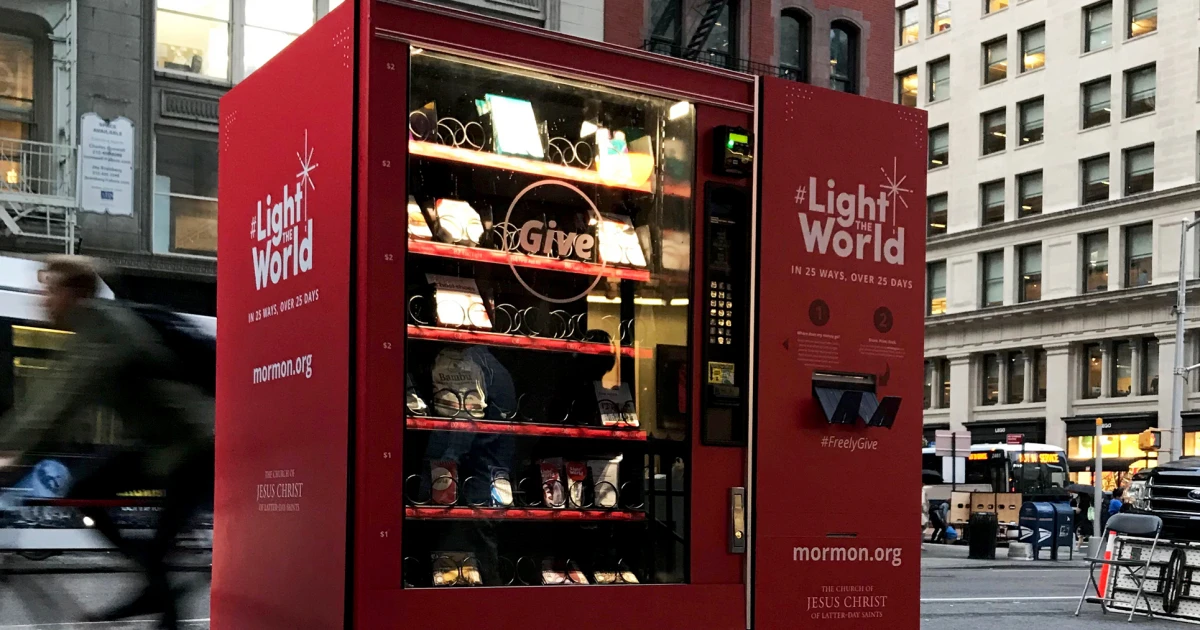
Giving machines let people buy donations instead of snacks, such as a meal, a blanket or vaccines. The Church of Jesus Christ of Latter-day Saints placed giving machines at its Hyde Park visitors’ centre in London for Christmas 2018, supporting charities including the Royal British Legion.
Charity vending machine: 7 best proven fundraising tips
1. Own the machine if you can
Buying your own charity vending machine means every penny of profit goes to your cause. Spreading the cost with a payment plan can make this affordable even for small groups.
2. Choose a busy, trusted site
A machine in a clubhouse, school foyer or church hall gets regular visits from people who support the cause. Familiar faces are more likely to buy.
3. Tell people where the money goes
On a charity vending machine, a clear sign saying “Every purchase funds our new minibus” encourages people to choose your machine over the shop down the road.
4. Stock what sells
Supporting a cause is a nice bonus, but people still buy what they like. Popular crisps, chocolate and cold drinks outsell healthy but unfamiliar brands.
5. Accept card payments
Many people no longer carry cash, so a charity vending machine without card payment misses sales. A contactless reader can boost sales significantly, especially among younger buyers.
Read our contactless vending machine guide for more.
6. Share progress
Post updates such as “Our machine has raised £850 towards new kits”. People like to see their snack money making a difference.
7. Keep it full and clean
An empty or broken charity vending machine raises nothing. Set a regular restocking routine, and use volunteers or a local operator if needed.
The legal rules
Fundraising with a charity vending machine is simple, but a few legal points apply. The most important is honesty about where the money goes.
The Charities Act statement
Under Section 60 of the Charities Act 1992, a business that tells customers part of their money goes to charity is a “commercial participator”. It must name the charity and state how much goes to it, or give a reasonable estimate.
Failing to do this is a criminal offence. The statement is usually shown on a sticker or panel on the machine.
Written agreements
Operators using a registered charity’s name should have a written agreement with that charity. The agreement sets out how much is paid and how the name can be used.
Food rules
If the machine sells food, the owner or operator may need to register with the local council as a food business. Products must be labelled, in date and stored correctly.
Our vending machine expiry dates guide explains how to manage stock safely.
Important: If you are running a charity vending machine as a business, check the Fundraising Regulator’s Code of Fundraising Practice as well as the Charities Act. Rules differ slightly in Scotland and Northern Ireland.
How much could you raise?
The amount a charity vending machine raises depends on footfall, prices and the share of profit going to the cause. The table gives rough examples for a group-owned machine.
| Site | Sales per week | Rough yearly profit |
|---|---|---|
| Small village hall | 20–40 items | £300–£800 |
| Sports clubhouse | 60–120 items | £1,000–£2,500 |
| Busy school or college | 150–300 items | £2,500–£6,000 |
| Leisure centre or large club | 200–400 items | £3,500–£8,000 |
These figures assume around 40–60p profit per item and are only a guide. Use our vending machine profit calculator to estimate your own numbers.
Best places to fundraise
The best sites for a charity vending machine have regular visitors who care about the cause. Here are the places where fundraising machines work best.
- Schools and colleges: parent groups and student unions raise money for trips and equipment.
- Sports clubs: players, parents and spectators buy drinks and snacks every match day.
- Churches and faith centres: machines in halls and community rooms support local projects.
- Community and village halls: clubs, classes and events bring steady footfall.
- Hospitals and hospices: friends’ groups and charities fund extra care and comforts.
- Charity shops and offices: staff and visitors support the charity directly.
See our guides to vending machines for schools, community hall vending machines, golf club vending machines and leisure centre vending machines.
Schools and PTAs
Schools are one of the most popular homes for a charity vending machine. But school food standards in England limit what can be sold to pupils during the school day.
Machines for pupils usually stock water, milk, fruit juice within limits and healthier snacks. Machines in staff rooms, sports halls used by the community or parents’ areas can offer a wider range.
Our vending machines for schools guide explains the rules in full.
Sports clubs
Sports clubs are ideal for a charity vending machine. Match days, training sessions and tournaments bring a steady stream of thirsty players and parents.
As a charity vending machine, a drinks machine usually performs best, especially with water, sports drinks and soft drinks. A combo machine adds snacks for longer events.
Read our sports drink vending machine guide for stock ideas.
Churches and faith groups
A charity vending machine in a church hall or faith centre can support building repairs, youth work or food banks. Halls are often busy with groups, classes and events throughout the week.
Many faith groups choose a snack and drinks machine for the hall, with hot drinks for coffee mornings. Clear signs explaining which project the money supports work especially well.
Hospitals and hospices
Hospital friends’ groups and hospice charities have used vending for years. Visitors, staff and patients need snacks and drinks at all hours, and many are happy to support the hospital at the same time.
A charity vending machine on a ward corridor or in a waiting area can raise money for equipment and patient comforts. Our vending machines for hospitals guide covers the practical details.
Asked to host a charity sweet machine?
Pubs, shops and takeaways are often asked to host small charity sweet machines. Before you agree, it is worth asking a few questions.
- Which charity does the machine support, and is it registered?
- How much goes to the charity, and is this shown on the machine?
- Does the operator have a written agreement with the charity?
- Who restocks, cleans and empties the machine?
- Will your business receive any share of the takings?
If the answers are vague, you can check the charity’s registration number on the Charity Commission register. A genuine charity vending machine operator will be happy to explain the arrangement.
A simple example
Imagine a junior football club with 200 players. It buys a combo machine on a payment plan and places it in the clubhouse.
On training nights and match days, the machine sells around 100 items a week at roughly 50p profit each. After payments and running costs, the charity vending machine could fund a new set of kits within its first year.
Owning vs placing a machine
The biggest choice is whether to buy your own charity vending machine or let an operator place one for free. Each option suits different groups.
| Factor | Own the machine | Free operator placement |
|---|---|---|
| Upfront cost | Machine price, or monthly payments | None |
| Money to your cause | All the profit | A commission on sales |
| Work involved | Restocking and cleaning | Very little |
| Control over stock | Full | Limited |
| Best for | Groups with volunteers or steady sales | Groups with no time to manage it |
Our free vending machine guide explains how operator placements work.
Tax and VAT
A charity vending machine is usually treated like any other for VAT, so charities pay VAT on sales if they are VAT-registered. Standard-rated items such as crisps, sweets and soft drinks carry VAT at 20%.
Charities can trade to raise funds, but larger trading activities may need to go through a separate trading company. HMRC has a small-scale trading exemption for modest fundraising sales.
See our vending machine VAT and vending business tax guides, and speak to an accountant if you are unsure.
Making the machine stand out
A charity vending machine should make the cause obvious. Clear branding turns a standard machine into a fundraising tool.
- Add a sign or wrap showing the cause and your logo.
- Show a target, such as “Help us raise £2,000 for new kits”.
- Update a progress chart every month.
- Thank supporters on social media and in newsletters.
- Include the Charities Act statement if a business is involved.
Running costs to plan for
Every charity vending machine has costs that come out of the takings before money reaches the cause. Planning for them avoids surprises.
- Stock: usually the largest cost, bought from wholesalers or cash and carry.
- Electricity: chilled drinks machines use more power than snack machines.
- Card fees: small per-sale fees on contactless payments.
- Repairs: occasional maintenance and spare parts.
- Payment plan: monthly payments if you spread the machine cost.
Our vending machine stock suppliers guide helps you find good-value products.
Volunteers and restocking
Many groups run their charity vending machine with volunteers. A simple rota keeps the machine full without putting the load on one person.
Keep a log of stock added, cash collected and card takings for each charity vending machine. That makes it easy to report how much the machine has raised and to spot any problems.
Our how to restock a vending machine guide has a step-by-step routine.
Choosing the right machine
For most groups, a combo machine selling drinks and snacks is the best all-round charity vending machine. Drinks-only machines suit sports clubs, while snack machines suit offices and halls.
A refurbished charity vending machine can cut the upfront cost, leaving more money for the cause. Read our refurbished vending machines buyers guide for tips.
Irelley machines start from £695, with free UK delivery and installation. Spread the cost with our 0% payment plans, or browse our combo vending machines.
Ending or moving a machine
Sometimes a site closes, footfall drops or a group changes its plans. If you own the machine, you can move it to a better location or sell it on.
If an operator runs it, check the notice period in your agreement. A good contract makes it easy to end the arrangement without fees.
Common mistakes
- Placing the machine where few supporters visit.
- Stocking only healthy or unfamiliar products that don’t sell.
- Forgetting the Charities Act statement when a business is involved.
- Letting the machine run empty for weeks.
- Not tracking how much the machine has raised.
- Accepting a placement deal without checking the commission.
The verdict on charity vending machines
A charity vending machine is one of the easiest ways to raise steady money for a good cause. Owning the machine raises the most, while operator placements suit groups with no time to manage stock.
Be clear about where the money goes, choose a busy site and keep the machine full. If you want help choosing a charity vending machine for your school, club or charity, contact our team.
FAQ
Frequently asked questions
A charity vending machine is a vending machine that raises money for a good cause. It might be owned by a charity, school or club, or run by an operator who donates part of the takings to a named charity.
It depends on the arrangement. With some small sweet machines, only a small fixed donation goes to charity, while a machine owned by a school or club can send all its profit to the cause. By law, operators claiming to support a charity must say how much goes to it.
Yes. Under Section 60 of the Charities Act 1992, a business that tells customers part of the money goes to charity must name the charity and state how much will go to it, or a reasonable estimate.
Yes. Many schools, PTAs and parent groups run machines to raise funds. School food standards limit what can be sold to pupils, so stock choices matter.
Yes. Sports clubs often place drinks and snack machines in clubhouses and changing areas, with profits funding kit, coaching and facilities.
Usually yes. Sales of standard-rated items such as confectionery, crisps and soft drinks normally carry VAT if the seller is VAT-registered, even for charities.
It can be. A well-placed machine with steady footfall can raise a useful amount each year, but profit depends on the site, product mix, prices and how the machine is run.
Giving machines are vending machines where people buy a donation rather than a product, such as a meal or a goat for a family overseas. One appeared at Hyde Park in London in 2018 for a Christmas campaign.
Some operators place machines for free and share commission with the site. If you want all the profit to go to your cause, buying a machine usually works out better over time.
Most do not need a special licence, but food hygiene registration, labelling and the Charities Act rules still apply. Collecting cash donations in public places can need a separate permit.
Ready to start fundraising?
Machines for schools, clubs and charities, with free UK delivery, installation and 0% payment plans.