

Vending machine locks: 7 proven types & best upgrades
T-handles, tubular and electronic locks, latching systems, key control and when to upgrade.
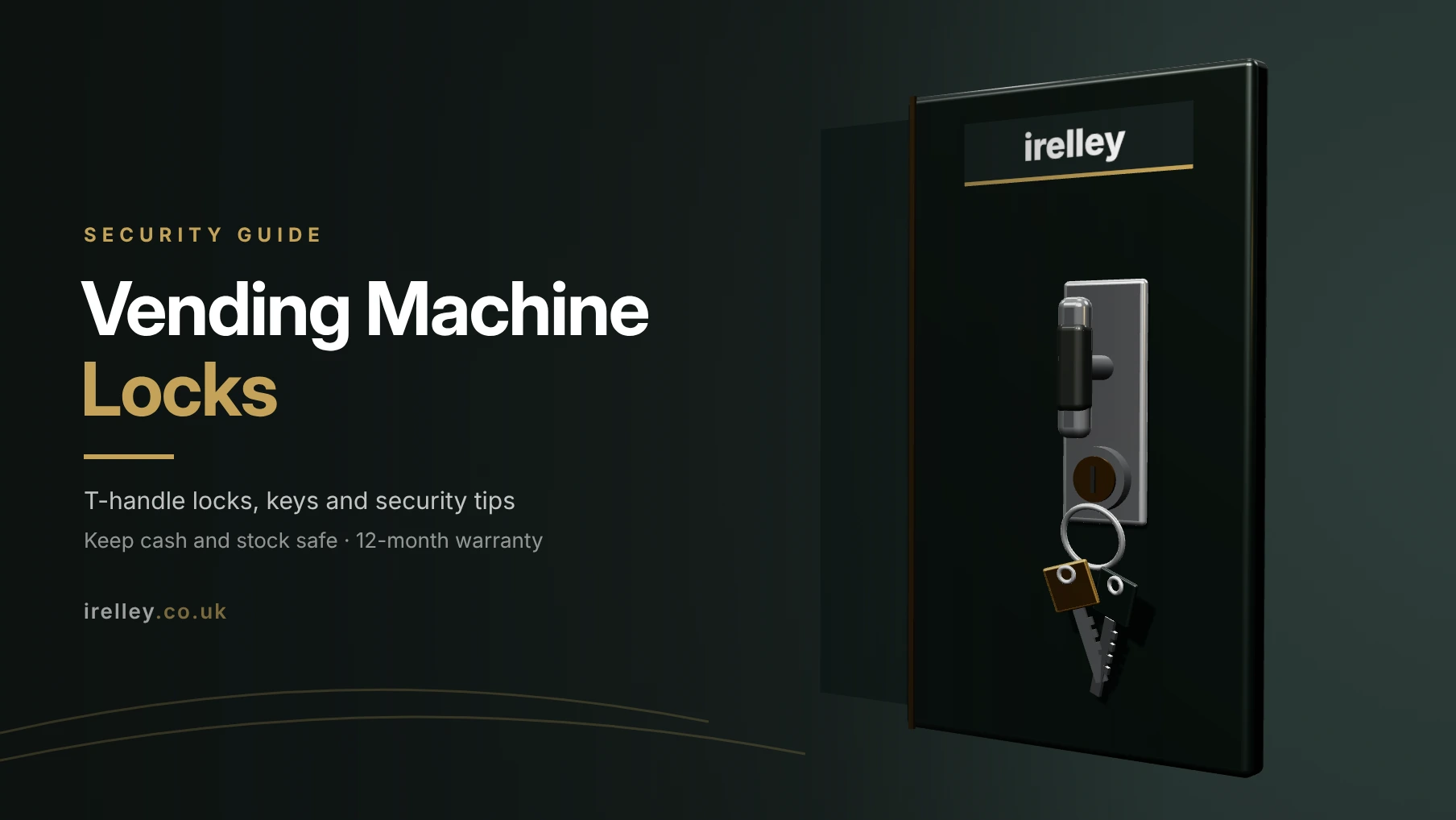
The lock is the first thing a thief tests and the last line of defence for your stock and cash. Yet many operators never think about their vending machine locks until a key goes missing or a door is forced.
This guide explains how vending machine locks work, the main types, latching systems, key control, electronic locks and when to upgrade.
Quick answer: Most vending machine locks use a T-handle with a tubular lock cylinder. Electronic locks add reprogrammable keys and audit trails.
Multi-point latching, strict key control and regular checks matter as much as the lock itself. Combine good locks with smart placement and cashless payments for the best protection.
Secure machines, delivered
Tested vending machines with free UK delivery, installation and a 12-month warranty.
Browse Machines →How vending machine locks work
Most full-size vending machine locks are built into a T-handle on the front door. When you unlock the cylinder, the handle pops out, and turning it pulls the door free of its latches.
Inside, hooks or bolts grip the cabinet frame. This latching system holds the door tight against the cabinet when it’s closed and locked.
Vending machine locks on modern machines often combine the handle, cylinder and latches into one assembly. If one part wears, the whole handle unit can usually be replaced.
Smaller machines may use a simple cam lock, where the key turns a metal tab behind the door frame.
Vending machine locks: 7 proven types
1. T-handle locks
The classic vending lock. A pop-out handle with a lock cylinder that releases the latches when turned.
2. Tubular (barrel) locks
A round key with pins arranged in a circle. Common in T-handles and harder to pick than basic flat-key locks.
3. Cam locks
Simple locks used on smaller machines, cash boxes and inner compartments.
4. High-security cylinders
Upgraded cylinders with extra pins, anti-drill plates and restricted key profiles.
5. Electronic locks
Opened with a programmed electronic key, code or card. Keys can be reprogrammed if lost.
6. Smartphone and Bluetooth locks
Opened through an app, with access granted or removed remotely and every opening logged.
7. Additional padlocks and bars
Extra hasps, padlocks or locking bars for outdoor or high-risk sites.
Comparing vending machine locks
| Lock type | Security | Key control | Best for |
|---|---|---|---|
| Cam lock | Basic | Physical key | Small machines, inner doors |
| Standard T-handle | Moderate | Physical key | Indoor, supervised sites |
| High-security cylinder | High | Restricted keys | Busy or public sites |
| Electronic lock | High | Reprogrammable, audit trail | Fleets and shared access |
| App-based lock | High | Remote access control | Large routes, many staff |
Vending machine locks and latching systems
The latching system matters as much as the vending machine locks themselves. A strong lock on a weak latch can still be pried open.
Multi-point latching uses several hooks or bolts along the door edge, spreading the force of any attack. Reinforced door frames and hinges add further protection.
Check latches regularly for wear. A door that doesn’t close tightly is easier to force and lets warm air into chilled machines.
Electronic vending machine locks
Electronic vending machine locks replace or upgrade the cylinder in a T-handle. They open with a programmed key, code or app instead of a cut metal key.
The big advantage is control. If a key is lost or a staff member leaves, you reprogramme the system rather than changing every lock.
Some electronic keys are also time-limited, so they only work during set hours or for a set number of days. That’s useful for temporary staff and contractors.
Many systems also record who opened each machine and when. That audit trail helps spot cash shortages and stock losses.
Key control for vending machine locks
Even the best vending machine locks fail if keys are copied or lost. Keep a register of every key, who holds it and when it was issued.
Restricted key systems stop keys being copied without authorisation. Avoid leaving keys in vans overnight or with site staff unless necessary.
If a key goes missing, change the cylinder straight away.
Label keys with a code rather than the site name, so a lost key doesn’t tell a finder which machine it opens.
Keyed alike or keyed different?
Keyed-alike locks let one key open many machines, which is convenient on a route. But if that key is lost, every machine is at risk.
Keyed-different locks give each machine its own key. They’re more secure but harder to manage. Electronic locks offer a middle ground, with one programmed key that can be cancelled instantly.
When to upgrade your vending machine locks
- After a key is lost or a staff member leaves.
- After a break-in or attempted break-in.
- When moving a machine to an outdoor or unsupervised site.
- When buying a used machine with unknown key history.
- When running a growing route with several staff.
Locks are only part of security
Vending machine locks work best alongside other measures. Good placement, lighting, CCTV and cashless payments all reduce the risk of an attack in the first place.
Anchoring stops machines being tipped or dragged away. Our vending machine security guide covers the full picture.
Vending machine locks for schools and hospitals
Schools and hospitals are busy, public and often open late. Vending machine locks here should be high-security cylinders with tightly controlled keys.
Machines in corridors and waiting areas see a lot of passers-by, so tamper-resistant fittings and good lighting help. Our vending machines for schools guide covers school-specific rules.
Vending machine locks for gyms and leisure centres
Gyms and leisure centres often have machines in reception or changing areas, sometimes open early and late. Staff are usually nearby, but not always watching.
Standard or high-security vending machine locks, combined with CCTV and cashless payments, suit most leisure sites.
Choosing vending machine locks for a new machine
When buying a new machine, ask about the lock type, the latching system and whether upgrades are available. A machine with multi-point latching and a quality cylinder saves money later.
Our guide to choosing the right vending machine covers other features to compare.
Vending machine locks and site agreements
Agree with the site host who holds keys and who can open the machine. Some hosts want access to clear jams or retrieve stuck items; others prefer not to be involved.
Write the arrangement into your placement agreement, including what happens if a key is lost. Our placement agreements guide explains what to include.
Upgrading vending machine locks across a fleet
If you run many machines, upgrading vending machine locks one by one can take time. Start with the highest-risk sites and work down.
Moving the whole fleet to electronic locks gives you one system for every machine. It costs more up front but simplifies key management for years.
What attackers look for
Thieves look for easy targets: dark, quiet spots, old machines with basic locks and machines that obviously take cash. Visible high-security vending machine locks and a “cashless only” sign can be enough to send them elsewhere.
Signs of attempted entry, such as scratches around the keyway, are a warning to upgrade quickly.
Sold Secure ratings and anchors
For extra padlocks, locking bars and ground anchors, look for Sold Secure ratings. Sold Secure is run by the Master Locksmiths Association and rates products as Bronze, Silver, Gold or Diamond, based on the tools and time needed to defeat them, according to this guide to Sold Secure ratings.
Bronze resists opportunist attacks, while Diamond resists specialist tools such as angle grinders. Outdoor machines at risky sites benefit from Gold or Diamond rated anchors alongside strong vending machine locks.
Vending machine locks for outdoor machines
Outdoor machines face more attacks and harsher weather. Rain and frost can stiffen cylinders, while thieves have more time and fewer witnesses.
Choose weather-resistant, high-security vending machine locks with covers over the keyway. Add anchoring and lighting. Our outdoor vending machine guide covers outdoor setups.
Vending machine locks for indoor sites
Offices, staff rooms and supervised sites carry lower risk. Standard T-handle vending machine locks with good key control are usually enough.
Even indoors, avoid leaving keys with the site unless needed, and change cylinders if a machine moves between sites. See our vending machines for offices guide for office setups.
Remote and high-risk sites
Construction sites, car parks and remote rural sites often sit empty at night. These need the strongest vending machine locks, multi-point latching and extra bars or padlocks.
Card-only payments remove the cash that attracts thieves. Our guide to vending machines for construction sites covers site-specific advice.
Cash boxes and inner locks
Many machines have a second lock on the cash box or coin mechanism. That means whoever restocks the machine doesn’t necessarily have access to the cash.
Separating stock access from cash access reduces the risk of insider theft. Going fully cashless removes the cash risk altogether. Our cashless payment guide explains the options.
Card readers and tamper protection
Card readers sit on the front of the machine and can be targets for tampering. Check them on every visit for loose fittings, damage or anything attached that shouldn’t be there.
Our contactless payment guide covers card readers in more detail.
Buying a second-hand machine
With a used machine, you never know how many keys are out there. Change the vending machine locks as soon as you take delivery.
Check the latches, hinges and door frame for pry marks or bending, which suggest previous attacks. Our refurbished vending machines guide explains what else to check.
Managing keys on a route
Operators running a route with several staff face the biggest key control challenge. Each driver needs access, but every extra key adds risk.
Electronic vending machine locks shine here. Drivers can be given access to specific machines and times, and access is removed instantly when someone leaves. Our vending machine route guide covers route planning.
Insider theft
Not all losses come from outside. Cash shortages and missing stock can point to someone with a key.
Audit trails from electronic locks, separate cash box keys and regular reconciliation of sales data make insider theft much harder to hide.
Looking after your locks
Locks wear out. Dust, rain and heavy use can make cylinders stiff or keys hard to turn.
Clean and lubricate vending machine locks with a product made for locks, not general oil, which attracts dirt. Our vending machine maintenance guide covers routine care.
Stuck locks and lost keys
If a key won’t turn, don’t force it, because a snapped key makes things worse. Try a lock lubricant first, then call a locksmith or your supplier.
If you’re locked out of a machine full of stock, a professional can usually drill and replace the cylinder. Our vending machine troubleshooting guide covers other common faults.
Door-open alerts and telemetry
Some telemetry systems alert you when a machine door is opened. If you get an alert when nobody is scheduled to visit, you know something is wrong.
Our vending machine telemetry guide explains what telemetry can monitor.
Insurance and locks
Insurers may ask about your vending machine locks, anchoring and site security. Better security can make cover easier to get and claims smoother to settle.
Our vending machine insurance guide explains the main types of cover.
Questions buyers ask
Do Irelley machines come with keys? Yes. Every machine is delivered with its keys, and we can advise on upgrades.
Can I fit an electronic lock to an existing machine? Often yes, if a compatible cylinder is available for the handle.
Should I change the lock on a new machine? It’s not usually necessary, but keep track of every key from day one.
Secure machines from Irelley
Every Irelley machine is tested before dispatch, including locks and latches. Machines are delivered and installed free anywhere in the UK and covered by a 12-month warranty.
See our warranty and delivery and installation pages for details.
Mechanical or electronic: which to choose?
Mechanical vending machine locks are simple, cheap and reliable. They suit small operators with a handful of machines and tight control over keys.
Electronic vending machine locks cost more but add flexibility, audit trails and instant access changes. They suit growing routes, shared access and higher-risk sites.
Many operators start mechanical and move to electronic as their fleet grows.
Common lock problems
- Stiff cylinders: usually dirt or weather; clean and lubricate.
- Handle won’t pop out: often a worn spring or debris in the mechanism.
- Door won’t close tightly: check latches, hinges and seals.
- Key turns but door stays shut: a latch may be bent or misaligned.
Fix small problems early, before they leave you locked out or the door insecure.
Keys and the restocking routine
Build key checks into every visit. Count keys at the start and end of each shift, and never leave them in the machine or a parked van.
Check the lock, handle and latches while restocking. Our restocking guide covers a full visit checklist.
Budgeting for security
Upgrading locks costs far less than a single break-in, which can mean lost stock, cash, repairs and downtime. Price upgrades against the risk at each site.
Spend most on outdoor and unsupervised machines, and keep standard locks where risk is low.
Inner compartments and stock security
Some machines have locked inner sections for high-value items such as electronics, PPE or premium products. These add a second barrier even if the main door is opened.
Locker-style machines give each item its own locked door, which suits valuable or bulky products and reduces the loss from any single break-in.
Anchoring and tilt protection
A heavy machine can still be tipped or rocked to shake products loose. Anchoring it to the floor or wall stops this and makes it much harder to move.
Anchoring also protects customers, because a machine that tips over can cause serious injury. Use proper anchor kits fitted to the manufacturer’s guidance.
Cashless as a security measure
The simplest way to make a machine less attractive to thieves is to remove the cash. Card-only machines leave nothing to steal except stock.
A clear “card only” sign on the front tells would-be thieves there’s no cash inside. Combined with good locks, it’s one of the most effective deterrents available.
Common mistakes
- Using the factory locks on a second-hand machine.
- Too many copies of one key.
- Ignoring worn latches and loose doors.
- Relying on locks alone at risky sites.
- Not changing cylinders after a lost key.
The verdict on vending machine locks
Good vending machine locks, strong latching and strict key control protect your stock and cash. Electronic locks add flexibility and audit trails for growing routes.
Combine them with smart placement and cashless payments for the best results. Browse our vending machines for sale or contact our team for advice.
FAQ
Frequently asked questions
Most vending machines use a T-handle with a lock cylinder, often a tubular or barrel lock. Newer machines may use electronic locks opened by a programmed key, code or phone app.
A T-handle is the pop-out handle on the door. Unlocking the cylinder releases the handle, which is turned to pull the door off its latches.
They can be. Electronic locks avoid physical keys being copied, can be reprogrammed if a key is lost and often keep an audit trail of who opened the machine and when.
Yes. Lock cylinders can usually be swapped for new or higher-security versions. Make sure the replacement fits the handle and door.
Change the lock cylinder as soon as possible, because anyone with the lost key could open the machine. Electronic locks can simply be reprogrammed.
As few as possible. Keep a record of every key and who holds it, and avoid keyed-alike locks across machines at different sites unless you control all the keys.
They help, but placement, lighting, cashless payments and anchoring matter just as much. A strong lock on a machine in a dark, quiet spot is still at risk.
The latching system is the set of hooks or bolts that hold the door shut when locked. Multi-point latches spread the load and make the door harder to pry open.
Secure vending machines
Tested machines with free UK delivery and installation.