

Vending machine regulations UK — 8 critical rules every operator must follow.
Vending machine regulations UK are straightforward once you know them — but getting them wrong can mean fines, lost contracts, or a local authority visit you did not expect. This guide covers every legal requirement in one place.
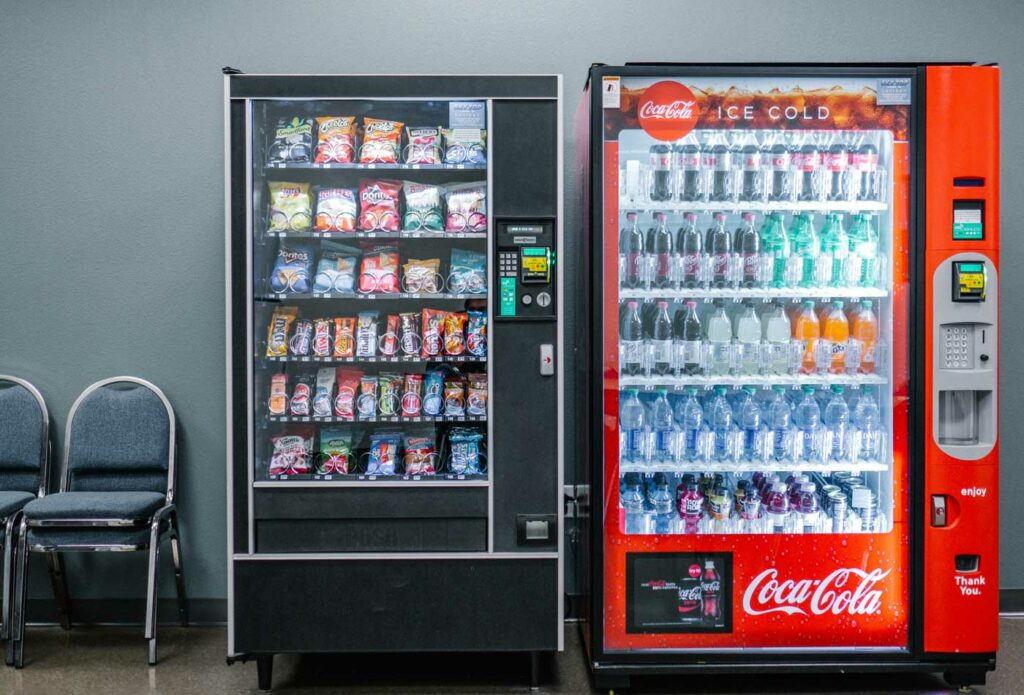
Vending machine regulations UK is the topic most new operators skip — because it sounds boring, because they assume vending is too small to attract regulatory attention, or because they simply do not know what applies. All three assumptions are wrong. Vending machines that dispense food and drink in the UK are subject to food hygiene law, health and safety requirements, allergen disclosure rules, tax obligations, and potentially insurance and planning considerations depending on where the machine is placed. None of these vending machine regulations UK are difficult to comply with, but ignoring them can result in enforcement action, loss of placement contracts, or liability exposure that could end a small operation overnight. This guide covers every requirement, informed by industry guidance from the Automatic Vending Association (AVA).
Vending machine regulations UK — rule 1: food business registration
If your vending machine sells food or drink — even pre-packaged ambient snacks — you are operating a food business under UK law. Vending machine regulations UK require you to register as a food business with your local authority’s environmental health department. Registration is free, takes a few minutes online, and must be completed at least 28 days before you start trading. You do not need to wait for approval — registration is a notification, not an application. But failing to register means you are operating illegally from day one.
Register with the local authority where your business is based (your home address if you are a sole trader), not where the machines are located. If your machines are in multiple local authority areas, you still only register once with your home authority.
Vending machine regulations UK — rule 2: food hygiene compliance
Vending machine regulations UK for food hygiene are governed by the Food Safety Act 1990 and EU-retained food hygiene regulations. As a vending operator, your obligations include:
- Temperature control: Refrigerated machines must maintain food at 5°C or below. Check and record temperatures at every restocking visit. If a machine loses refrigeration, remove perishable products immediately.
- Expiry date management: Remove all products past their use-by date at every visit. Use-by dates are a legal requirement for perishable food. Best-before dates are a quality guideline but should still be managed — selling visibly degraded product damages your reputation.
- Machine cleanliness: The machine itself must be maintained in a clean, hygienic condition. Clean the delivery bin, buttons, and product trays regularly. Keep a cleaning log. Vending machine regulations UK do not specify a cleaning frequency, but “as often as necessary to maintain hygiene” is the standard — in practice, every restocking visit at minimum.
- Pest prevention: Crumbs and food debris attract pests. Regular interior cleaning prevents infestation. If you find evidence of pests (droppings, gnaw marks), deep clean immediately and notify the site manager.
Your machines can be inspected by local authority environmental health officers at any time. They have the legal right to inspect vending machines just as they would inspect a shop or restaurant. A well-maintained machine with temperature logs and cleaning records will pass without issue. A neglected machine with expired products and no records will not. Vending machine regulations UK compliance is straightforward — but it must be documented.
Vending machine regulations UK — rule 3: allergen information
Since 2014, vending machine regulations UK require allergen information to be available for all food products sold through vending machines. For pre-packaged products (which is what most vending machines sell), the allergen information is on the packaging itself — the 14 major allergens must be highlighted in the ingredients list in bold, italics, or contrasting text. Your obligation as a vending operator is to ensure that the packaging is visible and readable to the customer before they purchase.
If your machine sells products where the packaging is not visible before purchase (some machines display products behind opaque panels), you must provide allergen information through an alternative method — a notice on the machine, a QR code linking to allergen data, or a phone number customers can call. This is an area of vending machine regulations UK that catches operators off guard because most assume the packaging handles it — and for most machines with clear glass fronts, it does. But verify your machine allows customers to read the label before committing to a purchase.
Vending machine regulations UK — rule 4: HMRC and tax obligations
Vending machine income is taxable. Vending machine regulations UK for tax are the same as any self-employment or business income:
- Register as a sole trader or limited company: Register with HMRC for self-assessment (sole trader) or incorporate a company through Companies House. Most small operators start as sole traders — it is simpler and cheaper.
- Declare all income: Vending revenue must be declared on your annual self-assessment tax return. Keep records of all income (cash collections and card payments) and all expenses (stock, fuel, insurance, machine costs, repairs).
- VAT registration: You must register for VAT if your taxable turnover exceeds £90,000 in a rolling 12-month period. Most small vending operators are below this threshold. If you exceed it, VAT at 20% applies to most vending sales (food and drink from vending machines is generally standard-rated, not zero-rated, because it is consumed on premises or served hot).
- National Insurance: Class 2 and Class 4 National Insurance contributions apply to self-employed vending operators earning above the small profits threshold.
Starting your operation the right way?
Browse our machines, get registered, get insured — and start with confidence that your operation is fully compliant.
Browse Machines →Vending machine regulations UK — rule 5: insurance requirements
While public liability insurance is not technically a legal requirement for sole traders without employees, vending machine regulations UK make it practically essential. Most site managers require proof of public liability insurance (typically £1–2 million) before signing a placement agreement. Without it, you lose access to the majority of locations. If you employ anyone — even one part-time helper — employer’s liability insurance is a legal requirement with a minimum cover of £5 million and a fine of up to £2,500 per day for non-compliance. Read more about vending machine insurance on our FAQ page.
Vending machine regulations UK — rule 6: health and safety
Vending machine regulations UK include general health and safety obligations under the Health and Safety at Work Act 1974. As a vending operator, your responsibilities include:
- Safe installation: Machines must be placed on level, stable surfaces. A vending machine weighing 200–400 kg that topples because it was placed on uneven flooring is a serious injury risk. Ensure the machine is stable and, where necessary, secured to the wall with anti-tip brackets.
- Electrical safety: Machines must be connected to properly earthed, appropriately rated electrical sockets. Avoid extension leads and daisy-chaining. PAT testing (Portable Appliance Testing) is not a strict legal requirement for fixed equipment, but many site managers require it as part of their own health and safety compliance — having a PAT certificate removes a barrier to placement.
- Access and egress: The machine must not block fire exits, emergency routes, or accessibility paths. Position it in a location that does not obstruct movement through the building.
- Manual handling: If you restock machines yourself, you are responsible for your own manual handling safety. A fully loaded restocking bag or tray of drinks can be heavy — use appropriate lifting technique and equipment.
Vending machine regulations UK — rule 7: Natasha’s Law and prepacked food
Natasha’s Law (the UK Food Information Amendment) came into force in October 2021 and is relevant to vending machine regulations UK if you sell food that is “prepacked for direct sale” (PPDS) — food that is packaged on the same premises where it is sold. For most vending operators selling branded, pre-packaged products from manufacturers (Walkers crisps, Cadbury chocolate, bottled Coca-Cola), Natasha’s Law does not create additional obligations because the manufacturer’s labelling already complies.
However, if you vend food that is prepared and packaged locally — sandwiches made by a local supplier and packaged specifically for your machines, for example — Natasha’s Law requires full ingredient lists with the 14 major allergens emphasised on every individual package. This is an area of vending machine regulations UK that affects operators selling fresh or locally prepared food, not those selling standard branded products.
Vending machine regulations UK — rule 8: planning permission and location rules
Vending machine regulations UK for planning permission depend on where the machine is placed:
- Inside a private building (office, factory, gym): No planning permission required. The machine is inside a premises that already has planning consent for its use. This covers the vast majority of vending placements.
- Inside a public building (hospital, council building): No planning permission required, but the building’s management may have their own procurement or approval processes.
- Outside on private land: May require planning permission depending on the local authority. A machine placed on a forecourt, car park, or external wall may be considered a change of use or an advertisement requiring consent. Check with your local planning authority before installing.
- On the public highway or pavement: Requires specific permission from the highways authority. Rarely practical for vending and almost never worth the bureaucratic effort.
For 95% of vending operators, vending machine regulations UK around planning permission are not an issue because machines are placed inside private or commercial buildings. If you are considering an external placement, a quick call to your local council’s planning department clarifies whether permission is needed.
| Regulation | Applies to | Action required | Consequence of non-compliance |
|---|---|---|---|
| Food business registration | All food/drink vendors | Register with local authority (free) | Operating illegally — enforcement action |
| Food hygiene | All food/drink vendors | Temperature logs, expiry checks, cleaning | Enforcement notice, prosecution, closure |
| Allergen information | All food vendors | Ensure packaging is visible/readable | Enforcement action, fines |
| HMRC registration | All operators | Register, declare income, pay tax | Penalties, back-tax, investigation |
| Public liability insurance | Practically all operators | Obtain £1–2m cover | Loss of placements, personal liability |
| Employer’s liability | Operators with employees | Obtain £5m minimum cover | Fine up to £2,500 per day |
| Health and safety | All operators | Safe installation, electrical safety | HSE enforcement, personal liability |
| Planning permission | External placements only | Check with local authority | Enforcement notice, removal order |
“Vending machine regulations UK are not complicated and they are not expensive to comply with. Registration is free. Temperature logs take 30 seconds. Cleaning records take a minute. Insurance costs less per day than the profit from a single transaction. The operators who get into trouble are not the ones who cannot comply — they are the ones who did not know they needed to.”
Compliance with vending machine regulations UK is a competitive advantage, not just a legal obligation. When you pitch to a site manager with your food business registration, public liability certificate, and cleaning records in hand, you present as a professional operator. When your competitor pitches with none of those, the contract goes to you. Compliance builds trust — and trust wins contracts.
Common questions — vending machine regulations UK
Start your compliant vending operation.
Browse our stock of 70+ tested machines — ready to deploy to your first location. We can advise on setup and compliance.