

Dippin’ Dots vs Mini Melts: 7 proven facts & best pick
History, taste, storage, UK supply and which beaded ice cream machine suits your site.
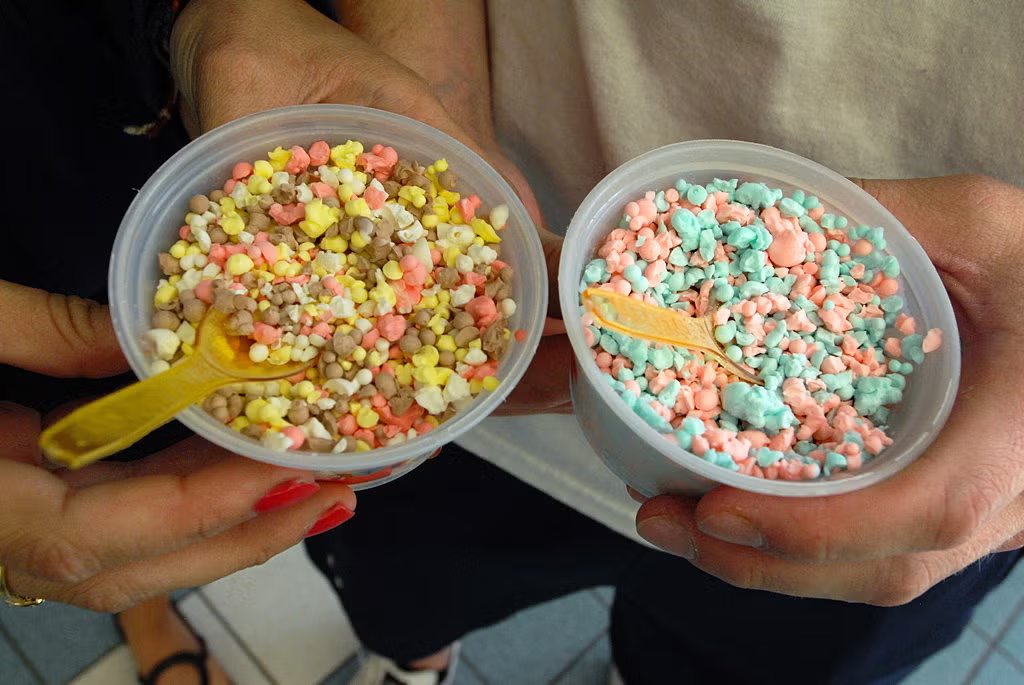
Dippin’ Dots and Mini Melts look almost identical: tiny frozen beads of ice cream served in a cup. For customers they’re a treat, and for vending operators they’re a way to stand out from standard ice cream freezers.
This guide compares Dippin’ Dots vs Mini Melts from a vending point of view. It covers history, how the beads are made, taste, storage, UK supply and which machine makes most sense for your site.
Quick answer: In the Dippin’ Dots vs Mini Melts comparison, both brands make beaded ice cream flash-frozen in liquid nitrogen and stored at around -40°C.
Dippin’ Dots is the original American brand from 1988. Mini Melts began in Europe in the 1990s and operates in over 30 countries, including the UK. For operators, supply and site matter more than the brand itself.
Beaded ice cream machines in stock
Dippin’ Dots and Mini Melts machines, tested and delivered free anywhere in the UK.
View the Dippin’ Dots Machine →Dippin’ Dots vs Mini Melts: the basics
Dippin’ Dots was created in 1988 by Curt Jones, a microbiologist, who started the business in his parents’ garage in Kentucky. The company is now owned by J&J Snack Foods, which bought it in 2022.
Mini Melts started in Europe in the 1990s and was founded by Tom Mosey and Nick Angus. Its US business is based in Florida, and the brand now sells in more than 30 countries.
Both brands sell through stalls, kiosks and vending machines at stadiums, attractions, shopping centres and leisure sites. In the UK, they’re most often seen at zoos, cinemas and family venues.
Dippin’ Dots vs Mini Melts: 7 proven facts
1. Both use the same basic process
Each brand drips ice cream mix into liquid nitrogen, which freezes it instantly into small beads. The quick freeze keeps ice crystals tiny, which gives the smooth texture.
2. Dippin’ Dots came first
Dippin’ Dots launched in 1988, several years before Mini Melts. It is often called the original beaded ice cream.
3. A patent fight ended in Mini Melts’ favour
Dippin’ Dots took Mini Melts to court over its patent and lost. Its patent was later ruled invalid in 2007, leaving the process open to competitors.
4. Both need to be stored at around -40°C
Beaded ice cream must be kept far colder than a normal freezer, which usually runs at about -18°C. Warmer storage makes the beads stick together into a lump.
5. Mini Melts has a wider international spread
Mini Melts operates in over 30 countries, including the UK. That can make supply easier to arrange for UK operators.
6. Both are big in vending
Mini Melts runs over two thousand kiosks in the US, according to The Spoon’s report on Mini Melts kiosks. Dippin’ Dots also sells many servings through vending machines.
7. Customers rarely notice the difference
In the Dippin’ Dots vs Mini Melts taste test, most customers struggle to tell them apart. Brand recognition and flavour choice matter more than recipe.
Side-by-side comparison
The table below sets out Dippin’ Dots vs Mini Melts on the points that matter for vending. Details can change, so check current supply with each brand.
| Point | Dippin’ Dots | Mini Melts |
|---|---|---|
| Founded | 1988, Kentucky, USA | 1990s, Europe |
| Founders | Curt Jones | Tom Mosey and Nick Angus |
| Owner | J&J Snack Foods | Mini Melts |
| Process | Liquid nitrogen flash-freezing | Liquid nitrogen flash-freezing |
| Storage | Around -40°C | Around -40°C |
| UK presence | Limited | Operates in the UK |
| Brand recognition | Very high, especially with US visitors | Growing |
How beaded ice cream is made
To understand Dippin’ Dots vs Mini Melts, start with the process. Normal ice cream is churned while it freezes, which adds air and forms larger ice crystals. Beaded ice cream skips the churning.
The mix is dripped into a bath of liquid nitrogen at about -196°C. Each drop freezes in seconds into a small, round bead with very little air.
Because there’s less air, the beads feel dense and creamy. They melt quickly on the tongue, which is part of the appeal.
Dippin’ Dots vs Mini Melts: taste and texture
On taste, Dippin’ Dots vs Mini Melts is close to a draw. Both offer classic flavours such as vanilla, chocolate, strawberry and cookies and cream, plus mixed and seasonal options.
Texture is almost identical too. Some customers say one brand’s beads feel slightly smaller or creamier, but that varies by flavour and how well the product has been stored.
Storage matters more than brand. A cup kept at the right temperature tastes better than either brand kept too warm.
Dippin’ Dots vs Mini Melts: storage matters most
Beaded ice cream needs storage at around -40°C. A standard ice cream freezer at -18°C to -25°C isn’t cold enough, and the beads will clump.
That’s why the Dippin’ Dots vs Mini Melts choice is really a choice about equipment and supply. Your machine must hold the right temperature, and your supplier must deliver product that stays frozen all the way.
Before buying, check the freezer specification of the machine and confirm how product will reach you. Our team can advise on both.
Dippin’ Dots vs Mini Melts: UK supply
Mini Melts lists the UK among the countries where it operates. That gives UK operators a clearer route to regular supply.
Dippin’ Dots is best known in the United States and sells in a number of other countries. In the UK it’s less common, which can make it more eye-catching but harder to source.
In the Dippin’ Dots vs Mini Melts decision, confirm your supply first. A machine without reliable stock earns nothing.
Dippin’ Dots vs Mini Melts in vending machines
In vending, Dippin’ Dots vs Mini Melts is an even match. Both brands are well suited to machines. Cups are pre-filled, light and easy to dispense, and customers know exactly what they’re getting.
Mini Melts has invested heavily in automated kiosks in the US, with telemetry and card payments built in. Dippin’ Dots also sells through vending at stadiums, arenas and malls.
For UK operators, a branded machine is a strong draw at family sites. Bright graphics catch children’s attention from across a room.
Branding and machine appeal
On branding, Dippin’ Dots vs Mini Melts tilts slightly towards Dippin’ Dots, which carries strong brand recognition, especially with visitors who know it from the US. Its colourful machines often become a talking point.
Mini Melts machines use similar bright, playful graphics. Either brand stands out more than a plain freezer.
In the Dippin’ Dots vs Mini Melts choice, think about which name your customers are more likely to know. At tourist sites with many US visitors, Dippin’ Dots may have the edge.
Best sites for Dippin’ Dots vs Mini Melts
Beaded ice cream sells best where families and young people gather. Footfall and dwell time matter more than the Dippin’ Dots vs Mini Melts brand choice.
- Leisure centres and swimming pools: a treat after a swim.
- Cinemas and bowling alleys: high footfall and long visits. See our guide to leisure centre vending machines.
- Zoos, theme parks and attractions: summer peaks and family crowds.
- Shopping centres: steady weekend trade.
- Holiday parks: strong seasonal demand.
Indoor sites with steady footfall all year are usually safer than seasonal outdoor sites. Our guide to vending machine locations explains how to judge a site.
Dippin’ Dots vs Mini Melts: pricing and margins
Dippin’ Dots vs Mini Melts cups both sell at a premium compared with standard ice cream lollies. Customers expect to pay more for the novelty.
On margins, Dippin’ Dots vs Mini Melts depends on what each supplier charges per cup and on delivery costs. Ask both for current trade prices and minimum orders before deciding.
Our guide to vending machine pricing explains how to set prices that sell. To estimate profit, see how much vending machines make.
Running costs
Whichever wins your Dippin’ Dots vs Mini Melts decision, keeping a freezer at -40°C uses more electricity than a standard chilled machine. Factor this into your profit sums before you commit.
Our guide to vending machine electricity costs shows how to estimate running costs. Card payment with telemetry on Irelley machines costs £10 a month plus 2% per transaction.
Restocking and handling
With Dippin’ Dots vs Mini Melts alike, beaded ice cream must stay frozen during restocking. Work quickly, keep the machine door open for as short a time as possible and move stock in insulated containers.
Plan restocks around busy periods such as school holidays and summer weekends. Telemetry helps you see when stock is running low.
Our restocking guide covers the basics of keeping a machine full without waste.
Dippin’ Dots vs Mini Melts and seasonality
Ice cream sells most in summer, and beaded ice cream is no exception. Outdoor sites can see sales drop sharply in winter.
Indoor sites such as cinemas and leisure centres smooth out the seasons. That’s often a bigger factor than Dippin’ Dots vs Mini Melts when it comes to annual profit.
Dippin’ Dots vs Mini Melts flavours
Flavour range is one of the few real differences in Dippin’ Dots vs Mini Melts. Both cover the classics, but their specials and seasonal flavours change from year to year and country to country.
- Vanilla and chocolate, the steady sellers
- Strawberry and other fruit flavours
- Cookies and cream
- Mixed “rainbow” or sherbet-style cups
- Seasonal and limited editions
In a vending machine, four or five flavours are usually enough. Ask your supplier which flavours sell best in the UK before placing your first order.
Allergens and dietary needs
Both brands make dairy ice cream, so every cup contains milk. Some flavours may also contain nuts, gluten, soya or egg.
Allergen information must be clear to customers. Make sure each cup is labelled and that the machine shows where to find allergen details.
If you sell food from a vending machine, you’ll usually need to register as a food business with your local council. Our vending machine regulations guide explains the rules.
Dippin’ Dots vs Mini Melts vs standard ice cream
Before choosing between Dippin’ Dots vs Mini Melts, it’s worth asking whether beaded ice cream suits your site at all. Standard ice cream lollies and tubs are easier to store and supply.
A normal ice cream freezer runs at around -18°C to -25°C and can be stocked from any cash and carry. Beaded ice cream needs -40°C storage and a specialist supplier.
The trade-off is novelty and price. Beaded ice cream stands out and sells at a premium, while standard ice cream is simpler. Our Ice Cream Freezer Machine with custom wrap suits standard ranges.
Dippin’ Dots vs Mini Melts for cinemas
Cinemas are one of the best homes for beaded ice cream. Customers arrive in a treat mood and often buy something before the film.
In the Dippin’ Dots vs Mini Melts choice for cinemas, brand matters less than placement. Put the machine where queues form for tickets or popcorn. See our cinema vending machines guide for more.
Dippin’ Dots vs Mini Melts for holiday parks
Holiday parks see huge summer demand from families. A branded beaded ice cream machine near the pool or play area can sell hundreds of cups on a busy weekend.
Winter trade drops at many parks, so check opening seasons before you commit. Our caravan park vending machines guide covers seasonal sites.
Card payments and telemetry
Most beaded ice cream buyers pay by card or phone. In the US, Mini Melts reports that credit cards make up around 60% of kiosk payments.
Contactless is essential for any Dippin’ Dots vs Mini Melts machine in the UK. Telemetry also helps, because it shows stock levels and alerts you if the freezer temperature rises.
Our contactless payment guide explains the options for UK machines.
A checklist before you buy
- Confirm reliable UK supply for your chosen brand.
- Check the machine’s freezer can hold around -40°C.
- Agree minimum orders and delivery costs with the supplier.
- Choose a site with year-round footfall where possible.
- Register as a food business with your local council.
- Plan restocks around school holidays and weekends.
Looking after an ultra-cold freezer
A freezer that runs at around -40°C works hard, so regular care keeps it reliable. Check door seals often, because even a small gap lets warm air in and causes frost.
Keep vents clear and leave space around the machine for air to flow. Defrost and clean on a schedule, moving stock to a cold box while you work.
For a Dippin’ Dots vs Mini Melts machine, a temperature alert is worth having. It warns you before a fault spoils a full load of stock. Our vending machine maintenance guide covers routine checks.
Questions customers ask
Why are the beads so cold? They’re stored much colder than normal ice cream, so they can feel icy at first and melt quickly.
Which is better? In the Dippin’ Dots vs Mini Melts debate, customers usually pick the flavour they like rather than the brand.
Common questions from operators
Is one brand easier to supply in the Dippin’ Dots vs Mini Melts choice? In the UK, Mini Melts has an established presence, so supply is often simpler to arrange. Check both before buying.
Do children prefer one brand? Children usually choose by flavour and colour rather than brand.
Can I switch brands later? Possibly, if the machine holds the right temperature and the cups fit. Branding on the machine would need changing too.
Dippin’ Dots vs Mini Melts: which should you choose?
For most UK operators, the Dippin’ Dots vs Mini Melts answer comes down to supply and site. Both make excellent beaded ice cream, and customers rarely notice the difference.
Choose Dippin’ Dots for its strong brand and standout look, especially at tourist sites. Choose Mini Melts if UK supply is easier to arrange in your area.
For a wider look at ice cream vending, read our ice cream vending machine guide.
Ice cream machines from Irelley
Irelley stocks the Dippin’ Dots Ice Cream Machine at £1,095 and the Mini Melts Ice Cream Machine, plus an Ice Cream Freezer Machine with custom wrap for standard ice cream. Each suits busy, family-friendly sites.
Every machine is tested before dispatch, delivered and installed free anywhere in the UK, and covered by a 12-month warranty. Payment plans are available with 0% interest.
The verdict on Dippin’ Dots vs Mini Melts
The Dippin’ Dots vs Mini Melts comparison is closer than most people expect. Both use the same liquid nitrogen process, both need -40°C storage and both taste much the same.
Pick the brand you can supply reliably and the site with the footfall to support it. Browse our vending machines for sale or contact our team for advice.
FAQ
Frequently asked questions
Both are beaded ice cream made by flash-freezing ice cream mix with liquid nitrogen. Dippin’ Dots is the older American brand, founded in 1988, while Mini Melts began in Europe in the 1990s and now operates in over 30 countries, including the UK.
Dippin’ Dots came first. Curt Jones founded it in 1988 in Kentucky, and Mini Melts followed in the mid-1990s.
Yes. Dippin’ Dots took Mini Melts to court over its patent and lost, and its patent was later ruled invalid in 2007.
Both brands store their ice cream at around -40°C, far colder than a normal freezer. Warmer storage causes the beads to stick together.
Yes. Irelley sells a branded Dippin’ Dots Ice Cream Machine with free UK delivery and installation. Check product supply in your area before you buy.
Mini Melts lists the UK among the more than 30 countries where it operates, so UK supply is generally easier to arrange than for Dippin’ Dots.
Taste is personal. Both offer similar classic flavours, and many customers find them very hard to tell apart.
Busy, family-friendly sites such as leisure centres, cinemas, bowling alleys, zoos, shopping centres and holiday parks.
A machine designed for beaded ice cream is built for very cold storage. Ask the supplier which products a specific machine can hold before switching ranges.
Beaded ice cream machines
Tested machines with free UK delivery and installation.