

Milk vending machine UK: 7 critical tips, best picks
Sell fresh milk direct from the farm, with bottles, milkshakes, chilling, hygiene and the rules explained.
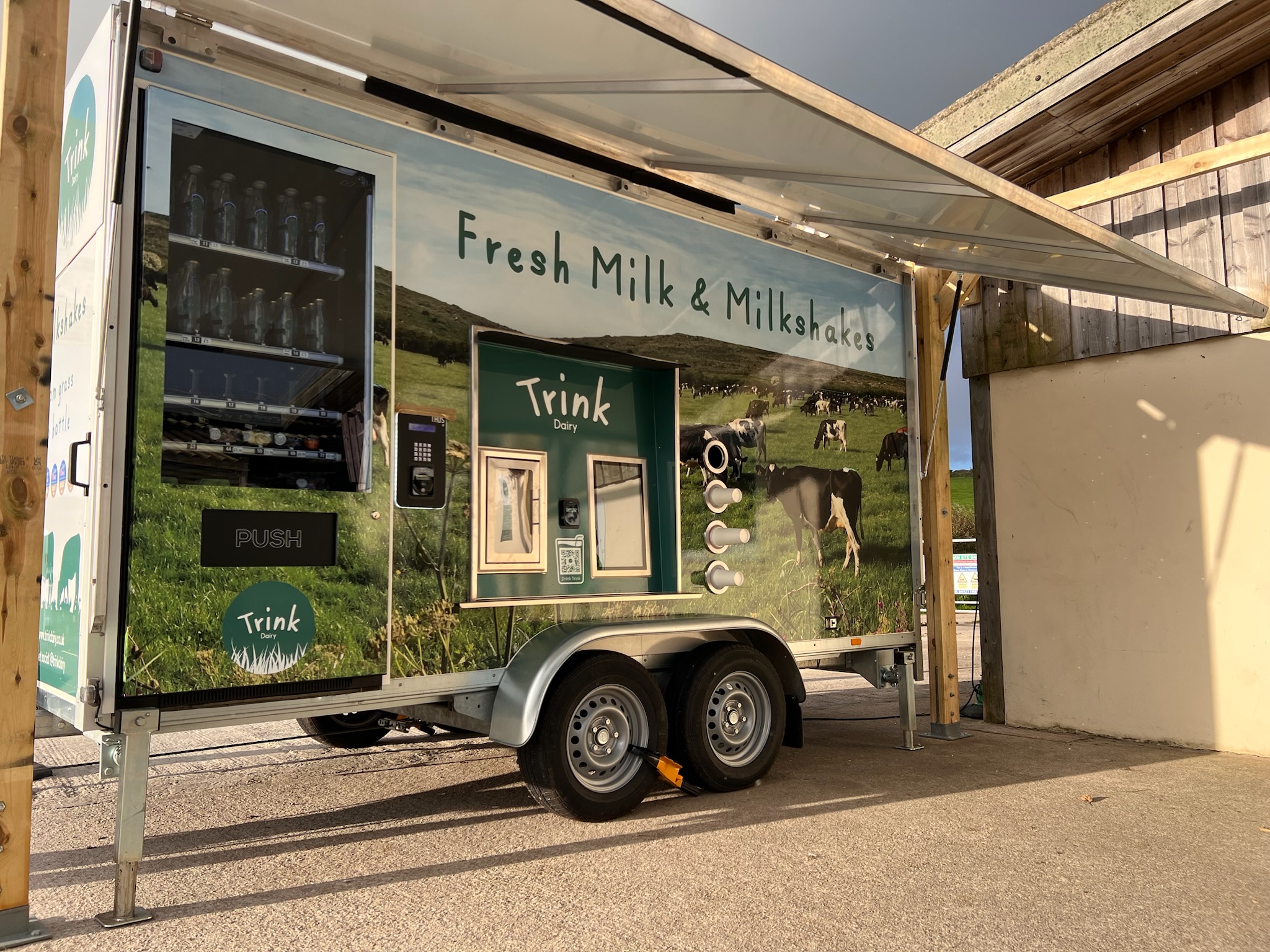
A milk vending machine lets dairy farms sell fresh milk straight to customers, often at several times the price a processor pays. Customers fill reusable glass bottles, add a milkshake syrup if they like and come back week after week.
This guide covers 7 critical tips for running a milk vending machine in the UK: pasteurised and raw milk rules, bottles, milkshakes, chilling, cleaning, payment, location and costs.
Chilled machines for farm sales
Fresh produce and chilled machines, delivered and installed free anywhere in the UK within 24 hours.
View the Fresh Produce Machine →Why milk vending machines are popular
Dairy farmers have faced years of low and unpredictable milk prices from processors, which is why the milk vending machine has become popular. Selling direct gives them control over price and a closer connection with customers.
Shoppers like milk vending because it’s fresh, local and often plastic-free. Many genuinely enjoy the experience of filling a glass bottle at the farm themselves.
A milk vending machine also attracts people to the farm, which helps sell eggs, meat and other produce alongside it.
Who buys from a milk vending machine?
Milk vending machine customers are often local families, people who care about food miles and shoppers who want to cut plastic. Many become regulars, filling the same bottle every few days.
Visitors to the countryside, walkers and cyclists also stop for a fresh drink, especially in summer. Children love milkshakes, which turns a quick stop into a proper family outing.
Cafés, bakeries and small shops sometimes buy in bulk too, if you can supply larger quantities.
Is a milk vending machine worth it?
For farms near towns, villages or busy roads, a milk vending machine can be very worthwhile. Even a few hundred litres a week sold direct can add meaningful income.
Costs include the machine, chilling, bottles, cleaning products, power, labelling and your own time. Success depends heavily on location and consistent quality.
Use our vending machine profit calculator to test the numbers for your farm.
7 critical tips for a milk vending machine
Use these tips to set up a milk vending machine that’s safe, legal and popular.
1. Decide pasteurised or raw
For a milk vending machine, pasteurised milk is simpler legally. Raw milk has strict extra controls in England and is banned in Scotland.
2. Register as a food business
Every milk vending machine is a food business, so register with your local council before selling.
3. Keep milk cold
Reliable refrigeration, temperature monitoring and alarms are essential for any milk vending machine.
4. Plan bottles
Offer reusable glass bottles, either sold from a separate machine or brought by customers.
5. Clean thoroughly and often
Milk vending machine lines, nozzles and tanks need regular, careful cleaning to prevent contamination.
6. Choose a visible location
A sheltered roadside hut with parking brings far more customers than a hidden yard.
7. Go cashless
Card and phone payment are expected and reduce theft risk.
“A milk vending machine turns a commodity into a premium product. Customers will pay more for fresh, local milk they pour themselves.”
Pasteurised versus raw milk
Most milk vending machine operators sell pasteurised milk. It has been heat-treated to kill harmful bacteria, and the rules are similar to selling other chilled dairy products.
Raw (unpasteurised) cow’s milk is more tightly controlled. In England, the Food Standards Agency’s raw drinking milk guidance explains that only registered raw milk farms can sell it, including from vending machines, with health warnings and regular inspections.
Raw cow’s milk can’t be sold to consumers in Scotland, and Wales and Northern Ireland have their own rules. Check carefully before selling raw milk anywhere.
Labelling and information
Customers need clear information at the milk vending machine. Display the farm’s name, the type of milk, pasteurisation status, storage advice and how long the milk keeps once bottled.
Raw milk must carry the required health warning. Allergen information should be clear for milk and any milkshake flavours.
Simple, honest labelling builds trust and helps customers use the milk safely at home.
Food business registration
Selling milk from a machine makes you a food business. Register with your local council before you start, and follow hygiene rules for storage, handling and cleaning.
Many dairy farms already have dairy hygiene approvals for their milk production. Selling direct adds extra responsibilities around labelling, chilling and the machine itself.
Our guide to vending machine regulations covers the wider rules.
How a milk vending machine works
Milk is stored in a chilled tank inside the milk vending machine. Customers place a bottle under the nozzle, choose a quantity, pay and the machine dispenses the milk.
Most machines pour a set volume, such as half a litre or a full litre. Some let customers choose exactly how much they want to buy.
The tank is filled from the farm’s own milk, usually daily, and cleaned between batches.
Filling and managing the tank
Most farms fill the milk vending machine tank once a day, sometimes twice in busy periods. Only fill as much as you expect to sell before the next clean.
Never top up old milk with fresh milk. Empty, clean and refill to keep batches separate and safe.
Track how much is sold each day to plan tank fills and cut waste.
Choosing the right size
Machines come with different tank sizes. A small farm selling a few dozen litres a day needs less capacity than a busy roadside site near a town.
Start with a size that matches realistic demand, so milk is sold well within its shelf life. It’s better to refill twice in a busy day than to leave a large tank half full overnight.
Bottles and packaging
Reusable glass bottles are the classic choice for a milk vending machine. Customers buy a bottle once and simply refill it on every visit.
Many farms sell bottles from a second machine beside the milk dispenser. Our custom retail machine can sell bottles, lids and milkshake syrups.
Remind customers to wash bottles thoroughly between every visit. Clear instructions near the machine help.
Bottle hygiene for customers
Reusable bottles only work if customers keep them clean. Display simple advice: wash in hot soapy water or a dishwasher, dry fully and keep lids clean.
Some farms sell bottle brushes or offer a bottle exchange, where customers swap a used bottle for a clean one. It adds work but gives extra peace of mind.
Milkshakes
Milkshake syrups are a popular milk vending machine add-on. Customers add flavour to their milk, giving families and children a fun reason to visit.
Some machines dispense flavours directly into the bottle. Others sell syrup sachets or bottles from a separate machine.
Sustainability benefits
A milk vending machine with reusable glass bottles can save thousands of plastic bottles a year. Many customers choose milk vending for exactly this reason.
Shorter supply chains also mean fewer food miles. Promoting these benefits helps attract eco-minded shoppers.
Some farms offer a discount or loyalty stamp for customers who bring their own bottles.
Chilling and temperature control
Milk must stay cold from the moment it leaves the bulk tank until it reaches the customer. A milk vending machine needs reliable refrigeration with a temperature display.
Alarms or telemetry should alert you if the temperature rises. If it does, stop sales, investigate and discard milk if needed.
Keep simple daily temperature records. Environmental health officers may ask to see them.
Testing and quality checks
Regular milk testing protects customers and the farm. Pasteurised milk should be tested in line with your hygiene approvals, while raw milk producers face extra official sampling.
Keep records of test results, temperatures and cleaning. If a problem appears, stop selling from the milk vending machine until it’s resolved.
Cleaning and hygiene
Milk lines, nozzles, tanks and drip trays must be cleaned thoroughly and regularly. Follow the manufacturer’s cleaning routine closely and use only food-safe products.
Keep the area around the machine clean and dry, and wipe the nozzle area often. Our guide to cleaning a vending machine covers general routines.
Good hygiene protects customers and the farm’s hard-earned reputation.
Selling other dairy products
A milk vending machine brings people to the farm, so it makes sense to sell other dairy products too. Cheese, butter, cream, yoghurt and ice cream all sell well alongside fresh milk.
Eggs and baked goods are popular additions. A chilled produce machine beside the milk vending machine can handle most of these lines.
Machines to consider
Chilled produce
Our fresh produce vending machine sells eggs, cheese, butter and bottled milk alongside a milk dispenser.
Bottles and syrups
Our custom retail machine handles bottles, lids and milkshake flavours.
Outdoor shelter
Our outdoor dual vending station with canopy shelters machines and customers.
Ice cream
Dairy farms making ice cream can add our custom-wrap ice cream freezer machine.
Starter
Milk Only
- Machines: Milk dispenser plus bottle machine
- Range: Pasteurised milk and syrups
- Location: Farm gate hut
- Payment: Card and phone
- Best for: First-time milk vending
Full Setup
Dairy Vending Hut
- Machines: Milk, chilled produce and ice cream
- Range: Milk, cheese, butter, eggs and ice cream
- Location: Roadside hut with parking
- Payment: Card and phone
- Best for: Established dairy farms
Our take: a milk vending machine works best with pasteurised milk, reliable chilling, strict cleaning, reusable bottles and a visible roadside hut. Check raw milk rules very carefully.
Vending huts
Most milk vending machine setups sit inside a small timber hut or converted building near the farm entrance. It protects the machine, keeps customers dry and allows good lighting.
Inside, there’s room for the milk machine, a bottle machine and perhaps a chilled produce machine. A small sink or hand sanitiser point is a very helpful touch for customers.
Check whether a new hut or signage needs planning permission before building.
Location
The best spots are visible from a road, with safe parking and easy access. Customers shouldn’t walk through working yards or near livestock.
A small hut or converted building keeps the machine dry and gives customers somewhere sheltered to fill bottles. Our guide to vending machine locations covers wider principles.
Restocking routine
A clear daily routine keeps everything safe and smooth. Typically, that means emptying and cleaning the tank, refilling with fresh milk, checking temperatures and restocking bottles and syrups.
Write the routine down so anyone on the farm can follow it. Our guide to restocking a vending machine covers general planning tips.
Opening hours
Many farms run their milk vending machine from early morning until evening, then lock the hut overnight. Others offer 24-hour access where security allows.
Choose opening hours that suit your daily restocking and cleaning routine. Display opening times clearly at the gate and online.
Power and installation
A milk vending machine needs a safe, reliable power supply for refrigeration, installed by a qualified electrician. Check weatherproofing if the machine is in an outbuilding.
Our guide to vending machine electricity costs helps estimate running costs.
Payment
Card and phone payment are essential. With Irelley, card payments with telemetry cost £10 a month plus 2% per transaction, as our contactless vending machine guide explains.
Test mobile signal at the machine’s exact location, as rural coverage can be weak.
Seasonal patterns
Milk vending machine sales often rise in spring and summer, when more people visit the countryside and milkshakes are popular. School holidays bring families.
Winter can be quieter, but loyal regulars usually keep coming. Plan tank fills around these patterns to keep waste low.
Pricing
Milk vending customers usually pay more than supermarket prices for fresh, local milk. Check nearby farms and farm shops to set a fair, competitive price.
Display prices clearly, including the cost of bottles and syrups. Consistent pricing builds trust.
Accessibility
Customers of all ages and abilities should be able to fill a bottle easily. Keep the nozzle area, payment panel and bottle shelf within comfortable reach, including from a wheelchair.
A firm, level path from the car park to the hut helps in wet weather. Good lighting matters for darker winter evenings.
Security
Unstaffed milk vending machine huts can attract theft or vandalism. Cashless payment, CCTV, lighting and a lockable building all help.
Our vending machine insurance guide explains the cover you’ll need.
Customer service
Display a phone number or QR code for problems and refunds. Respond quickly, especially if a customer reports an issue with taste or quality.
Friendly, fast service turns a milk vending machine into a trusted part of the community.
Branding
A wrap with the farm’s name, logo and photos of the herd makes the machine instantly recognisable. It also adds to the experience for families.
Irelley’s vinyl wraps cost from £100 to £300 for a DIY kit or £350 to £950 for a full turnkey wrap, excluding VAT.
Marketing
Social media, local groups and village newsletters help spread the word. Photos of the herd and the farm help customers feel properly connected to their milk.
Many farms find their milk vending machine becomes a local talking point, with families visiting regularly.
Measuring results
Card payment and telemetry show how many litres sell each day and at what times. Use that data to plan tank fills, restocking and cleaning around the busiest periods.
Track waste too. If milk is regularly left over, reduce fills or adjust opening hours. If the tank empties early, consider a larger machine or a second fill.
Ask regular customers for feedback on taste, price and opening times. Their answers often point to simple improvements.
Working with other farms
Some dairy farms supply milk to vending machines run by neighbouring farms, village shops or community groups. It spreads the reach of the farm’s milk without extra sites to manage.
Agree clear terms on hygiene, delivery, pricing and responsibility for the machine. Everyone involved must follow the same food safety standards.
Getting started
Start with pasteurised milk, a single milk vending machine and a bottle machine in a sheltered spot. Add other dairy products once you clearly understand local demand.
Our payment plans let you pay a 25% deposit and spread the rest over up to 12 months at 0%, with no credit check.
Checklist before you start
- Registered as a food business with your council
- Raw milk rules checked if relevant
- Reliable chilling, monitoring and alarms
- Cleaning routine and records in place
- Bottles and labels ready
- Card payment and mobile signal tested
Ticking every box gives your milk vending machine a safe, successful start.
Common mistakes
The biggest milk vending machine mistake is weak cleaning routines. Dirty lines and nozzles risk contamination and complaints.
The second is selling raw milk without the right registration and controls.
The third is a hidden location with no parking.
The last is overfilling the tank. Fill only what you expect to sell before the next clean, so every customer gets fresh milk.
Buying from Irelley
Browse our vending machines for sale, or contact our team to plan a milk vending setup. We deliver and install free anywhere in the UK, within 24 hours.
Every machine comes with a 12-month warranty covering parts and remote support.
FAQ
Frequently asked questions
Yes. Many dairy farms sell pasteurised milk from vending machines. Raw milk can also be sold this way in England by registered raw milk producers, but it’s banned in Scotland.
Yes. Selling milk is a food business, so you must register with your local council. Raw milk producers face extra registration, inspection and testing.
Customers buy or bring a bottle, place it under the dispenser, pay by card or coin and the machine pours chilled milk. Some machines also sell milkshake syrups.
Milk must be kept chilled at a safe temperature throughout. Machines need reliable refrigeration, temperature monitoring and alarms in case of faults.
Selling direct often earns far more per litre than selling to a processor, but success depends on location, footfall, quality and good hygiene routines.
Sell your milk direct
Chilled, retail and outdoor machines, delivered and installed free anywhere in the UK.
[…] Farms: our guides to farm shop vending machines and milk vending machines. […]
[…] milk vending machine guide covers the equipment in more […]