

Vending machines for factories: 7 critical tips, best picks
Food, drinks and PPE for every shift, from early starts to 3am breaks, with hygiene and welfare rules covered.
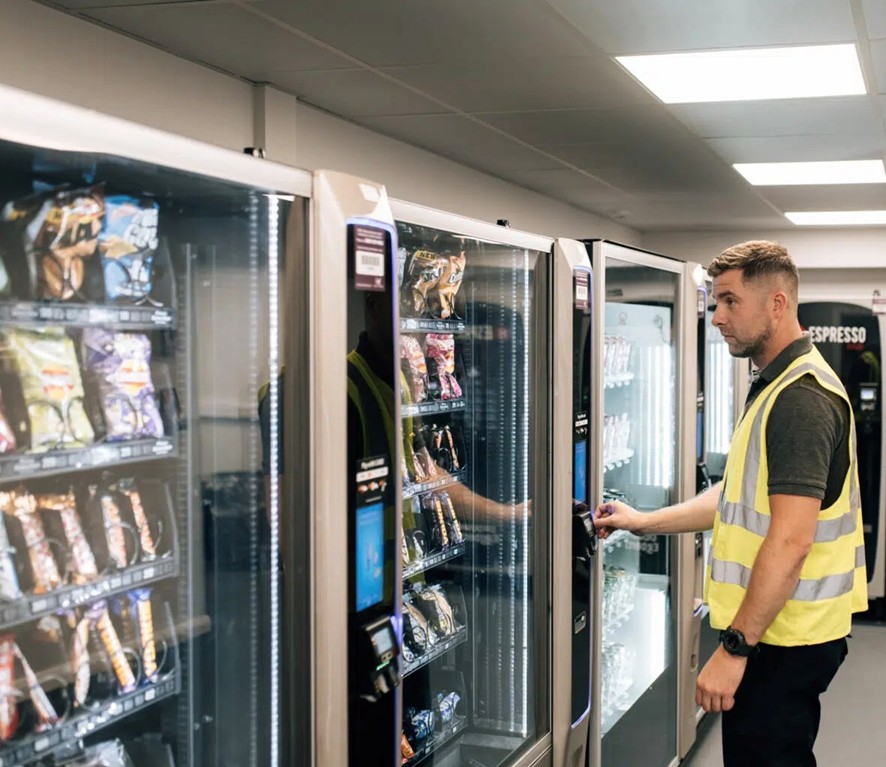
Vending machines for factories keep production running. Shift workers need food, drinks and essentials at all hours, often when canteens are closed and shops are miles away.
This guide covers 7 critical tips for choosing vending machines for factories: the right machine mix, shift patterns, hygiene zones, welfare rules, PPE vending, subsidised pricing and the best machines to consider.
Machines for every shift
Combo, hot drinks, water and PPE machines, delivered and installed free anywhere in the UK within 24 hours.
View Machines For Sale →Why factories need vending
Factories often run early, late and night shifts, which is why vending machines for factories matter. Canteens usually cover only part of the day, and many sites sit on industrial estates with no shops nearby.
Vending machines for factories fill that gap. Staff get a hot drink, a snack or a proper meal during short breaks without leaving site.
Good vending also supports staff wellbeing, morale and retention. Workers notice when an employer makes breaks easier, quicker and more comfortable.
Benefits for employers
Vending machines for factories do more than feed staff. They keep people on site during breaks, which helps shifts restart on time.
They also support wellbeing, especially when healthy options and subsidised hot drinks are included. Staff who feel looked after are more likely to stay.
For employers, vending machines for factories are a low-effort way to improve welfare facilities without the cost of a 24-hour canteen.
How many vending machines for factories do you need?
The number of vending machines for factories depends on headcount, shifts and layout. A small site with one shift may need just a combo and a hot drinks machine.
Larger sites with hundreds of staff and several break areas often need machines in each area. Long queues at break time are a clear sign you need more capacity.
As a rough guide, plan machines around break-time demand rather than total daily sales. Vending machines for factories must serve a rush of people in a 15-minute window.
7 critical tips for vending machines for factories
Use these tips to choose vending machines for factories that serve every shift well.
1. Cover all shifts
Choose vending machines for factories that keep night and weekend workers fed, not just day staff. Vending is often the only option outside canteen hours.
2. Get the machine mix right
A combo for snacks and drinks, a hot drinks machine and water cover most needs on most sites. Larger sites may add fresh or hot food for longer shifts.
3. Place machines near break areas
Breaks are short on production lines, so vending machines for factories need to be close by. Put machines in or beside rest areas so staff don’t waste break time walking.
4. Respect hygiene zones
Food factories and clean rooms have strict rules about food and drink near production. Keep machines in designated welfare areas, well away from the line.
5. Go cashless
Many workers now carry little or no cash. Card, phone and staff ID payments make breaks quicker.
6. Consider PPE vending
PPE machines issue gloves, glasses and earplugs around the clock and track usage. They cut waste and free stores staff for other tasks.
7. Think about subsidies
Subsidised prices or free items are a valued perk, especially on night shifts. Owning the machines makes this simple to manage and track.
“In a factory, the vending machine is the canteen at 3am. Get it right and every shift notices.”
The right machine mix
Most vending machines for factories fall into a few main types.
Combo machines
Snacks and cold drinks in one cabinet. Large sites suit a high-capacity machine such as our large black combo with six shelves.
Hot drinks machines
Coffee and tea are essential on early and night shifts in vending machines for factories. Our Nescafé hot drinks machine and Highland Estates coffee machine suit busy break rooms.
Water machines
Hot, physical work makes hydration important. Our Dasani water bottle vending machine offers chilled bottled water alongside free drinking water.
PPE machines
Our PPE essentials vending machine issues safety items to staff using controlled access, so supplies are available on every shift.
Smaller Factory
Compact Setup
- Machines: One combo plus hot drinks
- Shifts: One or two
- Space: Shared break room
- PPE: Issued from stores
- Best for: Under 100 staff
Larger Factory
Full Setup
- Machines: Combos, hot drinks, water and PPE
- Shifts: 24/7
- Space: Several break areas
- PPE: Vending with usage tracking
- Best for: Large multi-shift sites
Where to place vending machines for factories
Location within the site matters as much as the machine. Place vending machines for factories in or next to break rooms, canteens and rest areas.
On large sites, spread machines across several areas so no team has a long walk. Consider walking time from the furthest workstation to the nearest machine.
Keep machines well away from production lines, forklift routes and loading bays. Good lighting, power and space for queues all help.
Our guide to {L2(‘vending-machine-locations-uk’,’vending machine locations’)} covers placement principles in more detail.
Rolling out machines across a site
On large sites, roll out vending machines for factories in stages. Start in the busiest break area, measure use and staff feedback, then add machines elsewhere.
Keep machine types and payment systems consistent across the site. Staff then know what to expect wherever they take their break, and restocking stays simple.
Review sales after a few months to see which areas need more capacity or a different range. Data from card payments makes this easy.
Welfare rules
The Workplace (Health, Safety and Welfare) Regulations 1992 require employers to provide suitable welfare facilities, including drinking water and somewhere to rest and eat. Vending machines for factories support these facilities but don’t replace them.
Free drinking water must always be available, whatever vending machines for factories you install. Machines can add choice, such as chilled bottled water, hot drinks and food.
Hygiene zones and food factories
Food and drink manufacturers have strict controls on what enters production areas, which shapes vending machines for factories in this sector. Machines must sit in designated welfare areas, away from production.
Allergen controls matter too. Some food factories restrict nuts or other allergens on site, so check the site’s policy before choosing the product range.
PPE vending in factories
As part of vending machines for factories, PPE machines give staff controlled, 24/7 access to safety items. Workers scan an ID card or enter a code, and the system records what they take.
Employers must provide required PPE free of charge, so these machines issue items rather than sell them. Usage data helps managers spot waste and reorder in time.
Our take: the best vending machines for factories cover every shift, sit close to break areas, take card payment and include hot drinks. Add PPE vending on larger sites.
Products that suit shift work
Shift workers using vending machines for factories want filling, convenient food and drinks. Popular choices include sandwiches, pasta pots, soups, crisps, chocolate, cereal bars, fruit, water and hot drinks.
Offer healthier options in vending machines for factories too, as many employers want to support staff wellbeing. Our healthy vending combo helps balance the range.
Note that England plans to ban high-caffeine energy drinks from all vending machines from April 2027, subject to Parliamentary approval. Coffee and tea are exempt.
Night shift needs
Night workers often rely completely on vending. They want filling food, hot drinks and something to keep them going through the early hours.
Make sure machines are fully stocked before night shifts start, and that hot drinks machines are cleaned and ready. Remote stock data helps you see exactly what night teams buy most.
Healthier options matter at night too. Shift work can disrupt eating patterns, so balanced choices support staff wellbeing.
Hot and fresh food
Larger factories without a 24-hour canteen may add fresh or hot food vending. Sandwiches, salads, pasta pots and ready meals give night staff a proper meal.
Fresh food needs chilled machines, careful date checks and frequent restocking. A chilled cabinet like our fresh produce vending machine keeps products at the right temperature.
Pair fresh food with microwaves in the break room so staff can heat meals quickly.
Hot weather and heavy work
Factories can get hot, especially near ovens, furnaces and heavy machinery. In summer, demand for cold drinks and water rises sharply.
Stock extra water and soft drinks during hot spells, and check that chilled machines are coping. Remember that free drinking water must always be available alongside any vending.
Hydration supports safety as well as comfort, because tired, dehydrated workers are more likely to make mistakes.
Subsidised vending
Many employers subsidise vending machines for factories as a valued staff benefit. Options include reduced prices, free hot drinks or free items on night shifts.
Owning vending machines for factories makes subsidies easy to set and track. Card payment with telemetry shows exactly what a perk costs each month.
What it costs
The cost of vending machines for factories depends on the number and type of machines. Combo and hot drinks machines are the usual starting point, with PPE and fresh food machines added on larger sites.
Irelley’s payment plans let you pay a 25% deposit and spread the rest over up to 12 months at 0%, with no credit check. Delivery and installation are free anywhere in the UK, within 24 hours.
Use our vending machine profit calculator to model costs and sales for your site.
Payment and data
Card and phone payments are essential for vending machines for factories, and some sites use staff ID or closed-loop payment. With Irelley, card payments with telemetry cost £10 a month plus 2% per transaction, as our contactless vending machine guide explains.
Remote stock data means machines stay full across all shifts. Our guide on how to restock a vending machine covers planning around shift patterns.
Shutdowns and quiet periods
Many factories have planned shutdowns, such as summer or Christmas breaks. Run stock down before these periods so nothing goes out of date while the site is closed.
Restock in good time before production restarts after the break. Remote stock data makes it easy to see what vending machines for factories need after a shutdown.
Accessibility
Make sure every worker can use the machines, including those with disabilities. Controls, payment panels and collection trays should be within easy reach.
Clear labelling and simple menus help everyone, especially during busy breaks when vending machines for factories see heavy use.
Security and access
Factories usually have controlled access, which makes vending relatively secure. Cashless payment adds extra protection by removing cash from machines entirely.
PPE machines often use staff ID or codes, so only authorised people can take items. Usage reports show who took what and when, helping control costs.
Maintenance and reliability
A broken machine on a night shift means hungry, unhappy staff and a poor reputation for the canteen team. Choose reliable vending machines for factories with a warranty and responsive support.
Regular cleaning and quick checks prevent most faults. Our guides to vending machine maintenance and cleaning a vending machine set out a simple routine.
Owning or using an operator
Factories can buy their own machines or use a vending operator. Owning gives full control over range and prices, which makes subsidies easy.
Operators handle stock and maintenance, often paying commission or offering free placement. Our guide to a free vending machine for your business compares the two approaches.
For larger sites with many shifts, owning vending machines for factories often works out better value over time.
Insurance and responsibility
Agree who is responsible for the machines, whether you own them or an operator does. Damage, theft and breakdowns should all be covered by a clear agreement.
If you own vending machines for factories, add them to your business insurance or arrange specific cover. Our vending machine insurance guide explains the options.
Listening to staff
Ask staff what they want from vending machines for factories. Suggestion cards, short surveys or a chat with team leaders reveal popular products and gaps.
Acting on feedback shows staff that their comfort genuinely matters. Small changes, such as adding a favourite snack or a healthier option, can lift satisfaction noticeably.
Sustainability
Many manufacturers have sustainability targets. Energy-efficient machines, recyclable packaging and recycling points beside machines all help.
Cans instead of plastic bottles and reusable cups for hot drinks can reduce waste further. Energy-saving modes during shutdowns and quiet weekends also cut power use.
Multi-site manufacturers
Companies with several factories can standardise vending across all sites. One supplier, one payment system and one reporting dashboard make management far easier.
Compare sales and costs between sites to see where vending machines for factories work best, and share good ideas across the business. Our guide to choosing the right vending machine helps you pick models that suit different layouts.
Choosing a supplier
Pick a supplier that understands shift work and industrial sites. Ask about machine reliability, warranty, delivery, installation and how faults are handled.
Check that machines can take card and phone payments and support telemetry as standard. Ask whether PPE machines can use your existing staff ID cards.
A good supplier helps you plan vending machines for factories around your layout and headcount, rather than just selling a machine.
Factory vending checklist
Before choosing vending machines for factories, check:
- Which shifts need vending, including nights and weekends
- How many staff use each break area
- Any hygiene or allergen rules on site
- Whether PPE vending would help
- Whether you’ll subsidise prices
- Power, space and access for each machine
Clear answers make it easy to plan the right setup for your site.
Getting started
Start by mapping your shifts, break areas and headcount. That tells you how many vending machines for factories you need and where they should go.
Choose a core setup, usually a combo and a hot drinks machine per main break area, then add water, fresh food or PPE machines where demand is clear. Card payment and telemetry should be standard from day one.
Review the first three months of sales and staff feedback before expanding. A measured rollout avoids buying machines you don’t need.
Involve team leaders and health and safety staff early. They know the site’s routines and rules, and their support makes the rollout smoother.
Common mistakes
The biggest mistake with vending machines for factories is planning only for day shifts. Night workers often rely on vending completely for food and drink.
The second is placing machines far from break areas. Short breaks leave no time for long walks across the site.
The third is ignoring hygiene and allergen rules in food factories.
The last is choosing cheap, unreliable machines. Breakdowns on busy shifts quickly undo any savings on vending machines for factories.
Buying from Irelley
Browse our vending machines for sale, or contact our team to plan vending machines for factories of any size. We deliver and install free anywhere in the UK, within 24 hours, and our payment plans spread the cost at 0%.
Every machine comes with a 12-month warranty covering parts and remote support.
FAQ
Frequently asked questions
Most factories use a combo or snack machine, a hot drinks machine and often a water or PPE machine. Large sites with night shifts may add hot or fresh food vending.
For smaller sites or night shifts, vending machines can provide food and drink when a canteen isn’t viable. Larger sites often use vending alongside a canteen.
Yes. UK workplace rules require employers to provide an adequate supply of free drinking water. Vending machines can add choice but don’t replace this duty.
Yes. PPE vending machines issue items such as gloves, glasses and earplugs to staff, often using ID cards. Employers must provide required PPE free of charge.
Many employers subsidise vending as a staff benefit, especially for night shifts. Owning the machine makes it easy to set reduced prices or free items.
Keep every shift fuelled
Combo, hot drinks, water and PPE machines, delivered and installed free anywhere in the UK.