

Vending machine stock: 7 critical supplier tips, best buys
Where to buy snacks and drinks for your machines, how to compare prices and how to keep stock fresh and profitable.
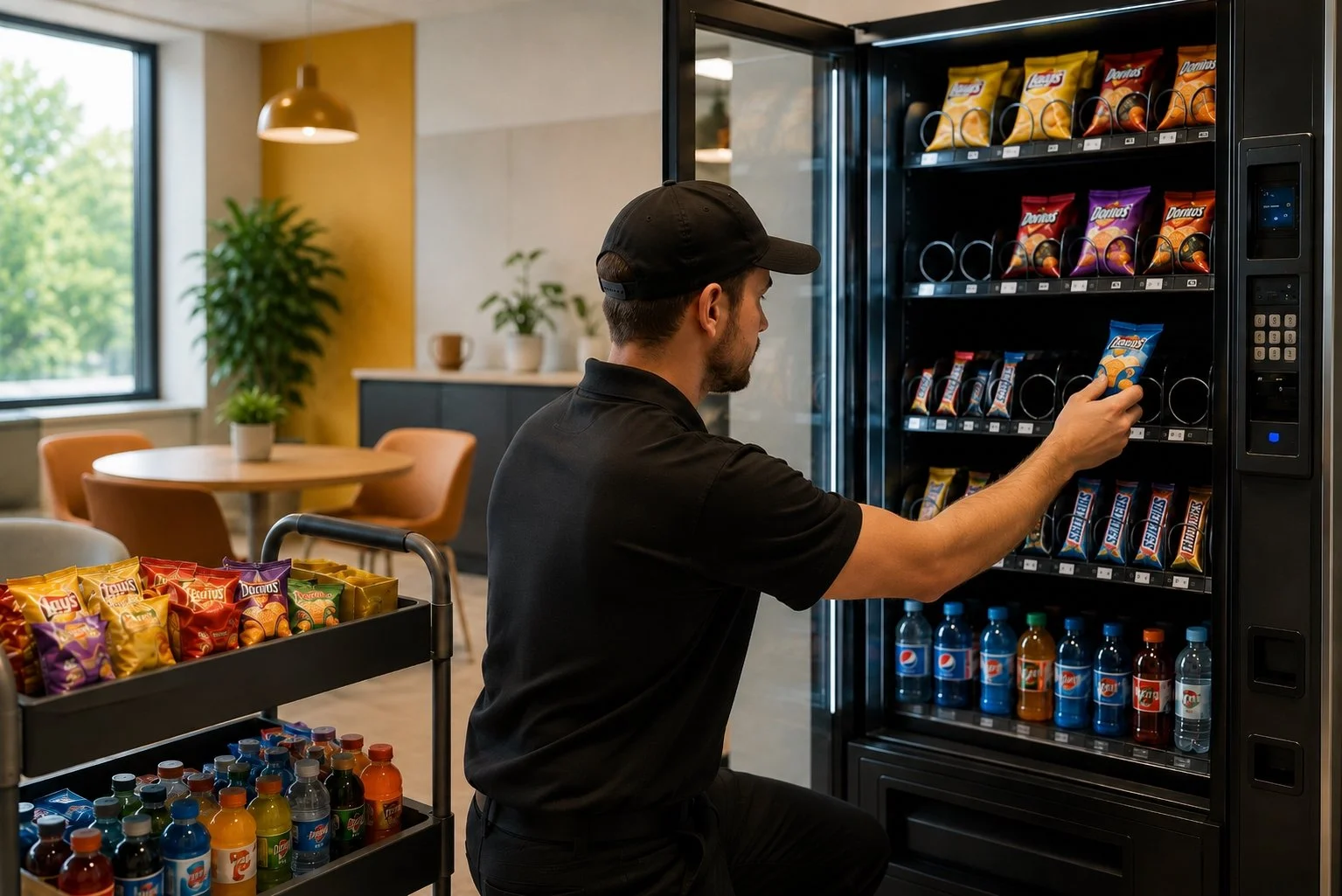
Where you buy vending machine stock has a big effect on profit. The same can of drink can cost noticeably more from one source than another, and over thousands of sales that difference adds up.
This guide covers 7 critical tips for buying vending machine stock in the UK: the main supplier types, how to compare prices, minimum orders, dates and quality, VAT, storage and how to build a buying routine that keeps machines full.
Ready to start vending?
Tested machines with free UK delivery, installation within 24 hours and 0% payment plans.
View Machines For Sale →Why your supplier matters
Product cost is usually the biggest ongoing expense in vending. Buying vending machine stock a few pence cheaper per item can make a real difference to monthly profit.
Supplier choice also affects reliability and how often your machines run empty. Running out of best sellers because a supplier is out of stock costs sales, so many operators use more than one source.
Good suppliers also help with dates, product information and new lines. The right partner makes buying vending machine stock simpler and more profitable.
Where to buy vending machine stock
There are five main ways to buy vending machine stock in the UK.
Cash and carry wholesalers
Trade wholesalers such as Booker and Bestway sell snacks and drinks by the case to businesses. You visit the warehouse, pick your stock and take it away.
Delivered wholesale
Many wholesalers deliver to your premises, which saves time. Delivery usually needs a minimum order value, so it suits operators with several machines.
Warehouse clubs
Membership clubs such as Costco sell large packs at competitive prices. They’re popular with small operators who don’t yet meet trade minimums elsewhere.
Direct from brands
Larger operators can sometimes buy directly from manufacturers or their distributors. This needs higher volumes but can bring better prices and support.
Specialist vending suppliers
Some suppliers focus on vending, offering product sizes and packs designed for machines. They can be useful for hot drinks ingredients and vend-sized products.
Getting a trade account
Most trade wholesalers ask for proof that you’re a business before you can buy vending machine stock from them. That might be a company registration number, a VAT number or business bank details.
Sole traders can usually open an account too, though some wholesalers ask for extra documents. Warehouse clubs often have simpler sign-up for small businesses.
Open accounts with two or three suppliers early. It gives you choice and a backup when you need vending machine stock in a hurry.
7 critical tips for buying vending machine stock
Use these tips to buy vending machine stock that sells well at the right price.
1. Compare unit costs
Divide the case price by the number of items to get the unit cost. A cheaper-looking case can work out more expensive per item.
2. Buy what sells
Focus your money on proven best sellers. Our guide to the best snacks for vending machines is a good starting point.
3. Watch the dates
Check best-before and use-by dates when you buy. Long dates give you more time to sell before stock needs to be cleared.
4. Don’t overbuy
Big discounts on bulk packs only help if you can sell everything in date. Buy in line with your sales data.
5. Use more than one supplier
Having a backup source protects you when a product is out of stock. It also gives you a way to compare prices.
6. Keep VAT invoices
If you’re VAT-registered, you’ll need proper VAT invoices to reclaim input VAT. Trade wholesalers provide them as standard.
7. Plan around regulations
Rules can change what you’re allowed to sell. From April 2027, England plans to ban high-caffeine energy drinks from all vending machines, subject to Parliamentary approval, so avoid stockpiling them.
“The best vending machine stock isn’t the cheapest. It’s the product that sells fast, at a healthy margin, before its date runs out.”
Your first stock order
Your first order of vending machine stock should be cautious. Buy enough to fill the machine and cover a week or two of sales, but no more.
Pick a mix of familiar best sellers across categories: crisps, chocolate, biscuits, a healthy option or two, water and popular soft drinks. That gives you useful sales data quickly.
After two or three weeks, review what sold and adjust your next order. Your second order of vending machine stock will be far more accurate than your first.
Comparing prices properly
Price comparisons for vending machine stock can be misleading. Promotions, pack sizes and delivery charges all change the real cost of vending machine stock.
Work out the unit cost for each product from each supplier, then add any delivery cost spread across the order. That gives you a true comparison.
Remember your own time too. A trip to a cash and carry costs fuel and hours, while delivered wholesale saves both.
Option 1
Cash and Carry
- Prices: Competitive trade prices
- Minimum order: Usually none
- Time: Needs a warehouse visit
- Flexibility: Buy exactly what you need
- Best for: Small and growing operators
Option 2
Delivered Wholesale
- Prices: Similar trade prices
- Minimum order: Usually required
- Time: Saves trips
- Flexibility: Plan orders in advance
- Best for: Operators with several machines
Stock by machine type
The right vending machine stock depends on the machine you run.
Snack machines
Crisps, chocolate, biscuits and cereal bars are the core range. A machine like our classic snack machine suits standard single-serve packs.
Drinks machines
Cans and 500ml bottles are the standard sizes. Water, colas and sugar-free options should all feature, as in our Coca-Cola modern drinks machine.
Combo machines
Combos need both snacks and drinks, so buy in balanced quantities. Our black combo machine is a typical example.
Healthy machines
Healthier vending machine stock includes nuts, fruit snacks, protein bars and lower-sugar drinks. Our healthy vending combo is designed around this range.
Hot drinks ingredients
Coffee machines use ingredients rather than packaged vending machine stock. Coffee beans or granules, milk powder, chocolate powder and cups are the main items.
Specialist vending suppliers often sell vend-grade ingredients designed for machines. Our Nescafé hot drinks machine works best with the ingredients recommended for it.
Ingredient costs per cup are usually low, which is why hot drinks vending can be very profitable.
Fresh and chilled stock
Fresh vending machine stock, such as sandwiches and salads, needs careful buying because the dates are short. Buy little and often, and only from suppliers who label products properly.
This kind of stock suits busy sites where it will sell within a day or two. A chilled machine like our fresh produce vending machine keeps it at the right temperature.
Track waste closely. If you’re throwing away more than you sell, reduce quantities or change the range.
Branded or own-label?
Branded vending machine stock usually sells faster because customers recognise it. They cost more but often justify a higher price.
Own-label or lesser-known brands can offer better margins, but they may sell more slowly. Test them in one or two columns before committing.
Most successful operators stock mainly familiar brands, with a few value or specialist lines alongside.
VAT on vending machine stock
VAT on food and drink is complicated, and vending adds its own rules. Most crisps, confectionery and soft drinks are standard-rated, while some cold foods can be zero-rated depending on the product and location.
HMRC’s guidance on food products and VAT explains the main rules. If you’re VAT-registered, keep every invoice so you can reclaim VAT on standard-rated vending machine stock.
If you’re not registered, you can’t reclaim VAT, so compare prices including VAT. Speak to an accountant if you’re unsure.
Allergens and labelling
Customers need allergen information, so buy vending machine stock from suppliers who provide fully labelled products. Branded packaged products carry the required labels already.
If you sell anything repackaged or made locally, labelling becomes your responsibility. Our guide to vending machine regulations covers the main rules.
Storing your stock
Good storage protects your vending machine stock and your margins, especially in summer. Keep it cool, dry and off the floor, away from sunlight and heat.
Chocolate melts in warm vans and garages, and cans can be damaged by frost. Store sensitive products indoors in stable conditions.
Rotate stock so older items go out first, and keep a simple record of dates. Our guide on how to restock a vending machine covers rotation in the machine itself.
Our take: buy vending machine stock from a trade wholesaler, compare unit costs, keep a backup supplier and buy in line with your sales data. Short dates and overbuying are the biggest hidden costs.
Seasonal buying
Demand for vending machine stock changes through the year. Cold drinks and water sell more in summer, while hot drinks and chocolate lift in winter.
Buy ahead of seasonal peaks, but don’t overstock seasonal lines. Festive treats that don’t sell by January become hard to shift.
Watch the weather forecast too. A heatwave can double drinks sales in days.
Plan for local events as well, such as sports fixtures, exam periods or busy holiday weeks, which can change demand at particular sites.
Managing short dates and waste
Every product left past its date is lost profit. Check dates at every restock and rotate older vending machine stock to the front.
Products close to their date can be discounted, offered as staff treats or donated where appropriate. Never sell anything past its use-by date.
Over time, your sales data shows how much of each product you really need. Buying to that level is the best way to cut waste.
Working with site owners
Some site owners have rules about what can be sold, such as no energy drinks, more healthy options or specific brands. Agree the range before you buy, so you don’t end up with stock you can’t use.
If you pay commission, share sales reports and invite suggestions. Our commission rates guide explains how to keep that relationship strong.
Building a buying routine
A regular routine for buying vending machine stock keeps machines full without tying up too much cash. Many operators buy weekly, using sales data from the previous week to decide quantities.
Card payment and telemetry make this much easier, because you can see exactly what sold. Card payments with telemetry cost £10 a month plus 2% per transaction with Irelley, as our contactless vending machine guide explains.
Keep a standard shopping list for your core range, then add seasonal or test products as needed.
Cash flow and stock
Vending machine stock ties up cash until it sells. Too much stock in a garage means less money for new machines or other costs.
Aim to keep enough vending machine stock for one or two restock cycles. Anything more should be a deliberate choice, such as buying ahead of a price rise or a busy season.
Track how quickly each product turns over. Fast-moving vending machine stock can be bought in larger quantities, while slow lines should be bought in small amounts.
Stock for different sites
The best vending machine stock depends on the site as much as the machine. Offices favour coffee and chocolate, gyms want water and protein, and schools must follow food standards.
Ask the site owner what customers want, and watch your sales data closely in the first month. Our guide to vending machine locations explains how different sites behave.
Keep a separate buying list for each type of site if your route is varied. It stops you loading the wrong vending machine stock into the wrong machine.
Ordering with technology
Telemetry turns sales data into shopping lists. Many systems show exactly how much vending machine stock each machine needs before your next visit.
Some operators export this data straight into their wholesaler orders. That cuts guesswork, reduces trips and keeps cash from being tied up in the wrong products.
Even a simple spreadsheet that tracks weekly sales by product will make your buying far more accurate.
Margins and pricing
The cost of vending machine stock sets the floor for your prices. Know your cost per item, add VAT where it applies, card fees and any commission, then price for a healthy margin.
Our vending machine profit calculator helps you check margins on each product. For real-world figures, see our guide to how much vending machines make.
Questions to ask a supplier
Before choosing where to buy vending machine stock, ask:
- What are the unit prices for my core products?
- Is there a minimum order, and what does delivery cost?
- How long are the dates on typical deliveries?
- Do you provide VAT invoices and allergen information?
- Can you supply vend-sized products and ingredients?
Clear answers help you choose suppliers that fit your business.
Buying for a growing route
As you add machines, the way you buy vending machine stock changes. Higher volumes unlock delivered wholesale, better prices and sometimes direct accounts with brands.
Standardise your core range across machines where you can. Buying the same vending machine stock in larger quantities usually lowers unit costs.
Our guide to starting a vending machine business covers how operators grow from one machine to a full route.
Sustainability
Customers and site owners increasingly care about packaging and sourcing. Recyclable packaging, cans instead of plastic bottles and responsibly sourced products can all help.
Ask suppliers about greener options and include a few in your range. It can help you win sites with sustainability goals, such as universities and councils.
Stock buying checklist
Before each order of vending machine stock, check:
- Sales data for the last week or month
- Current stock levels at base and in machines
- Dates on existing stock
- Upcoming seasonal changes or events
- Any site rules or requested products
- Unit prices across your suppliers
A few minutes with this checklist keeps your vending machine stock lean, fresh and profitable.
Protecting your margins
Small price rises from suppliers can quietly erode your profit. Review the cost of your core vending machine stock every month or two and compare it with your selling prices.
If a product’s cost rises, decide whether to raise its price, switch to a similar product or accept a lower margin for a while. Making that decision deliberately is better than discovering months later that a best seller barely makes money.
Watch out for pack size changes too. A product that looks the same price but contains less can change both your margin and customer satisfaction.
Keep a simple price history for your top twenty lines. It shows trends quickly and helps you negotiate with suppliers when you buy in larger volumes.
Common mistakes
The biggest mistake is buying vending machine stock on price alone. Cheap products that don’t sell, or arrive with short dates, end up costing more.
The second is overbuying promotions. A great deal on a product that sells slowly ties up cash and risks waste.
The third is relying on a single supplier for all your vending machine stock. When they run out, your machines run out too.
Buying from Irelley
Browse our vending machines for sale, or contact our team for advice on getting started. We deliver and install free anywhere in the UK, within 24 hours.
Every machine comes with a 12-month warranty covering parts and remote support, and our payment plans let you spread the cost at 0%.
FAQ
Frequently asked questions
Most operators buy from cash and carry wholesalers, delivered wholesale services, warehouse clubs or directly from brands. Many use a mix, depending on volume and location.
Usually, yes. Wholesale prices are lower than supermarket prices, especially when buying by the case. Compare unit costs rather than case prices.
Most trade wholesalers ask for proof of a business, such as a company registration or VAT number. Some warehouse clubs accept sole traders with basic business details.
Keep it cool, dry and off the floor, away from direct sunlight. Rotate stock so older items are used first, and check dates regularly.
From April 2027, England plans to ban high-caffeine energy drinks from all vending machines, subject to Parliamentary approval. Plan your range now and avoid overstocking them.
Stock up and start selling
Tested machines, free UK delivery and 0% payment plans to grow your vending business.
[…] vending machine stock suppliers guide helps you find good-value […]
[…] vending machine stock suppliers guide shows where to buy […]
[…] gidsen over een vending business starten, vending als bijbaan en inkoop van voorraad helpen je op […]