

How to choose the right vending machine for your location.
The machine you choose determines what you can sell, how much you can earn, and how much maintenance you will deal with. Here is how to choose the right vending machine for any location — with honest comparisons of every machine type.
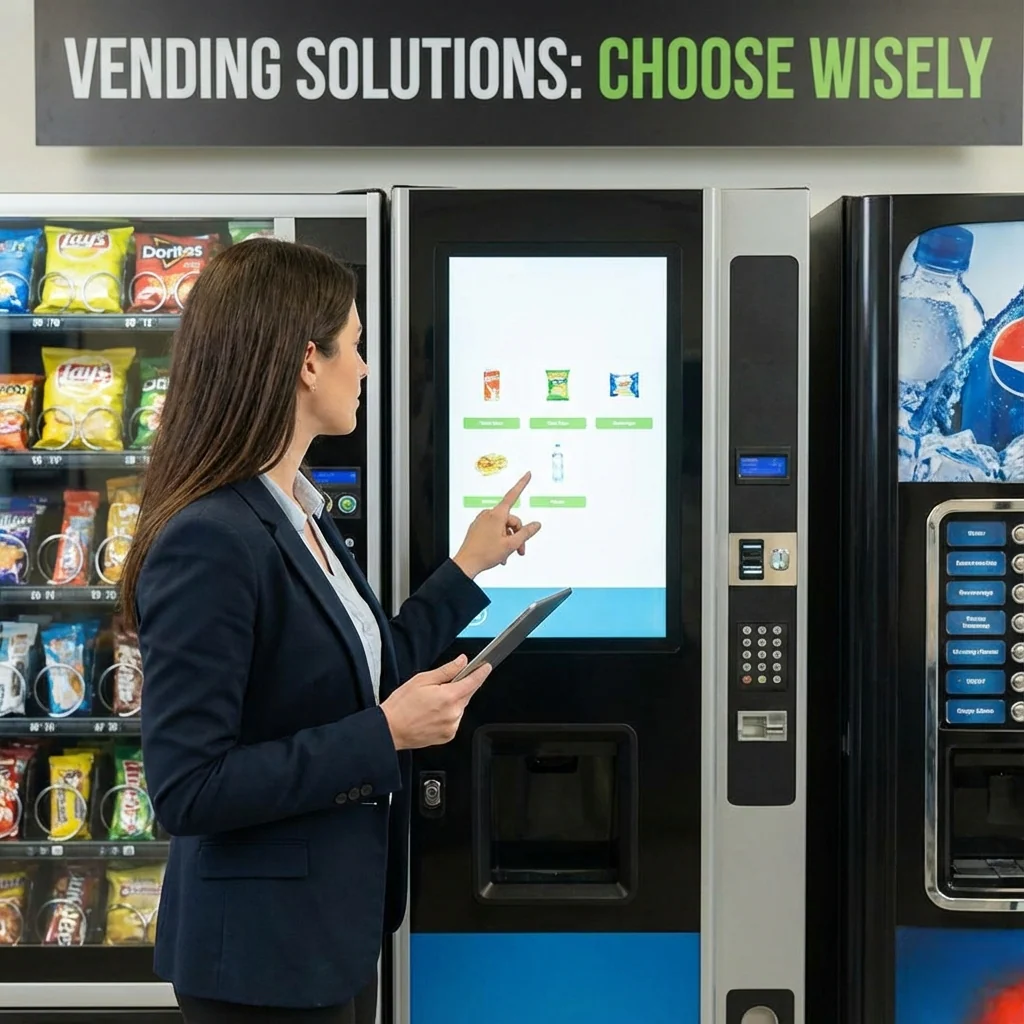
Choose the right vending machine and your location earns to its full potential. Choose the wrong one and you leave money on the table every single day — a drinks-only machine in a location that wants snacks, a premium new unit where a refurbished machine would earn the same revenue, or a coffee machine where nobody stays long enough to wait for a brew. The machine and the location must match, and understanding how to choose the right vending machine for each specific site is one of the most important skills a vending operator can develop.
This guide compares every major vending machine type — combo, drinks-only, snack-only, coffee, and fresh food — by cost, revenue potential, maintenance requirements, and which locations each type suits best. The information here is based on real UK operator experience and is consistent with industry guidance from the Automatic Vending Association.
Choose the right vending machine — the 5 main types compared
| Machine type | Cost (refurbished) | Cost (new) | Monthly revenue | Maintenance |
|---|---|---|---|---|
| Combo (snacks + drinks) | £650–£1,200 | £2,000–£4,500 | £300–£800 | Moderate |
| Cold drinks only | £500–£900 | £1,500–£3,000 | £200–£600 | Low |
| Snack only | £450–£800 | £1,200–£2,500 | £150–£400 | Low |
| Hot drinks (bean-to-cup) | £800–£2,000 | £3,000–£7,000 | £250–£700 | High |
| Fresh food / micro market | £1,500–£3,000 | £4,000–£10,000 | £400–£1,200 | Very high |
The simple rule: If you are choosing your first machine and are unsure which type to pick, choose a combo. It covers the widest range of customer needs, generates the highest total revenue per placement, and gives you the data to understand what your specific location actually wants before you invest in specialist machines.
Choose the right vending machine — combo machines
What they sell
Snacks, crisps, chocolate, and confectionery in the top section, cold drinks (cans and bottles) in the bottom section — all from a single unit. Some combo machines also include a water dispensing option or a small number of fresh food slots.
Why they are the best all-rounder
When you choose the right vending machine for most locations, the answer is almost always a combo. They earn more per placement because customers can buy both a drink and a snack in one transaction. A customer who would spend £1.20 on a Coke at a drinks-only machine spends £2.40 on a Coke and a KitKat at a combo. That add-on effect, multiplied across dozens of daily transactions, is the reason combo machines consistently outperform single-category machines by 30–50% in the same location.
Best locations for combo
Combo Shines Here
- Warehouses and factories — shift workers want both food and drinks
- Offices (30+ staff) — covers all break room needs
- Universities — students want variety
- Hotels — late-night snacks and drinks for guests
- Any single-machine placement — maximises revenue from one unit
When combo is not ideal
Consider Alternatives When
- Space is very tight — combo machines are the largest type
- You already have a snack machine — add a drinks-only instead
- The audience only wants drinks — gyms, sports venues
- Hot drinks are the priority — offices with no coffee provision
- Fresh food is required — hospitals, 24hr sites
Browse our combo machines
Refurbished from £650, new from £2,000. PAT tested, delivered, and ready to earn.
Browse Machines →Choose the right vending machine — cold drinks only
Drinks-only machines are the simplest to operate, have the lowest maintenance requirements, and sell the highest-margin products in vending. When you choose the right vending machine and it is a drinks-only, you are betting on a location where cold beverages dominate demand — and there are several locations where that bet pays off handsomely.
Best locations for drinks-only
- Gyms and leisure centres: Post-workout cold drinks, energy drinks, protein shakes, and water are the primary purchases. Snack demand is minimal.
- Outdoor or semi-outdoor locations: Where a full combo would be oversized or impractical — waiting areas, covered walkways, loading bays.
- Alongside an existing snack machine: If you already have a snack unit and want to expand capacity with a second machine dedicated to drinks.
Advantages
- Highest margins: Cold drinks deliver 50–70% profit margins — the best in vending
- Lowest maintenance: No spirals to jam, fewer mechanical moving parts
- Cheaper to buy: £500–£900 refurbished makes it the lowest-cost entry point
- Faster restocking: Loading cans and bottles is quicker than loading snack spirals
Choose the right vending machine — snack only
Snack-only machines are the least common standalone choice, but they have a role in specific situations. When you choose the right vending machine as a snack-only, it is usually because the location already has adequate drink provision (a water cooler, a drinks machine, a nearby café) but has no convenient snack access.
Best locations for snack-only
- Offices with kitchen facilities: Staff can make their own tea and coffee but have no snack access
- Schools and colleges: Where cold drinks may be restricted by policy but snacks are permitted
- Alongside a hot drinks machine: Coffee and a biscuit is a powerful combination
Choose the right vending machine — hot drinks (bean-to-cup)
Bean-to-cup coffee machines are high-revenue, high-margin, but high-maintenance machines that suit specific locations with strong hot drink demand. When you choose the right vending machine as a coffee unit, you are committing to a more hands-on operation than snack or drink machines require.
What makes them different
Unlike snack and drink machines that dispense pre-packaged products, bean-to-cup machines grind fresh coffee beans, heat water, froth milk, and dispense a hot drink into a cup — all automatically. This mechanical complexity means more parts to clean, more components to maintain, and more potential failure points. But the product — a freshly ground coffee for £1.00–£1.50 that costs you 10–15p in ingredients — delivers margins of 85–90%, the highest in the entire vending industry.
Best locations for hot drinks
- Large offices (50+ staff) with no café: The single strongest location for a hot drinks machine. Staff drink multiple cups per day.
- Hospitals and medical centres: Visitors and staff need hot drinks outside canteen hours.
- Car dealerships and waiting rooms: Captive audience with 30–90 minute wait times.
- Universities and libraries: Students and late-night study sessions drive consistent demand.
Coffee machine advice for beginners: Do not start with a coffee machine as your first unit. The maintenance demands, cleaning requirements, and higher purchase cost add complexity that is best tackled after you have mastered the basics with a simpler combo or drinks machine. Choose the right vending machine for your experience level, not just your ambition.
Choose the right vending machine — fresh food and micro markets
Fresh food machines and micro market setups represent the premium end of vending. They dispense sandwiches, salads, wraps, fruit, and ready meals — providing a genuine meal solution rather than just snacks and drinks. Revenue can be exceptional in the right location, but so can the complexity.
Why they are not for beginners
- Perishable stock: Fresh food has a 1–3 day shelf life. Waste from unsold items directly eats into profit.
- Daily restocking: Unlike snack machines that can go a week between visits, fresh food machines may need daily attention.
- Higher cost: £4,000–£10,000 for the machine, plus ongoing food supplier relationships and cold chain management.
- Regulatory requirements: More stringent food hygiene and labelling obligations than pre-packaged snacks.
If you want to choose the right vending machine in this category, the ideal location has 200+ people on site daily, no canteen or nearby food outlet, and demand for proper meal options — typically hospitals, large office parks, or 24-hour industrial sites.
Choose the right vending machine — the decision framework
Ask these five questions about your location, and the right machine type will become obvious:
- How many people pass the machine daily? Under 50 = drinks-only or small combo. 50–200 = full combo. 200+ = combo plus a second specialist unit (coffee or fresh food).
- What do they already have access to? If there is a canteen with meals, they need snacks and drinks. If there is no food at all, they may want a combo plus fresh food. If there is a kettle and kitchen, they need snacks — not coffee.
- How long do people stay? Short dwell time (under 30 minutes) = drinks and quick snacks. Long dwell time (hours) = combo, coffee, or fresh food. Choose the right vending machine based on what people have time to consume.
- What space is available? Full-size combo needs approximately 95 cm × 80 cm floor space. Tight space = slim drinks-only or compact snack machine.
- What is your experience level? First machine = combo or drinks-only. Established operator = coffee, fresh food, or multi-machine setups.
“The best operators do not choose their favourite machine and then look for a location to put it. They assess the location first, understand what the audience needs, and then choose the right vending machine to serve that specific demand. Location first, machine second — always.”
Choose the right vending machine — new vs refurbished reminder
Whichever machine type you select, the new vs refurbished decision is the next choice. The short version: refurbished machines earn the same revenue as new machines in the same location. The difference is in upfront cost, expected lifespan, and maintenance frequency.
| Factor | Refurbished | New |
|---|---|---|
| Cost | 50–70% cheaper | Full retail price |
| Revenue potential | Identical to new | Identical to refurbished |
| Expected lifespan | 5–10 years with maintenance | 10–15 years with maintenance |
| Maintenance cost | Slightly higher (older parts) | Lower (newer components) |
| Best for | Beginners, budget-conscious, testing locations | Established operators scaling fleet |
The bottom line: Choose the right vending machine by matching the machine type to your location’s audience, space, and demand profile — not by buying the most impressive-looking unit. A £700 refurbished combo in the right warehouse will outperform a £4,000 new coffee machine in the wrong office every single time. Location fit beats machine quality, always.
Common questions — choose the right vending machine
Need help choosing?
Tell us about your location and we will recommend the right machine — no obligation, no pressure.