

PPE vending machine UK: 7 critical tips for employers
How PPE vending keeps gloves, glasses and ear protection available on every shift, while meeting the rules on free PPE.
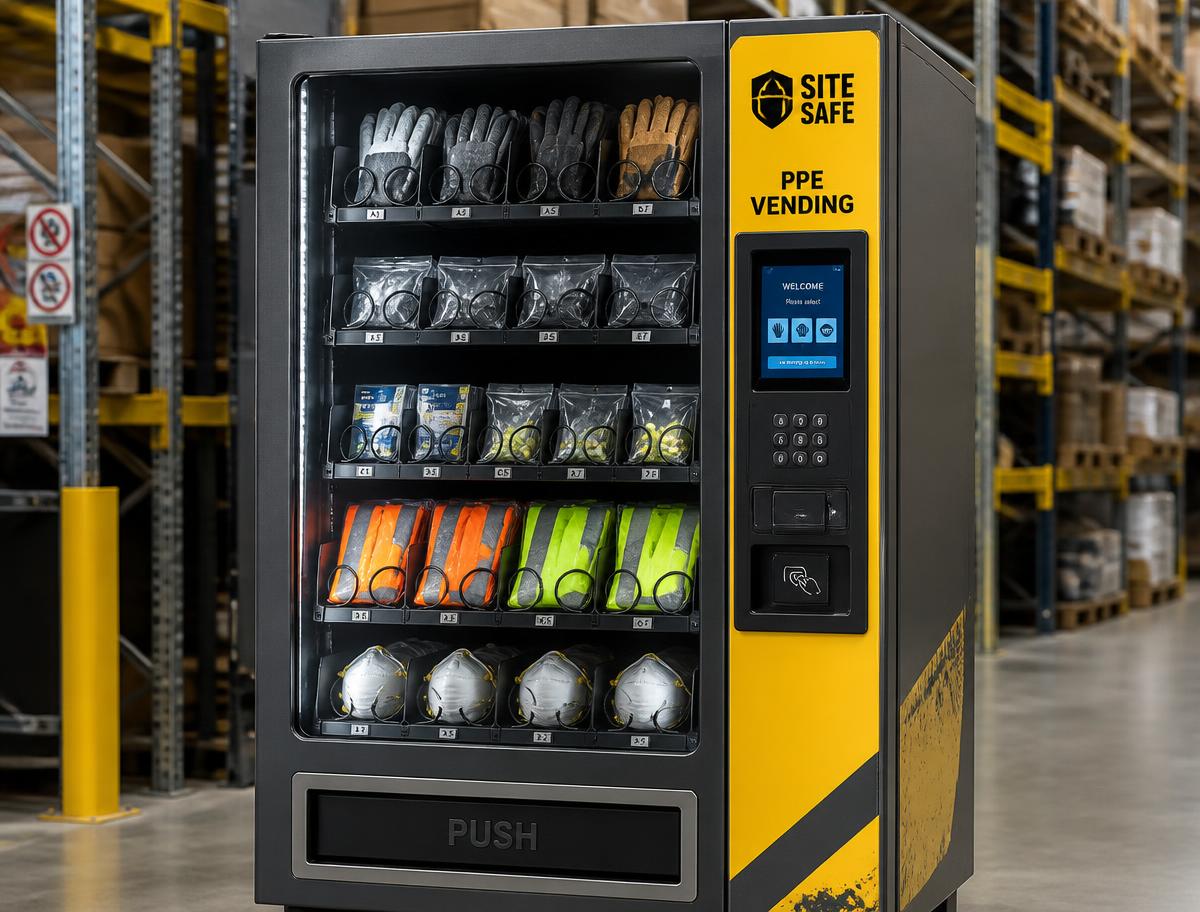
A PPE vending machine keeps gloves, safety glasses, ear plugs and other essentials available on every shift. No more waiting for the stores to open or hunting for a supervisor with a key.
This guide covers 7 critical tips for employers choosing a PPE vending machine, the rules on free PPE, what to stock, how to control access and where to place it.
See our PPE machine
The PPE Essentials Vending Machine, delivered and installed free anywhere in the UK.
View the PPE Machine →Why use a PPE vending machine?
Running out of PPE stops work. On night shifts and weekends, the stores are often closed, and workers either wait or carry on without the right protection.
A PPE vending machine solves that. It makes everyday items available 24 hours a day, right where people need them.
It saves supervisors’ time, too. Instead of unlocking stores and handing out gloves, they can focus on running the shift.
A PPE vending machine also helps control use. Many machines record what’s taken and when, so you can spot waste, plan orders and show that PPE has been provided.
The law on free PPE
Before choosing a PPE vending machine, understand one key rule. HSE guidance says employers must provide PPE free of charge where a risk assessment shows it’s needed.
That means a workplace PPE vending machine should issue required items to staff rather than sell them. Machines can be set up to work with staff cards, codes or free vend settings, so ask how a machine can be configured for your site.
Items that aren’t required by your risk assessment, such as optional extras, may be treated differently. If in doubt, take advice and keep required PPE free.
7 critical tips for choosing a PPE vending machine
Use these tips to choose and run a PPE vending machine that keeps your workforce protected.
1. Start from your risk assessment
Stock the items your risk assessments require first. A PPE vending machine should support your safety plan, not replace it.
2. Keep required PPE free
Set up the machine to issue required PPE at no cost to workers. Staff cards or codes make this simple and controlled.
3. Place it where work starts
Put the machine near entrances, clocking-in points or the start of the shop floor. Workers should be able to grab PPE before they begin.
On large sites, a second machine near the far end of the shop floor saves long walks.
4. Track usage
Usage data shows which items go fastest and on which shifts. It helps cut waste and makes reordering easy.
5. Stock the right sizes
Gloves and some other items come in sizes. Make sure every size your workforce needs is available, or people will make do with the wrong fit.
6. Keep it full
An empty PPE vending machine is worse than none, because people rely on it. Assign someone to check stock levels every shift.
7. Train your team
Show workers how to use the machine and what’s available. A short briefing at induction avoids confusion later.
Put a simple poster beside the machine too, showing what’s inside and how to use it. New starters and agency workers will thank you on their first shift.
“PPE that’s locked in a store at 2am isn’t protecting anyone. A PPE vending machine puts it where the work happens.”
Controlling access
A PPE vending machine works best when it knows who’s taking what. Staff cards, PIN codes or other ID let you issue items free while still tracking use.
You can set limits per person or per shift to prevent stockpiling. That keeps a PPE vending machine stocked for everyone, not just the first few people in.
Visitors and contractors can be given temporary codes or cards. It’s a simple way to make sure everyone on site has the right protection.
Payment readers can still be useful for optional items that aren’t required PPE. Our contactless vending machine guide explains how card readers work.
What to stock
A typical PPE vending machine range includes everyday consumables:
- Hand protection: disposable gloves and work gloves in several sizes
- Eye protection: safety glasses and over-glasses
- Hearing protection: ear plugs and simple ear defenders
- Respiratory protection: disposable masks suited to your risks
- Visibility: hi-vis vests and armbands
- Other consumables: plasters, wipes and small batteries
Check that every item meets the standard your risk assessment requires. Cheaper isn’t better if the protection isn’t right for the job.
Keep spare stock in a secure store near the machine, so refills take minutes rather than a trip across site.
Choosing the right range for your site
No two sites need exactly the same PPE. A distribution centre may get through boxes of gloves and hi-vis vests, while a factory line uses far more ear plugs and safety glasses.
Start by listing the items your teams use most often outside stores hours. Those are the first products to put in a PPE vending machine.
Review the range every few months with supervisors and safety reps. They’ll know which items are missing, which sizes run out and which products workers don’t like wearing.
Comfort matters more than many employers expect. If glasses fog up or gloves are too stiff, people take them off, so choose items your workforce will actually wear.
Our PPE Essentials machine
Our PPE Essentials Vending Machine is designed for exactly this job. It has five shelves and push delivery, and costs £1,995 with free delivery and installation.
It’s a practical way to keep everyday safety items stocked on every shift. Contact our team to talk through how it can be set up for your site and staff.
With a Machine
PPE Vending
- Access: 24 hours a day
- Control: Usage tracked by item
- Waste: Easier to spot and reduce
- Staff time: No one needed to issue items
- Best for: Multi-shift sites
Without a Machine
Stores Only
- Access: Stores opening hours
- Control: Manual records
- Waste: Harder to track
- Staff time: Someone must issue items
- Best for: Small, day-only sites
Where a PPE vending machine works best
Any site with multiple shifts and regular PPE use is a strong fit:
- Warehouses and distribution centres: gloves and hi-vis on every shift
- Factories: eye and hearing protection on production lines
- Construction sites: gloves, glasses and masks in welfare areas
- Laboratories and food production: disposable gloves and hygiene items
- Facilities and maintenance teams: mixed PPE for varied tasks
For more on warehouse sites, see our guide to vending machines for warehouses, which covers PPE alongside food and drink.
Our take: a PPE vending machine is one of the simplest ways to make sure protection is always available. Keep required items free, place it where work starts, and use the data to plan orders.
Restocking and maintenance
Assign one person to own the PPE vending machine. They should check stock levels every shift, reorder fast-moving items and keep the machine clean.
Usage reports make reordering easier, because they show exactly what’s been taken. Our guides on how to restock a vending machine and vending machine maintenance cover the routine.
PPE records and audits
Usage data from a PPE vending machine is useful evidence that PPE has been made available. It can support safety audits and help investigate incidents.
Keep records with your other safety documents, and review them alongside risk assessments. Our guides to vending machine regulations and vending machine insurance cover the wider picture.
If usage of an item suddenly rises, it may point to a new risk, a supply problem or misuse. A PPE vending machine makes these patterns easy to spot.
Placement and setup
Choose a spot that’s dry, well lit and on the natural route into work. Avoid areas with heavy forklift traffic or where the machine could be knocked.
You’ll need a level floor and a standard power socket. Keep the machine clear of fire exits and walkways, and fix signage showing what’s available.
Our guide to vending machine locations has general placement advice.
Costs and payment options
Our PPE Essentials machine costs £1,995. Our vending machine payment plans let you pay a 25% deposit and spread the rest over up to 12 months at 0% interest.
Running costs are mainly stock and a little electricity, as a PPE vending machine has no chilled section. Because a PPE vending machine helps cut waste, many employers find it pays for itself through lower PPE spend.
Buying from Irelley
Browse all our vending machines for sale, or speak to our team about PPE vending for your site. We deliver and install free anywhere in the UK, usually within 24 hours.
Every machine comes with a 12-month warranty covering parts and remote support. See our vending machine warranty and delivery and installation pages for details.
FAQ
Frequently asked questions
A PPE vending machine dispenses personal protective equipment such as gloves, safety glasses, ear plugs and masks, so workers can get what they need at any hour.
Not for PPE that a risk assessment says is needed. HSE guidance says employers must provide it free of charge, so workplace PPE machines usually issue items rather than sell them.
Common items include disposable and work gloves, safety glasses, ear plugs, masks, hi-vis items and other small consumables. Check that every item meets your risk assessment.
Near site entrances, at the start of the shop floor or beside the stores, where workers pass before starting work. It needs a level floor and a power socket.
Irelley’s PPE Essentials Vending Machine costs £1,995, with free delivery and installation. Payment plans with a 25% deposit and up to 12 months at 0% are available.
PPE on every shift
The PPE Essentials Vending Machine, delivered and installed free anywhere in the UK.