

Vending machine VAT UK: 7 critical rules explained
Which products carry VAT, why location matters, when to register and how VAT affects your prices and commission.
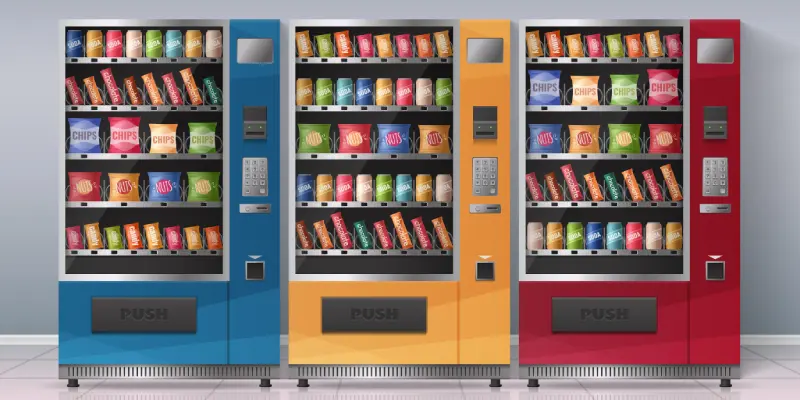
Vending machine VAT confuses plenty of operators. Some products are standard-rated, some cold food can be zero-rated, and the location of the machine can change the answer.
This guide explains 7 critical rules for vending machine VAT in the UK, how to work out VAT on your takings, when to register, reclaiming VAT and how it affects commission and pricing. It’s general guidance, so always check your own position with an accountant.
Planning your vending business?
Tested machines with free UK delivery and 0% payment plans.
View Machines For Sale →How vending machine VAT works
If you’re VAT-registered, you must charge VAT on your taxable sales and pay it to HMRC. In vending, your prices are VAT-inclusive, so the VAT is already inside every sale.
Most vending products are standard-rated at 20%. That includes crisps and savoury snacks, confectionery, soft drinks, bottled water and hot drinks.
Some cold foods can be zero-rated in shops, such as certain sandwiches or fruit. But vending machine VAT has its own wrinkle: where the machine stands can matter.
7 critical rules for vending machine VAT
These rules cover the vending machine VAT points most operators need to understand.
1. Most snacks and drinks are standard-rated
Crisps, chocolate, sweets, soft drinks, water and hot drinks are standard-rated wherever they’re sold. For a typical snack and drinks machine, almost everything carries 20% VAT.
2. Hot food and hot drinks are always standard-rated
Hot food and hot drinks count as standard-rated supplies. That covers coffee machines and any hot food vending.
3. Location can change cold food
HMRC’s guidance on vending machines says food and drink sold from machines in canteen areas, or areas set aside for eating, is normally standard-rated as catering. The same cold sandwich might be treated differently in a machine elsewhere.
4. Registration depends on turnover
You must register for VAT if your taxable turnover goes over the threshold, currently £90,000 over a rolling 12 months. Many small operators sit below it and don’t charge VAT.
5. Registered businesses can reclaim VAT
If you’re VAT-registered, you can usually reclaim VAT on business purchases, including machines, stock and wraps quoted excluding VAT.
6. Commission can carry VAT
If a site owner is VAT-registered, they may need to charge VAT on the commission or fee they receive from you. Make sure your agreement says how VAT is handled.
7. Keep clear records
Record takings by machine and, where it matters, by product type. Good records make vending machine VAT returns far easier and protect you if HMRC asks questions.
Remember that this guide is general information, not tax advice.
“In vending, VAT isn’t on top of the price. It’s inside it, so every penny you set at the machine needs to account for it.”
Working out VAT from your takings
Because vending prices include VAT, you need to take vending machine VAT out to see your real sales. At the 20% standard rate, the VAT inside a price is one sixth.
- Takings including VAT: £600
- VAT at one sixth: £100
- Net sales: £500
If you sell a mix of standard-rated and zero-rated items, you’ll need to separate them. Telemetry and card data make that much easier than counting coins.
Do the calculation for each machine and each VAT period. It shows which sites are really profitable once VAT is taken out, as our guide to how much vending machines make explains.
Pricing with VAT in mind
With vending machine VAT, a £1.20 can of drink earns you £1.00 if you’re registered. Price with that in mind, or your margins will be thinner than you expect.
Card payment lets you set exact prices rather than rounding to coins, which helps you protect margins after VAT. Our contactless vending machine guide explains how card readers work.
Our vending machine profit calculator helps you model prices, costs and margins together.
Usually Standard-Rated
20% VAT
- Snacks: Crisps and savoury snacks
- Sweets: Chocolate and confectionery
- Drinks: Soft drinks and bottled water
- Hot items: Hot drinks and hot food
- Canteen areas: Most food and drink
May Be Zero-Rated
0% VAT
- Some cold food: Depending on the product
- Location: Outside canteen areas
- Examples: Some sandwiches and fruit
- Check: Every product individually
- Advice: Confirm with an accountant
Vending machine VAT by machine type
Different machines raise different vending machine VAT questions.
Snack and drinks machines
Almost everything is standard-rated, so vending machine VAT is simple: 20% on nearly every sale. A combo machine stocked with crisps, chocolate and soft drinks is a typical example.
Coffee machines
Hot drinks are always standard-rated. A hot drinks machine charges VAT on every cup if you’re registered.
Fresh food machines
This is where vending machine VAT gets more complex, because some cold food may be zero-rated outside canteen areas. A fresh produce machine needs product-by-product checks.
PPE and retail machines
Non-food items are generally standard-rated. Required PPE issued free to staff isn’t a sale, so it doesn’t create output VAT in the usual way.
Common VAT mistakes
The most common vending machine VAT mistake is forgetting that prices already include VAT. Operators who price as if VAT were extra find their margins much thinner than planned.
The second is treating everything as zero-rated food. Most vending machine VAT is charged at the standard rate, because most vending products are standard-rated.
The third is ignoring location. A machine in a canteen area can change the vending machine VAT treatment of cold food that would be zero-rated elsewhere.
The last is paying commission on gross takings. Base it on net sales, so vending machine VAT never ends up in someone else’s pocket.
Should you register voluntarily?
Some operators register for vending machine VAT before they hit the threshold. It lets them reclaim VAT on machines and stock, which helps when buying several machines at once.
The downside is that you must then charge VAT on your sales. Since most vending products are standard-rated and customers can’t reclaim VAT, that usually cuts your margin.
For many small operators, staying below the threshold works better. An accountant can model both options for your business.
Keep an eye on your rolling 12-month turnover as you add machines. Growing routes can cross the threshold faster than expected, and late registration can mean paying vending machine VAT you never collected.
VAT schemes that may help
HMRC offers simpler schemes that can make vending machine VAT easier for smaller businesses. The Flat Rate Scheme, for example, lets eligible businesses pay a fixed percentage of turnover instead of calculating VAT on every sale.
Whether a scheme suits you depends on your turnover, costs and how much you buy. Take advice before choosing, as the wrong scheme can cost more.
Review your choice each year as the business grows.
Our take: treat vending machine VAT as part of your pricing from day one. Know which products are standard-rated, watch your turnover against the threshold, and keep clear records by machine.
VAT and commission agreements
If you pay commission to site owners, vending machine VAT affects the deal in two ways. First, base commission on net sales, after VAT, so you don’t pay the site on money that belongs to HMRC.
Second, check whether the site owner is VAT-registered and will add VAT to their invoice. Our commission rates guide covers structuring these deals, and our guide to placement agreements explains what to write down.
Buying a machine: the VAT angle
When you buy a machine, check whether the price includes vending machine VAT. Some extras, such as our vinyl wraps at £100 to £950, are quoted excluding VAT.
If you’re registered, you can usually reclaim that VAT. Businesses may also be able to claim capital allowances, as our guide to vending machine finance explains.
Records and Making Tax Digital
VAT-registered businesses must follow Making Tax Digital, which means keeping digital records and filing returns through compatible software.
Card and telemetry data fit neatly into this. Exporting sales by machine and date makes vending machine VAT returns faster and more accurate.
Keep invoices for every machine, stock order and service. They support your reclaim and help if HMRC ever reviews your vending machine VAT records.
Getting it right
Vending machine VAT isn’t complicated once your systems are set up, but mistakes are costly. Use card and telemetry data to track takings, keep receipts for every purchase, and file returns on time.
For the bigger picture on running a compliant business, see our guides to vending machine regulations and starting a vending machine business.
Buying from Irelley
Browse our vending machines for sale, or contact our team for a clear quote. We deliver and install free anywhere in the UK, within 24 hours, and our payment plans let you spread the cost at 0%.
FAQ
Frequently asked questions
If you’re VAT-registered, yes, on standard-rated products. Most typical vending products, such as crisps, confectionery, soft drinks and hot drinks, are standard-rated. Some cold food can be zero-rated, depending on what it is and where the machine stands.
Some cold food can be, but not always. HMRC guidance says food and drink from machines in canteen areas is normally standard-rated, so location matters as well as the product.
You must register if your VAT-taxable turnover goes over the registration threshold, currently £90,000 over a rolling 12 months. Check gov.uk for the current figure.
If you’re VAT-registered and use the machine for your taxable business, you can usually reclaim the VAT you pay on it.
At the 20% standard rate, the VAT inside a VAT-inclusive price is one sixth. So £6 of standard-rated takings includes £1 of VAT.
Price with confidence
Tested machines, free UK delivery and 0% payment plans to grow your vending business.