

Vending machine placement agreements: how to negotiate the best deal.
A good placement agreement protects your machine, your revenue, and your relationship with the site owner. A bad one costs you money every month. Here’s how to get it right from the start.
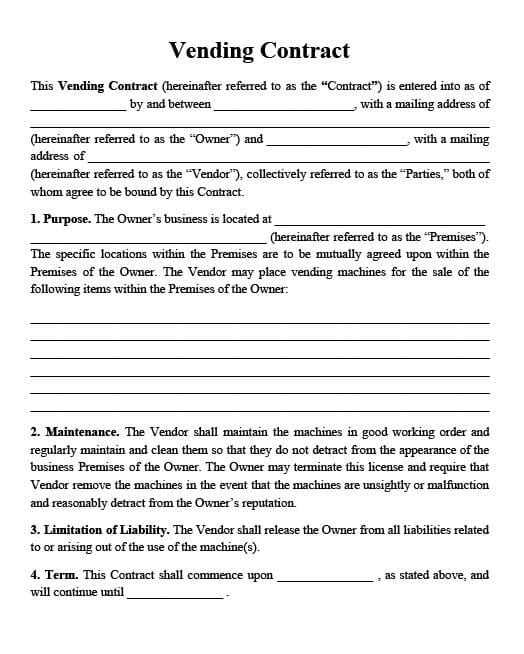
Vending machine placement agreements are the foundation of every profitable vending operation — and the document most first-time operators get wrong. A placement agreement is the contract between you (the machine owner/operator) and the site owner (the business, landlord, or property manager who provides the location). It defines who pays what, what happens if things go wrong, how long the machine stays, and what each party is responsible for. Getting your vending machine placement agreements right protects your investment, your margins, and your relationship with the site. Getting them wrong can mean losing money, losing your machine, or losing the location entirely.
This guide covers everything UK operators need to know about vending machine placement agreements: what to include, commission structures, contract length, the clauses that protect you, the red flags that signal a bad deal, and proven negotiation strategies. The guidance here is consistent with industry best practices recommended by the Automatic Vending Association (AVA).
Vending machine placement agreements — what they should cover
A solid vending machine placement agreement should address every aspect of the arrangement between you and the site owner. At minimum, your vending machine placement agreements should include:
- Parties: Full legal names and contact details of both the operator and the site owner.
- Location: The exact position of the machine within the premises — be specific (e.g. “ground floor staff break room, east wall”) to avoid disputes about relocation.
- Machine details: Make, model, serial number, and a description of the machine. This establishes exactly what equipment is covered.
- Commission/rent: The payment structure — what the site owner receives, how it is calculated, and when it is paid.
- Contract duration: Start date, end date, and renewal terms.
- Termination clauses: How either party can exit the agreement, notice periods required, and what happens to the machine.
- Responsibilities: Who provides electricity, who is responsible for cleaning the area around the machine, who handles waste.
- Access: Your right to access the machine for restocking, maintenance, and cash collection at reasonable times.
- Insurance and liability: Who insures the machine, who is liable for damage, what happens if the machine causes injury or property damage.
- Exclusivity: Whether the site owner can place competing machines from other operators.
Never operate on a handshake. Verbal agreements are technically enforceable but practically unenforceable. Every vending machine placement agreement should be in writing, signed by both parties, with each party retaining a copy. It takes 30 minutes to draft and saves months of disputes.
Vending machine placement agreements — commission structures explained
The commission structure is the most negotiated element of any vending machine placement agreement. There are three main models, and the right choice depends on the location, the expected sales volume, and the bargaining position of each party.
Most common
Percentage Commission
- How it works: Site owner receives a percentage of gross sales
- Typical range: 5–20% of gross revenue
- Best for: High-traffic locations
- Advantage: Site owner is incentivised to drive traffic
- Risk: Your margins shrink as commission rises
Alternative
Fixed Monthly Rent
- How it works: You pay a flat fee per month for the space
- Typical range: £20–£100/month
- Best for: Predictable budgeting
- Advantage: Your upside is uncapped — high sales = all yours
- Risk: You pay the same even in slow months
The third option: zero commission
In many vending machine placement agreements, particularly for smaller sites like offices, workshops, and community centres, the site owner receives no commission or rent at all. The value proposition is simple: the site owner gets a free amenity for their staff or visitors, and you get a location for your machine. This is the most operator-friendly structure and is more common than many new operators realise — especially in locations with fewer than 50 people where sales volume is modest.
Which commission structure should you offer?
- High-traffic locations (200+ people, public access): Expect to pay 10–20% commission. The site owner knows the location has value and will shop around if your offer is too low.
- Medium-traffic locations (50–200 people, staff only): 5–10% commission or a small fixed rent of £30–£60/month. Many sites in this range will accept zero commission if the amenity value is emphasised.
- Low-traffic locations (under 50 people): Zero commission is standard. You are providing a service — the site owner should not expect to profit from a machine that generates modest revenue.
“The biggest mistake new operators make with vending machine placement agreements is offering commission before being asked. Lead with the amenity value — free snacks and drinks for your staff, maintained and stocked at no cost to you. Many site owners never ask for commission because the free service is enough.”
Vending machine placement agreements — contract length and renewal
Recommended contract lengths
- 12 months (minimum recommended): Gives you enough time to establish the machine, optimise the product mix, and generate a return on your investment. Shorter contracts do not justify the setup effort.
- 24 months (ideal): A two-year agreement provides stability and allows you to plan ahead. Most vending machine placement agreements in the UK default to this length.
- 36 months: Common for high-value placements where you are investing in premium or new equipment specifically for the location. The longer term protects your larger investment.
Renewal terms
The best vending machine placement agreements include an automatic renewal clause — the agreement renews for an additional 12-month period unless either party gives written notice (typically 30–90 days) before the end date. This prevents the awkward scenario where your contract expires, nobody notices, and you are suddenly operating without a valid agreement.
Need a machine for your new location?
Browse our full range — new and refurbished, all tested and ready for placement.
Browse Machines →Vending machine placement agreements — clauses that protect you
Beyond the basics, these clauses in your vending machine placement agreements protect your business from the most common problems operators face:
Exclusivity clause
This prevents the site owner from placing a competing vending machine from another operator in the same location. Without exclusivity, a site owner can accept your machine, see it performing well, then invite a competitor to place a second machine next to yours — splitting your sales in half. Exclusivity is standard in professional vending machine placement agreements and is rarely refused.
Access clause
You need reliable access to your machine for restocking, maintenance, cash collection, and repairs. Your agreement should guarantee access during normal business hours and, ideally, include a provision for emergency access (e.g. if the machine jams or a refrigeration unit fails). Without this clause, you are at the mercy of the site owner’s schedule.
Electricity clause
In the vast majority of vending machine placement agreements, the site owner provides electricity at no additional cost. This should be stated explicitly in the agreement. A vending machine typically costs £10–£25/month in electricity — a negligible amount for most businesses but a cost you should not absorb on top of commission.
Machine ownership clause
State clearly that the machine remains your property at all times. Without this clause, disputes can arise if the site owner assumes the machine becomes a fixture of the premises — particularly in commercial property transactions where fixtures transfer with the building.
Removal and make-good clause
When the agreement ends, you have the right to remove your machine within a specified period (typically 14–30 days). You should also agree to leave the space in reasonable condition — no damage from installation or removal.
Vending machine placement agreements — red flags to avoid
- Commission above 20%: Unless the location is exceptionally high-traffic (thousands of daily transactions), commission above 20% makes most vending machine placement agreements unprofitable for the operator.
- No termination clause: You need an exit. If the location underperforms, you must be able to remove your machine within a reasonable notice period — not be locked in for 36 months with no way out.
- Site owner controls pricing: Your product pricing should be your decision. If the site owner dictates prices, they can squeeze your margins while still collecting commission on the gross figure.
- You pay for electricity on top of commission: Electricity is almost always the site owner’s cost. Paying both electricity and commission is double-dipping.
- No exclusivity: Agreeing to vending machine placement agreements without exclusivity means the site owner can invite a competitor tomorrow.
- Unreasonable damage liability: Normal wear and tear to the floor or wall where the machine sits should not be your liability. Your agreement should distinguish between damage caused by the machine and normal wear.
Vending machine placement agreements — negotiation strategies
Lead with value, not price
The strongest negotiating position for vending machine placement agreements is to frame your machine as a free amenity, not a revenue opportunity for the site owner. “We provide, stock, and maintain a snack and drinks machine for your staff at zero cost to you” is a powerful opening. Commission only enters the conversation if the site owner raises it — and many will not.
Know your walk-away number
Before negotiating any vending machine placement agreement, calculate your minimum viable margin at that location. If the commission or rent pushes your monthly profit below £100–£150 for a single machine, the location is not worth the operational effort. Know your number and be willing to walk away.
Offer a trial period
If a site owner is hesitant, offer a 3-month trial with a simplified agreement. If the machine performs well, convert to a full 24-month agreement. This reduces the site owner’s perceived risk and gets your machine in the door. Most trial placements convert to permanent vending machine placement agreements because both parties see the benefit.
Bundle multiple locations
If a business has multiple sites (e.g. a company with three offices), negotiate vending machine placement agreements for all locations as a single deal. Offer a slightly lower commission in exchange for the volume — the site owner gets a better per-machine rate, and you get three secure placements instead of one.
The best vending machine placement agreements are fair to both sides. You need a profitable location with reliable access. The site owner needs a well-maintained machine that serves their staff or visitors. When both parties benefit, the agreement lasts. When one side feels squeezed, the relationship — and the placement — eventually fails.
Common questions — vending machine placement agreements
Got a location lined up? We can help you fill it.
Browse our stock of 70+ tested machines or speak to our team about choosing the right unit for your placement.